Desert Driving Terms Explained: Cresting, Side-Sloping and More
Ten minutes into your first briefing you will hear a small handful of words that sound like a private language: cresting, the slip face, watch your spacing, we may deflate a touch. None of them are complicated — they only sound that way because the desert has its own shapes and its own moves, and plain words for them never quite stuck. This page fixes that. With these desert driving terms explained before you go, the briefing will land like a story instead of a vocabulary test, and you will understand not just what your guide says, but why.
The dune’s own words
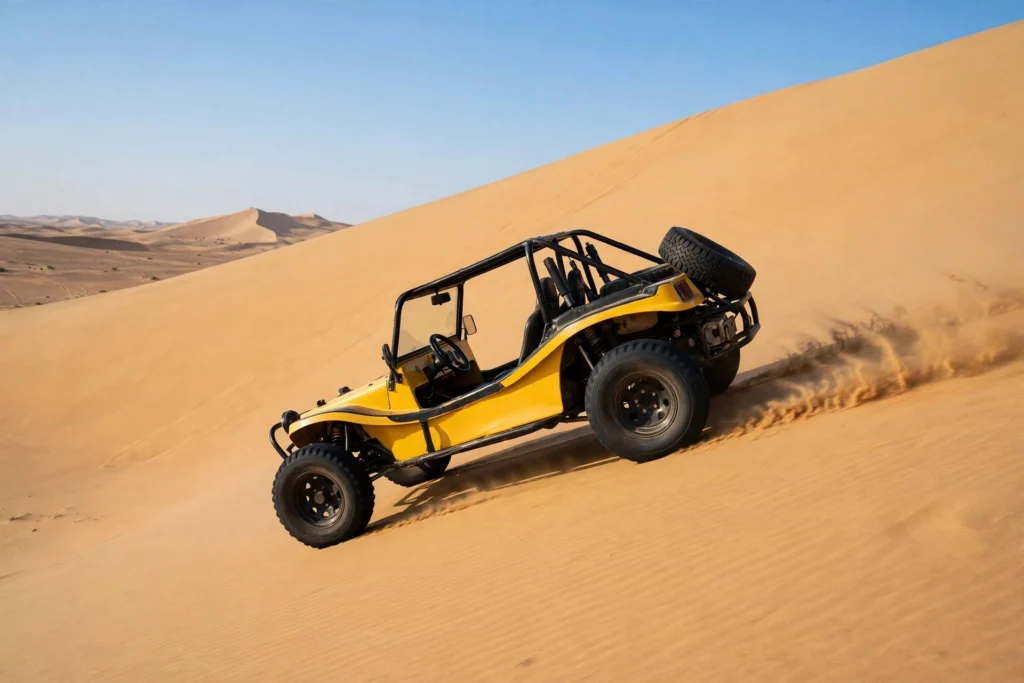
- The face — the smooth, windward slope of the dune, the side the wind built gently. This is the side you drive up.
- The crest — the sharp top edge where the two sides meet. Everything in dune driving is about how you cross this line.
- The slip face — the steep back side of the dune, where sand pours and slides at its natural angle. It is much steeper than it looks from the front, which is why crossing the crest slowly and knowingly matters.
- Sabkha — the flat, hard salt plain found between dune fields. Firm, fast and flat — the desert’s natural rest stop and photo floor.
The driving words
- Cresting — crossing the top of a dune from the face to the far side. Done well, it is a smooth roll: steady power up, ease off at the top, roll down. Done badly — braking at the very top — it leads straight to the next word.
- High-centred (or beached) — balanced on the crest with your wheels in soft sand on both sides and no grip to move. It looks dramatic and solves in minutes with a guide, a rope or a little digging. Every desert driver has a beached story; soon you may too.
- Traversing / side-sloping — driving across the face of a dune rather than up it, slightly angled, using the slope like a banked road. It feels strange for exactly ten seconds, then rather elegant.
- Momentum — the desert’s golden rule. Steady speed carried into a climb does the work that raw power cannot; stopping and starting on soft sand is where buggies dig in.
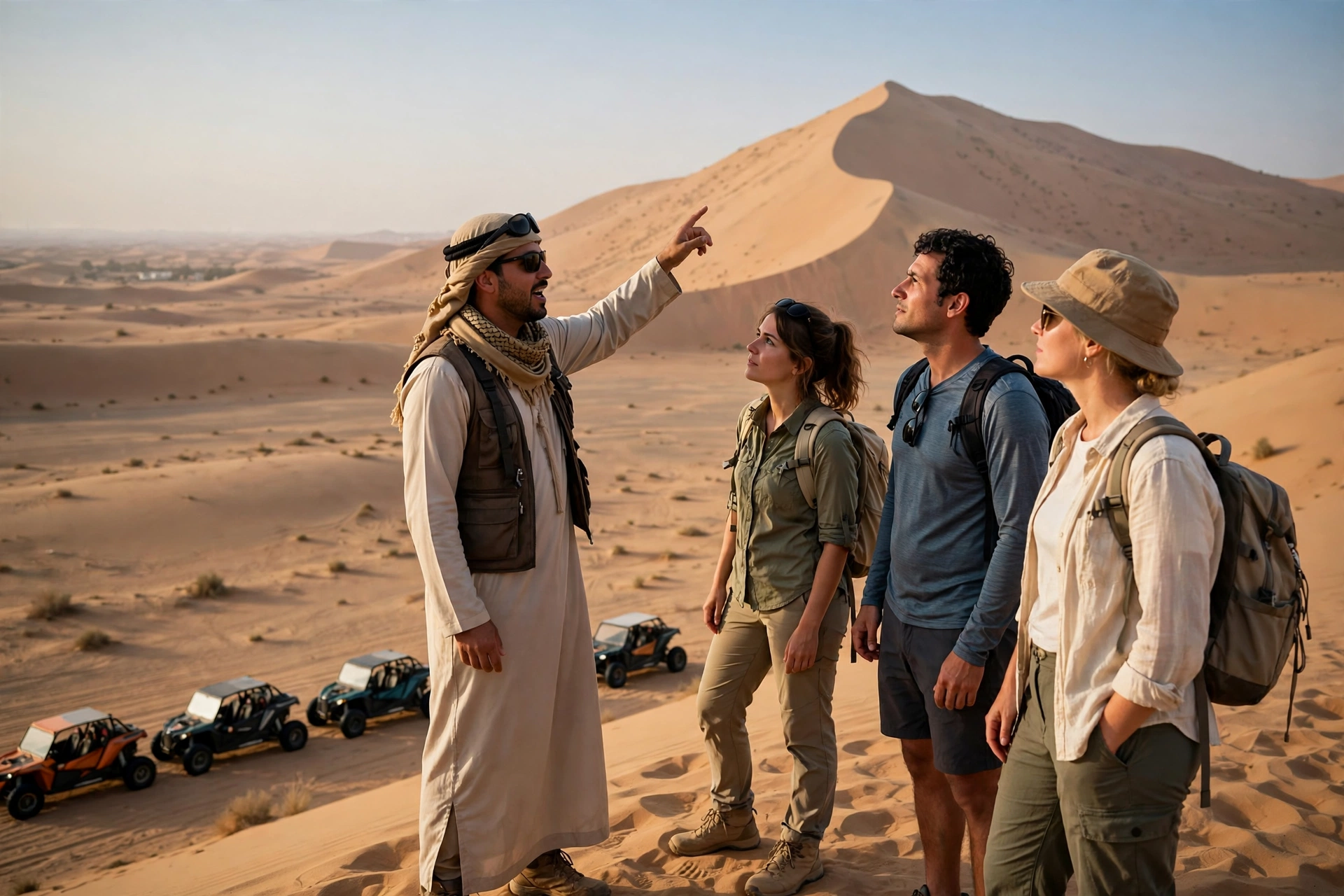
- The line — the route the guide picks over the dunes. Following the line means following their judgement about which sand is firm, which crest is kind, and which view is worth the climb.
The rescue and kit words
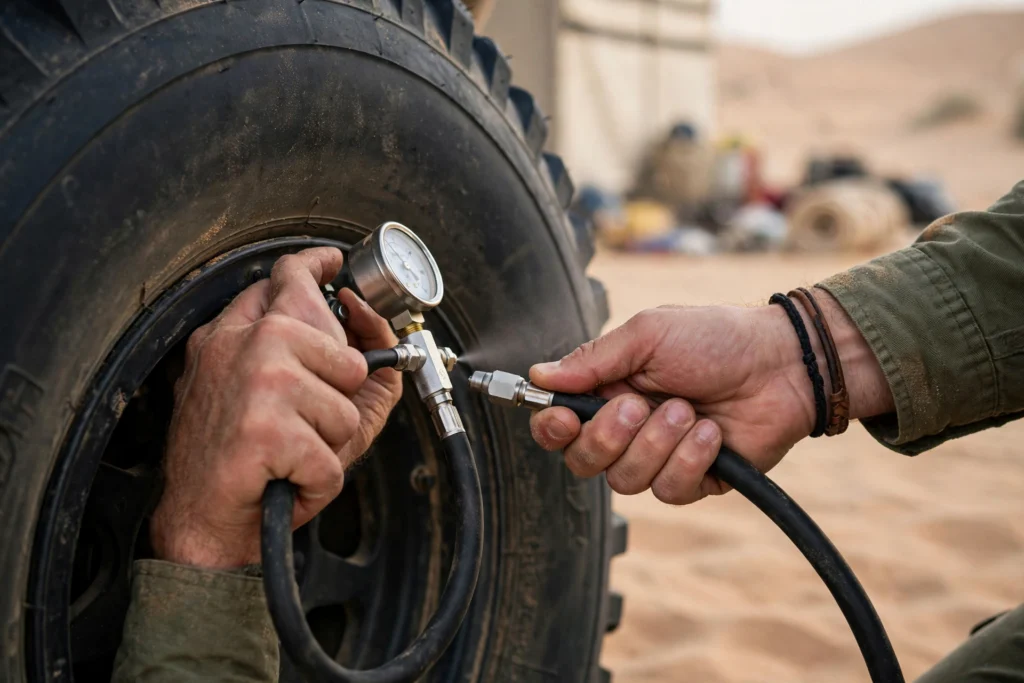
- Deflation — letting some air out of the tyres before sand driving. A softer tyre spreads wider, grips better and floats over sand instead of cutting into it. Your buggy arrives already set; on the quad bike side the same trick applies.
- Self-recovery — getting unstuck with what the vehicle and driver can do alone: rocking gently, steering straight, using momentum rather than spinning the wheels deeper. The first resort, and surprisingly often the only one needed.
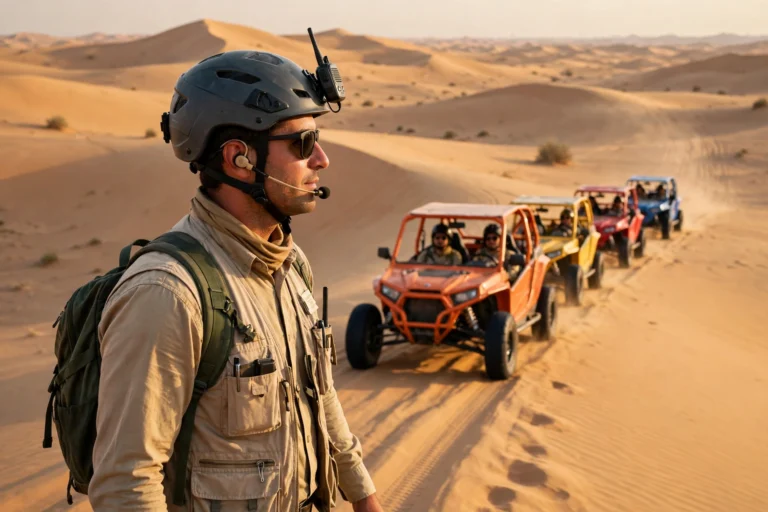
- The safety flag — the tall, thin flag on a pole at the back of every buggy. Over a crest, the flag appears before the buggy does, which is the entire point.
- Support vehicle — the car that shadows the group carrying water, tools, spares and the day’s quiet solutions. You will barely notice it until the moment you are glad it exists.
Why the words are worth learning
None of this is tested, and nobody will quiz you at the base. But a rider who knows what “ease off as you crest” means hears the briefing once and drives it; a rider who does not spends the first three dunes translating. The guides on the buggy rental tours will happily unpack any word on the spot — and machines like the Can-Am Maverick X3 make the learning curve kind — but arriving with the language already in your pocket buys you something real: a first ride that feels like a second one.
Quick questions
Will the guide explain these terms on the day?
Yes — the briefing covers what you need, in plain language, and guides demonstrate more than they lecture. This list simply lets you arrive pre-translated.
What does it mean when the guide says “keep your momentum and follow my line”?
Keep a steady speed (do not brake on the climb), and drive exactly where the guide’s buggy went. It is the two-sentence summary of this entire page.
Is the slip face dangerous?
Not when crossed properly — slowly, knowingly, on the guide’s line. It is the reason cresting is taught carefully rather than left to instinct.
Do these terms apply to quad bikes too?
Almost all of them. Sand behaves the same under four small wheels as under a buggy; only the balance and body position differ, and your quad guide covers those.
You speak desert now
Face, crest, slip face; cresting, traversing, momentum; deflation and the flag. With these desert driving terms explained, the next briefing you hear will sound like what it actually is — a friendly set of instructions in a language you now speak. Ready to use it? Message us on WhatsApp at +971 55 719 0598, book your ride, and impress your guide by asking about the slip face before he mentions it.