Phone, GoPro or Nothing? Filming Your Buggy Ride Without Wrecking Your Phone
Every rider asks some version of this question at the base: “Can I film it?” The answer is yes — but filming your buggy ride is rougher on electronics than people expect. Sand gets into ports and zips. Buggies bounce harder than they look on video. And a phone held in one hand is a phone one bump away from a very quiet flight into a dune.
The riders who come home with great footage are not the ones with the most expensive camera. They are the ones who chose the right tool for each moment. On a family outing like the 4-seater Polaris ride, that usually means an action camera while moving, a phone at the stops, and bare eyes for at least some of the ride. Here is how each option really plays out.
Your phone: better than you fear, worse than you hope
Your phone shoots excellent video — sitting still. At the photo stops it is the best camera most people own: quick, sharp, and already in your pocket. For group shots, crest views and the buggy portraits, nothing else comes close for convenience.
While the buggy is moving, the phone becomes a problem. You need two hands to drive properly, full stop. One-handed filming while steering over sand is how phones get dropped and how drivers stop paying attention to the route. As a passenger your hands are freer, but the footage still suffers: no stability against real bumps, a lens slowly filming through a film of dust, and one hand permanently occupied instead of holding on.
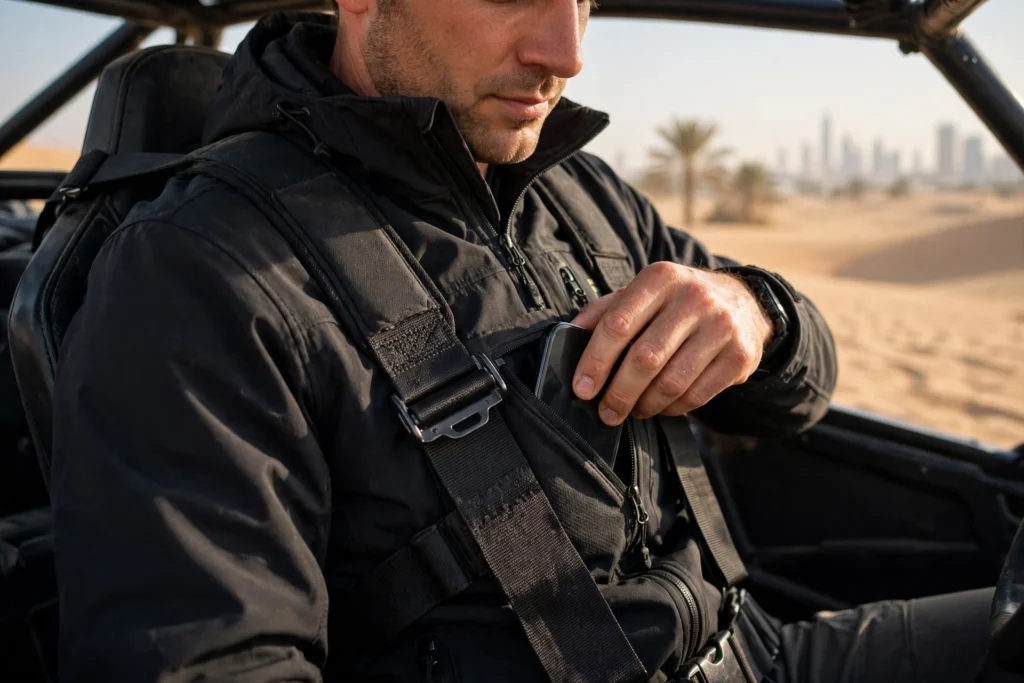
If your phone does film some moving clips, keep them short, brace both elbows against your body, and put the phone away for the steeper sections. And whatever you film, remember where the phone lives between clips — a zipped pocket, every single time.
The action camera: the right tool, used properly
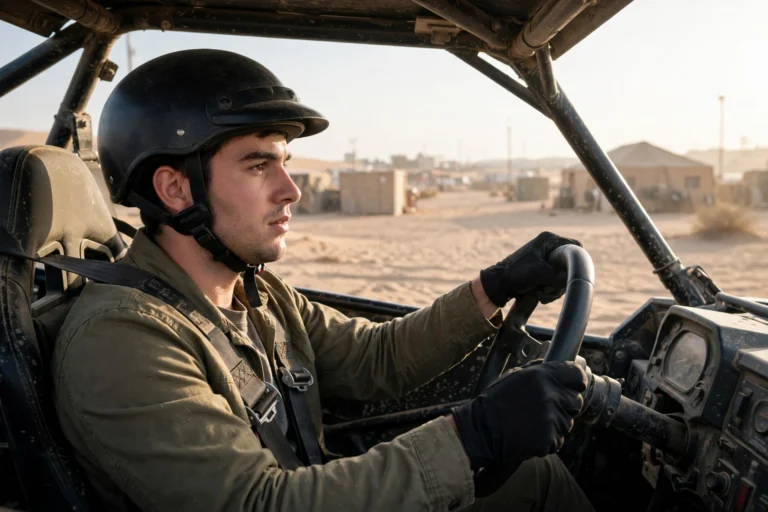
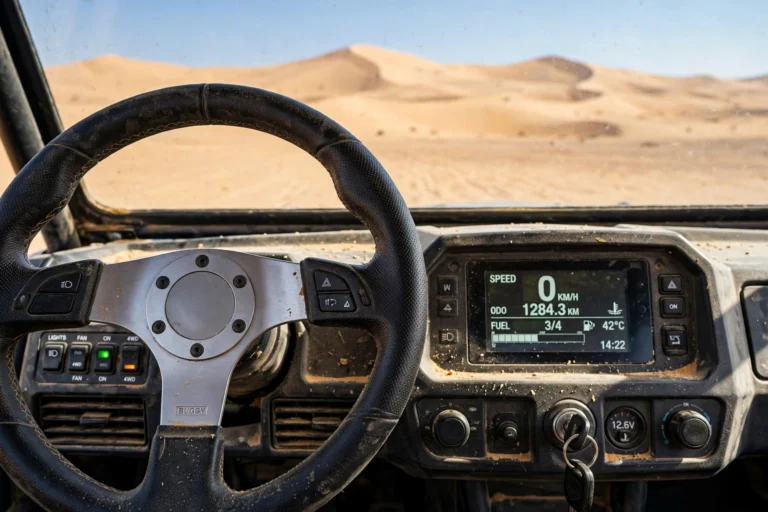
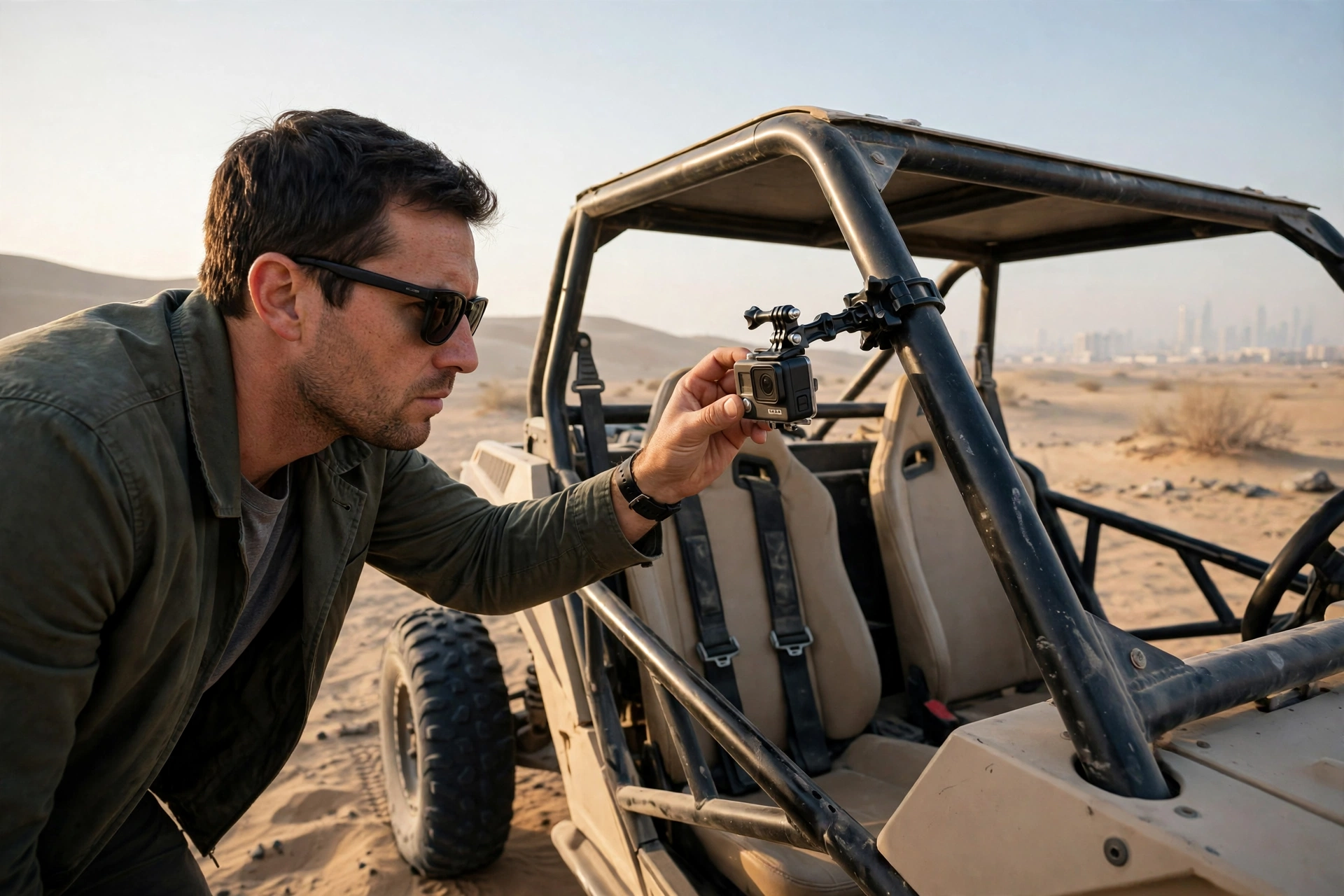
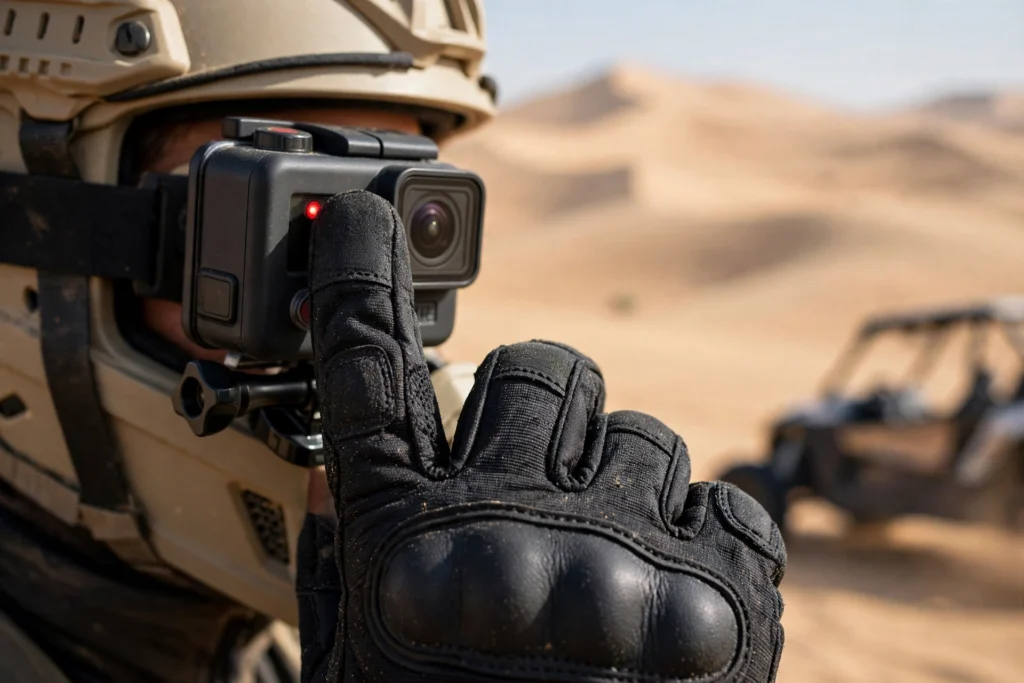
A GoPro or similar action camera exists for exactly this: it is small, sealed against dust, built to be knocked, and stabilises footage in a way a phone bouncing in a hand cannot. Mounted and forgotten, it quietly records the whole ride while you get on with driving — which is the point. On the 2-seater Polaris buggy, a chest mount or a mount your guide approves on the buggy gives the classic driver-view footage: wheel, hands, dunes coming at you.
Used properly means a few things. Mount it before the briefing, not in a rush at the first dune. Use the mount maker’s proper clamp or strap, not tape and hope. Set it recording at a stop, and then leave it alone — reaching for a camera mid-slope is the same mistake as reaching for a phone. And carry a spare battery or start fully charged: cold morning air, heat, and constant stabilisation all eat batteries faster than a normal day out.
One honest warning: a camera mounted on the outside of the buggy will get sandblasted. The housing can take it. Your holiday snaps from the lens afterwards will need the glass wiped clean at every stop.
The passenger trick nobody tells you
In a two or four-seater buggy, the smartest filming setup costs nothing: swap jobs. Let one person drive a section properly, hands on the wheel, attention on the guide. The passenger films the moving clips with a braced phone or the action camera in hand, two hands free to hold it steady and safe. Next section, swap at a stop.
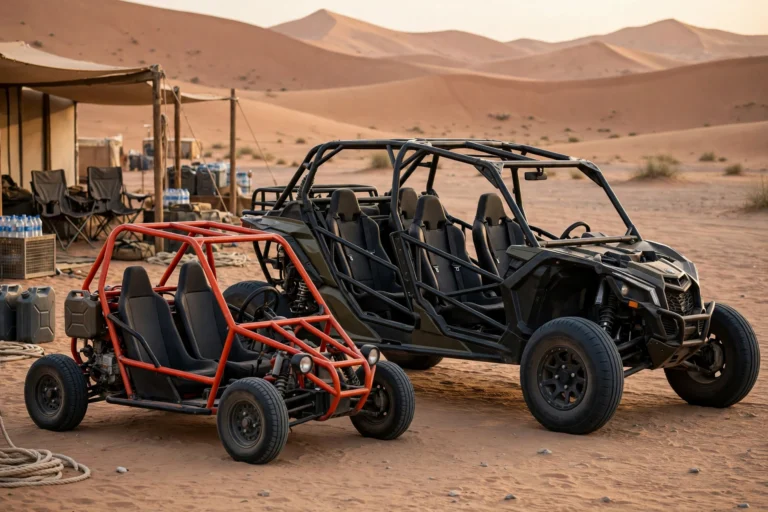
Families do this instinctively and end up with the best footage of all — real driving, real reactions, no wobbling, and nobody trying to steer one-handed through soft sand. If you are browsing the buggy rental options for a group, a four-seater makes this rotation even easier, because there is always someone free to be the camera person.
Option three: film nothing, on purpose
It sounds like a strange thing for a tour company to suggest, but consider putting one full section of the ride away entirely. No screen, no recording, nothing between you and a very big, very quiet landscape. Most riders say afterwards that the section they did not film is the one they remember most clearly — the sound of the engine, the spray of sand off the wheels ahead, the drop over a crest arriving in their stomach rather than on a screen.
You will not miss the footage. You will have the stops, the mounted camera if you brought one, and everyone else’s clips from the group chat. Give yourself at least ten minutes of the real thing.
Protecting whatever you bring
Sand is the enemy, not the bumps. Keep phones and cameras in a sealed pouch or a zip-lock bag when they are not in use — fine desert sand works into charging ports and camera doors and stays there. Never open a camera’s battery door on the dunes if you can avoid it. Back at the hotel, brush devices down with a soft, dry cloth before plugging anything in, and do not blow into ports with your mouth: that just adds moisture to the grit.
Quick questions
Can I hold my phone and film while I drive?
No — and it is not worth it. Driving on sand takes two hands and your full attention. Film at the stops, let a passenger film, mount an action camera, or swap driving and filming between sections.
Where should my phone be while I am driving?
In a zipped pocket or a sealed pouch, every time. Not in a loose pocket, not in the door, not on your lap. Buggies bounce, and an unsecured phone leaves quietly and lands in very findable-looking sand that is surprisingly hard to search.
Is a GoPro worth bringing if I already own one?
Yes, this is exactly what it is for. Bring the proper mount, a full battery and a spare if you have one. Mount it before the briefing and wipe the lens at the stops.
Will the sand damage my phone?
Loose sand on the screen wipes off. The real risk is fine sand in ports and buttons, which a zipped pocket and a sealed pouch prevent. Take reasonable care and your phone will be fine — most riders use theirs at every stop without any trouble.
Capture it, then enjoy it
Sort the camera plan before you set off, and the ride itself gets simpler: phone for the stops, camera for the moving shots, eyes for everything else. If you are not sure which buggy gives your group the best mix of driving and filming chances, message us on WhatsApp at +971 55 719 0598 and we will talk it through.