A Desert Day With a Wheelchair User: What Is Possible
A desert day with a wheelchair user is possible. It takes planning, honest talk, and a few changes to the usual trip. But it can be a good day, and everyone in the group can enjoy it.
The desert is soft sand, and soft sand is hard for wheels. That is the simple truth. So the day is built around the parts that work: the drive, the camp, the views, the food, and the time together.
Start with an honest talk
The first step is a talk before you book. Tell us about the wheelchair, the person’s needs, and how much help they need to move. You do not need to share medical details. We need to know the practical things: can the person transfer to a car seat? How long can they sit without a break? Do they need a flat place to rest?
This talk is how we plan a day that fits. A person who can transfer to a car seat can join the drive and the camp. A person who stays in the chair the whole time needs a different plan. Both are fine. We just need to know which one it is.
The drive: the easy part
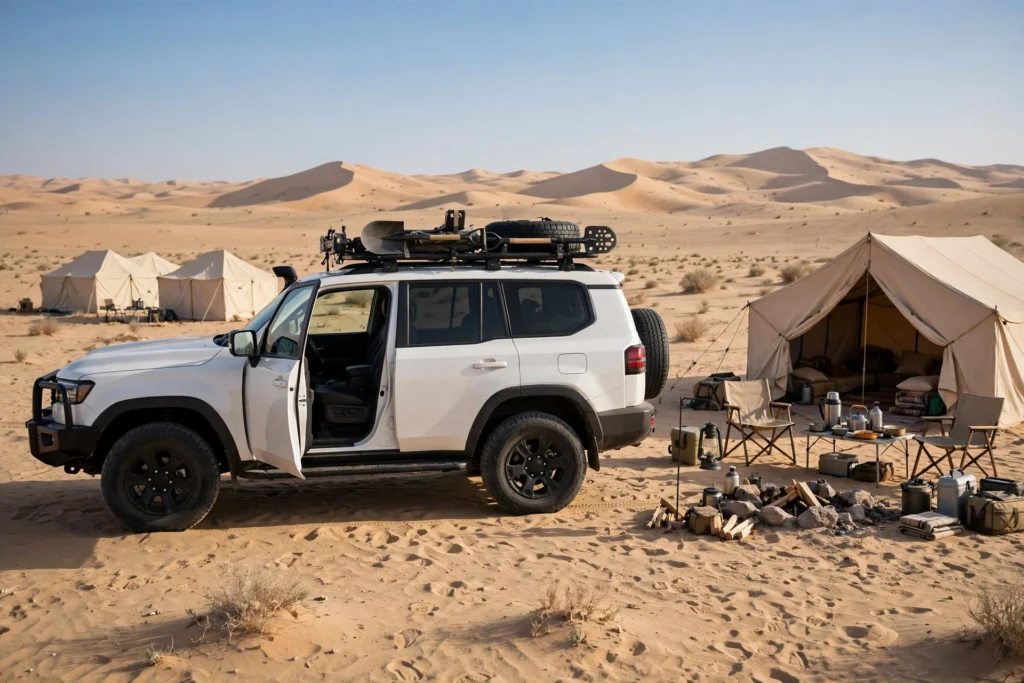
The drive out to the desert is the easy part. The 4×4 picks you up from the hotel and drives on paved roads, then on a desert track. The person in the wheelchair rides in a car seat like everyone else, with the chair folded and stored in the back.
Tell us before the trip if the chair is a manual chair or a powered chair. A manual chair folds small and fits easily. A powered chair is heavy and wide, and not every vehicle can carry it. We need to know the size and the weight so we can send the right car.
The transfer matters. The person moves from the chair to the car seat, and back again at the desert. If that move is easy for them, the day is easy. If the move needs two helpers and a board, plan for that. Bring the helper, bring the board, and allow extra time at each stop.
The dunes: the hard part
Here is the honest part: soft sand and wheelchairs do not mix. A manual chair sinks into the sand. A powered chair can get stuck. Pushing a chair up a dune is hard work, and it is not fun for the person in it.
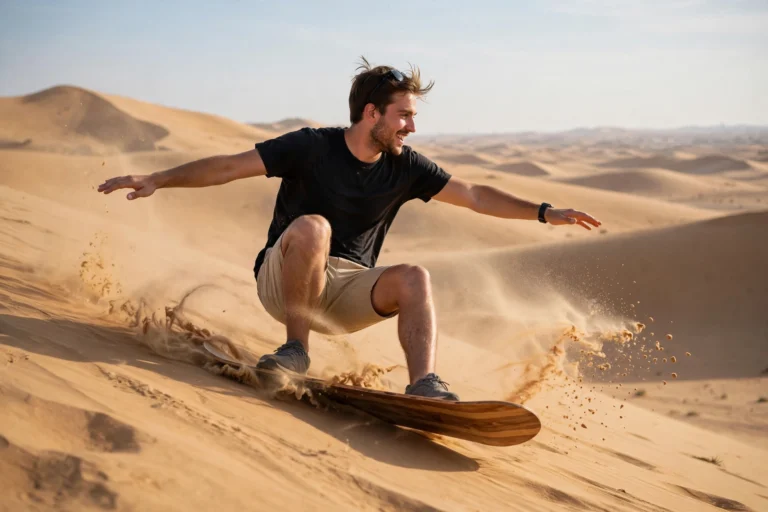
So the dune walk is the part we skip, or change. The wheelchair user stays on the flat, firm ground near the cars and the camp. The rest of the group can walk up a dune, take photos, and come back. No one misses the desert. The wheelchair user still sees the dunes, the sunset, and the wide open sand. They just see it from firm ground.
The camp: the part that works best
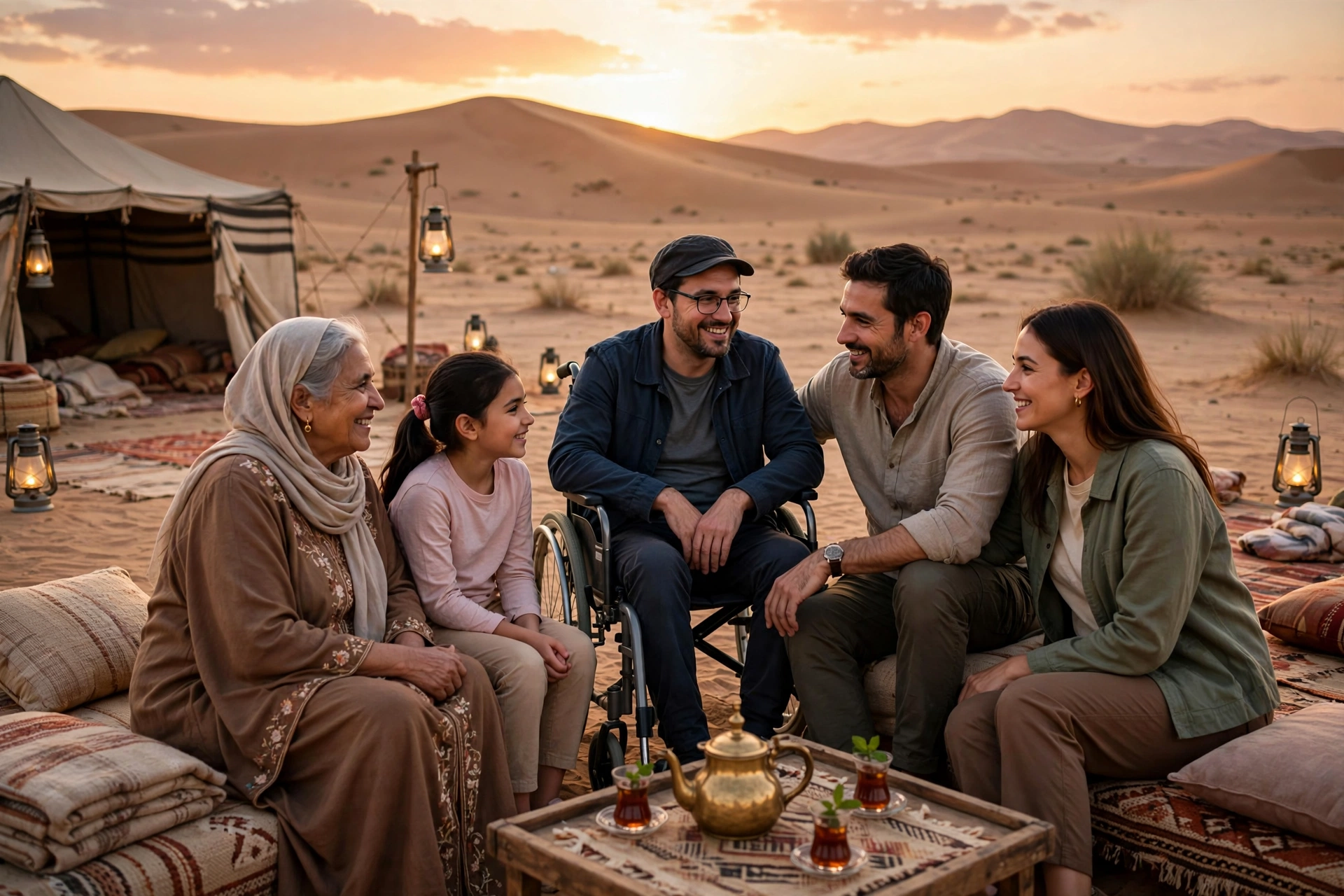
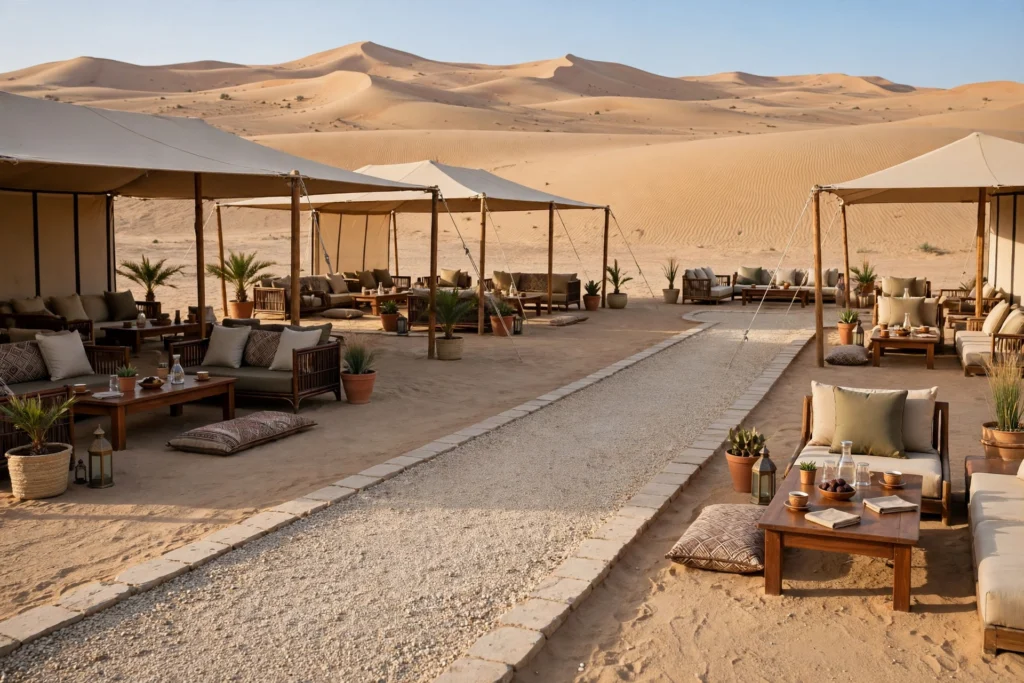
The camp is where a desert day with a wheelchair user works best. A camp is flat. It has paths, seating, shade, and food. It is a place to sit, talk, and watch the desert without fighting the sand.
At the camp, the wheelchair user can join everything: the food, the music, the henna, the coffee, and the sunset view. A low seat or a firm chair helps. A table at a good height helps. Shade helps most of all, because the desert sun is strong and the chair user cannot move into the shade as fast as a walker.
The buggy ride: what to know
A dune buggy is not made for a wheelchair user. The seat is high, the step up is big, and the ride is bumpy. Most wheelchair users will not ride a buggy, and that is fine. The buggy is one small part of a desert day, not the whole day.
Some wheelchair users who can transfer well may still want a short, slow buggy ride as a passenger. If the person can climb into the seat with help and sit upright, a short run on flat ground may be possible. Talk to us about it when you book. We will tell you straight if it is safe.
Planning the day together
Plan the day around the wheelchair user, not around them. That means: pick a camp with flat ground and a toilet that fits a wheelchair. Pick a short drive, not a long one. Build in rest stops. Allow extra time for every transfer. Keep the group together at the camp, so no one is left sitting alone while the rest walk off.
Tell the guide on the day. The guide needs to know who uses a chair, what help they need, and where the firm ground is. A good guide will keep the group near the camp, set up seating with a view, and make sure the wheelchair user is part of every part of the day that works.
Quick questions
Can a wheelchair user go on a desert safari in Dubai?
Yes, with the right plan. The drive and the camp work well. The soft sand does not. Plan around the flat ground and allow extra time for transfers.
Can a wheelchair user ride a dune buggy?
Usually not. The seat is high, the step is big, and the ride is bumpy. A person who transfers well may manage a short, slow passenger ride. Talk to us before you book, and we will tell you straight if it is safe.
Is the camp the best part of the day for a wheelchair user?
Yes. The camp is flat, with seating, shade, food, and a view of the dunes. It is where the whole group can be together without fighting the sand.
A day that fits everyone
A desert day with a wheelchair user is not a smaller day. It is a different day. The dunes stay in view. The camp is the heart of it. The food, the sunset, and the time together are all there. The parts that do not work are left out, and no one pretends otherwise.
Plan it early, talk honestly about what is needed, and the desert will give the whole group a good day.
If you want to plan a desert day for your group, look at the desert safari or the standard safari with dune buggy – or contact us – and message us on WhatsApp at +971 55 719 0598.