How Fast Do Dune Buggies Go? Speed, Answered Straight
How Fast Do Dune Buggies Go? Speed, Answered Straight
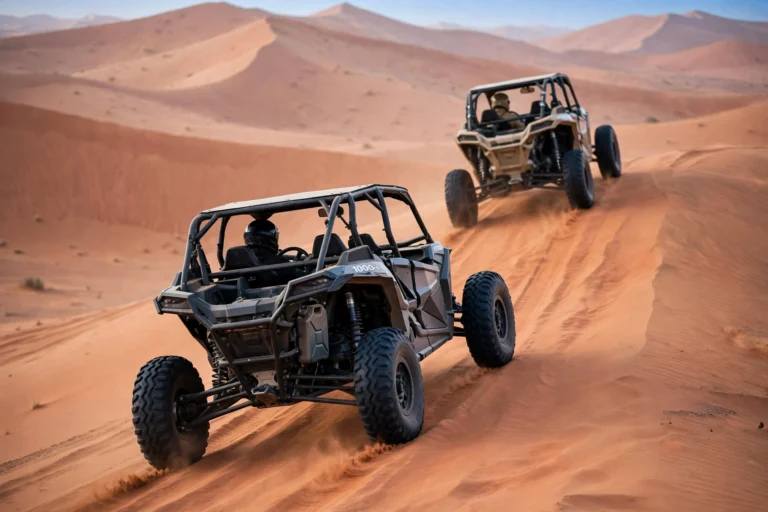
How fast do dune buggies go? The short answer is: it depends on the buggy, the sand, and the driver. A buggy can go fast on a flat, open stretch. It goes slow on a steep dune face. And on a guided ride, the guide sets the pace, not you.
What sets the speed
Three things set how fast a buggy goes on any given day.
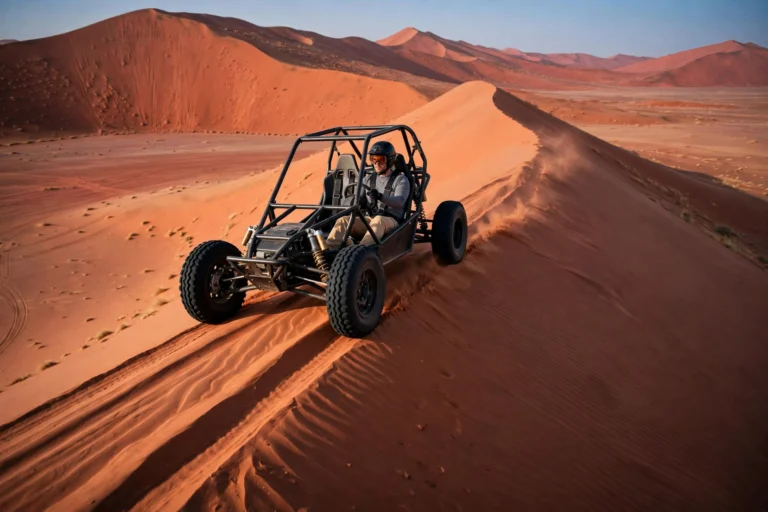
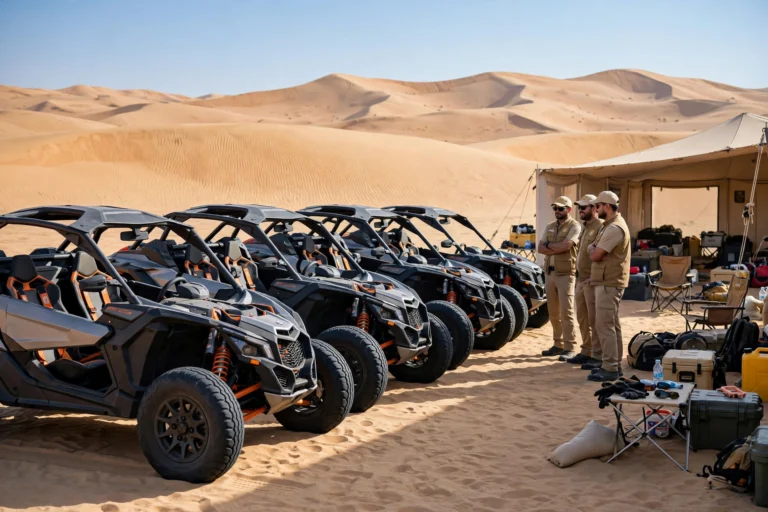
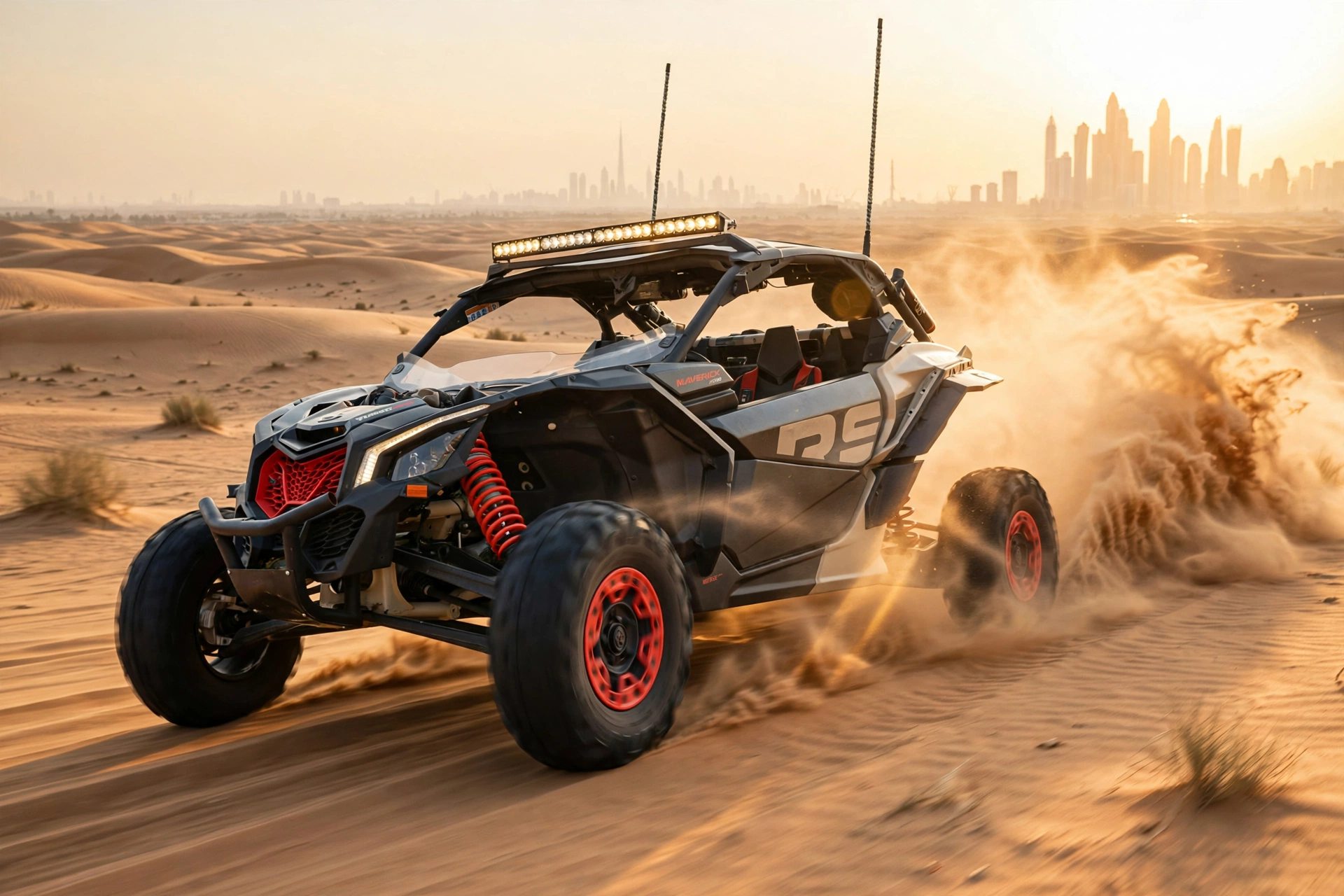
First, the buggy itself. A big two-seat buggy has a strong engine and wide tyres made for sand. It can hold speed on flat ground without much effort. A smaller buggy or a quad bike has less power, so it tops out lower. Our fleet runs Can-Am buggies, which are built for this kind of sand. They have the power to climb a dune and the grip to hold a line across soft ground.
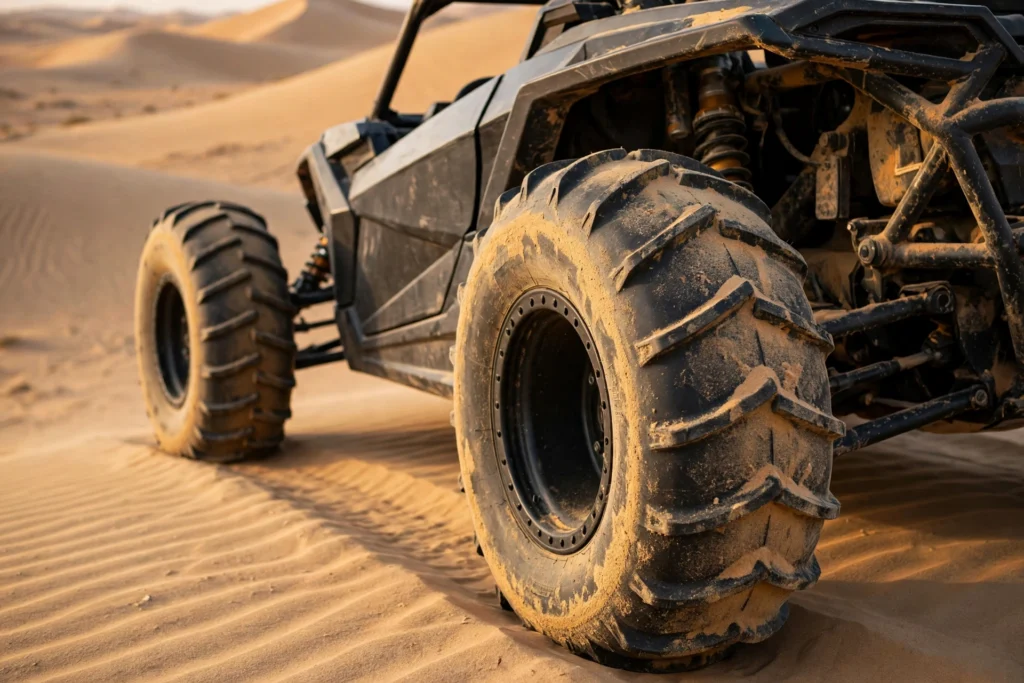
Second, the sand. Soft, deep sand slows a buggy down. The tyres sink in a little, and the engine works harder. Hard, packed sand lets a buggy roll fast. Fresh wind-blown sand is soft. Sand that has been driven on is firmer. The same stretch of desert can feel fast in the morning and slow in the afternoon, when the sun has dried the top layer out.
Third, the driver. A first-time driver goes slower. That is normal, and it is fine. A driver who has ridden before goes faster, because they know how the buggy feels. Nobody should push past what feels safe to them.
The open stretch: where the speed lives
Every ride has open stretches where you can open up a little. These are flat, clear runs between dunes, where the guide can see far ahead. The guide will wave the group on, and you can press the pedal and feel the buggy pick up speed.
This is the part most riders remember. The wind picks up. The sand hums under the tyres. The buggy feels light and quick. It is a rush, and it is over in a minute or two before the next dune face.
The dune face: where speed drops
A dune face is a different job. You climb it slow and steady. If you hit a steep face too fast, the buggy can lose grip or tip its weight the wrong way. The guide shows the line before you climb: where to aim, how much throttle to hold, and where to turn at the top.
Coming down the other side, you go slow too. A dune drop looks soft, but the buggy picks up speed fast on the way down. The guide will keep the group slow on descents. That is not being careful for no reason. It is how you keep the ride safe.
The pace the guide sets
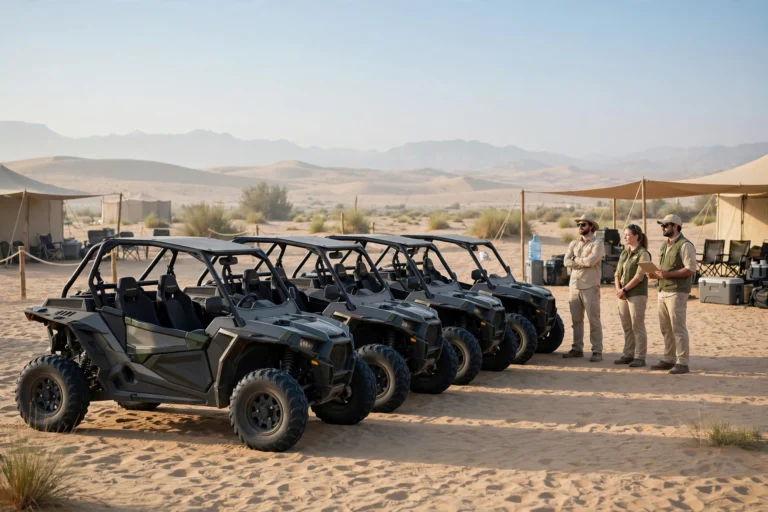
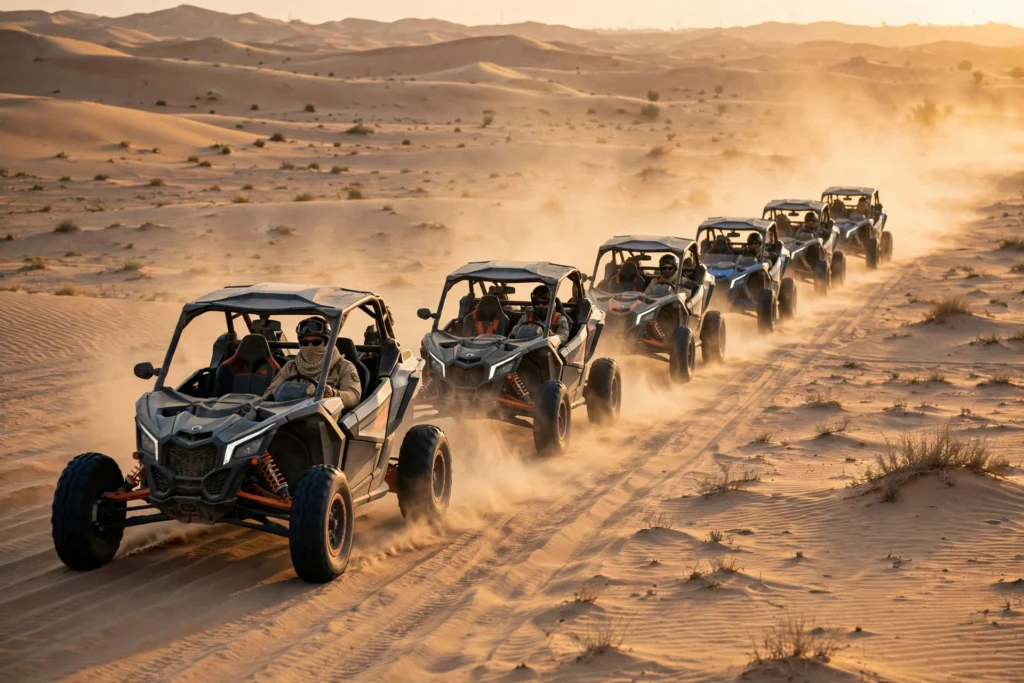
On a guided ride, the guide sets the pace. This is true on every tour, and it is there for a reason. The guide knows the route, the soft spots, and the other groups out on the sand. They also know how fast each rider in the group can go.
The guide rides ahead and signals the pace with hand signs and by their own speed. If the guide slows, you slow. If the guide opens up, you can open up too. Stay in line, keep a gap to the buggy in front, and do not overtake. Overtaking on a dune is how crashes happen.
Speed and safety
Speed and safety go together. A buggy at speed on soft sand needs room to stop. The guide leaves gaps between buggies for this reason. Keep your gap. If the buggy ahead slows, you have time to slow too.
Wear the seat belt. It is not there for show. On a bumpy ride, the belt keeps you in the seat. On a fast stretch, it keeps you steady when the buggy bounces over a ridge.
Hold the wheel with both hands. Keep your thumbs out of the wheel spokes. If the wheel kicks on a rut, a thumb inside the spokes can get hurt. The guide will tell you this before the ride starts. Listen to it.
What speed feels like from the seat
Speed in the desert feels faster than the same speed on a road. There is no road noise, no other cars, and nothing close by to judge speed against. The wind, the sand spray, and the open ground make it feel quick.
That is part of the fun. You do not need a huge speed number to feel the rush. A steady run across open sand, with the dunes sliding past, feels fast enough for most riders.
Can you choose your pace?
Yes, to a point. When you book, tell us what kind of ride you want. A calm, easy ride is fine. A faster, more open ride is fine too. We match the group and the route to what you ask for.
A private ride gives you the most choice. A shared ride follows the group. Either way, the guide keeps the final say on pace, because the guide is the one who can see the sand ahead.
Quick questions
How fast do dune buggies go?
It depends on the buggy, the sand, and the driver. A buggy goes fast on flat, open sand and slow on steep dune faces. On a guided ride, the guide sets the pace for the group.
Can I drive as fast as I want?
On a guided ride, no. The guide sets the pace, and you stay in line behind the group. A private or solo ride gives you more room to set your own pace.
Is a fast buggy ride safe?
Yes, when the guide sets the pace and riders keep their gaps and wear their seat belts. The guide knows the route and the soft spots, and they keep the group at a safe speed.
The straight answer
How fast do dune buggies go? Fast enough to feel it, on the open stretches, and slow enough to be safe, on the dunes. The guide sets the pace, the sand sets the limit, and you set how brave you feel.
If you want to feel it for yourself, look at the Can-Am Buggy Maverick X3 or the buggy rental — or contact us and message us on WhatsApp at +971 55 719 0598. Tell us the pace you want, and we will set the ride up for you.