Henna, Coffee and Dates: Small Desert Traditions, Explained
Henna, Coffee and Dates: Small Desert Traditions, Explained
The big parts of a desert day are easy to see: the buggy ride, the dunes, the sunset. But some of the best moments are small. A henna design on your hand. A tiny cup of coffee. A few sweet dates. This guide to henna desert safari Dubai explains three small traditions you will meet at the camp, so you can enjoy them instead of wondering what they are.
What is henna
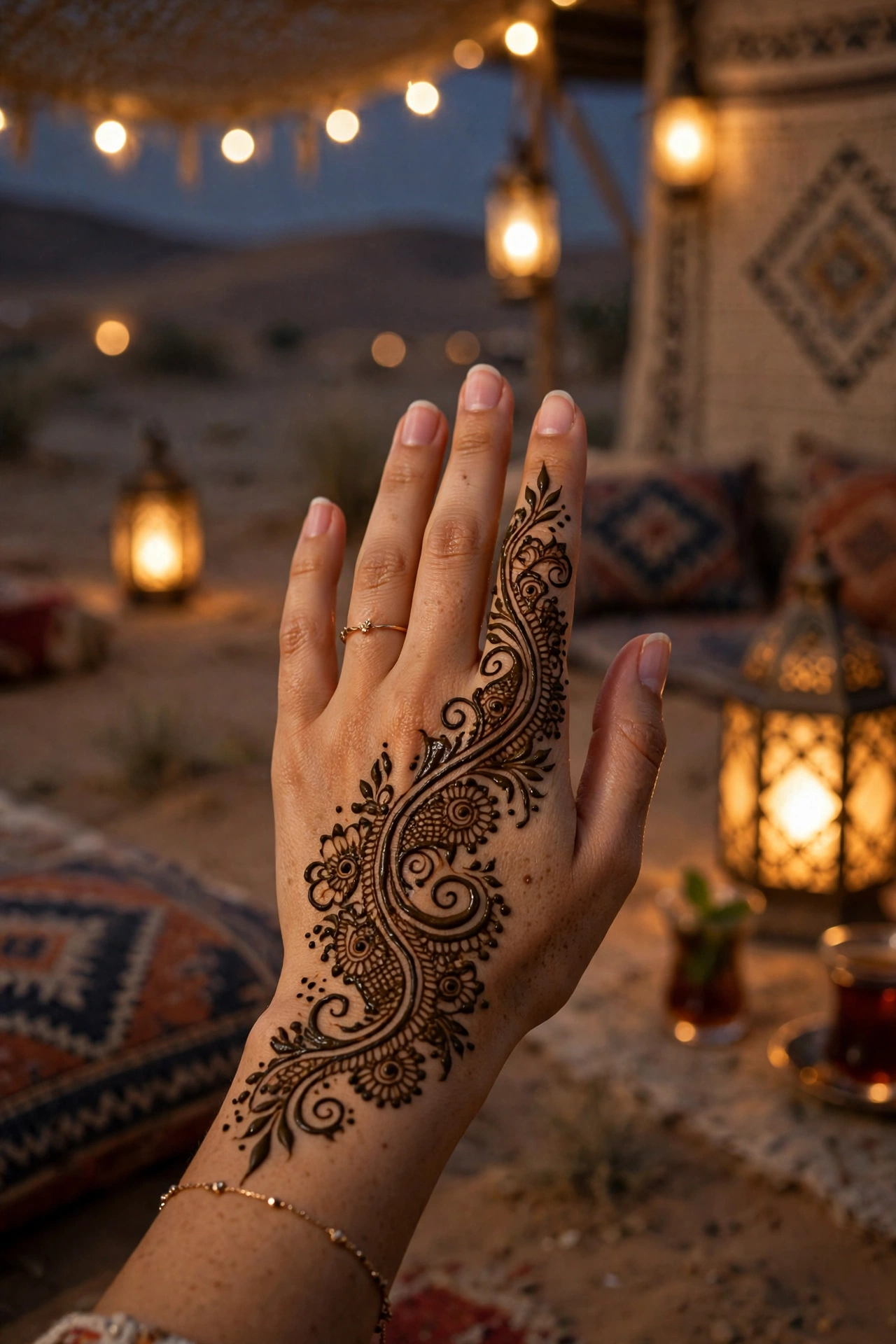
Henna is a paste made from the leaves of the henna plant. It has been used in this part of the world for a very long time. The paste is put on the skin in patterns, and it leaves a brown-orange stain that lasts for days.
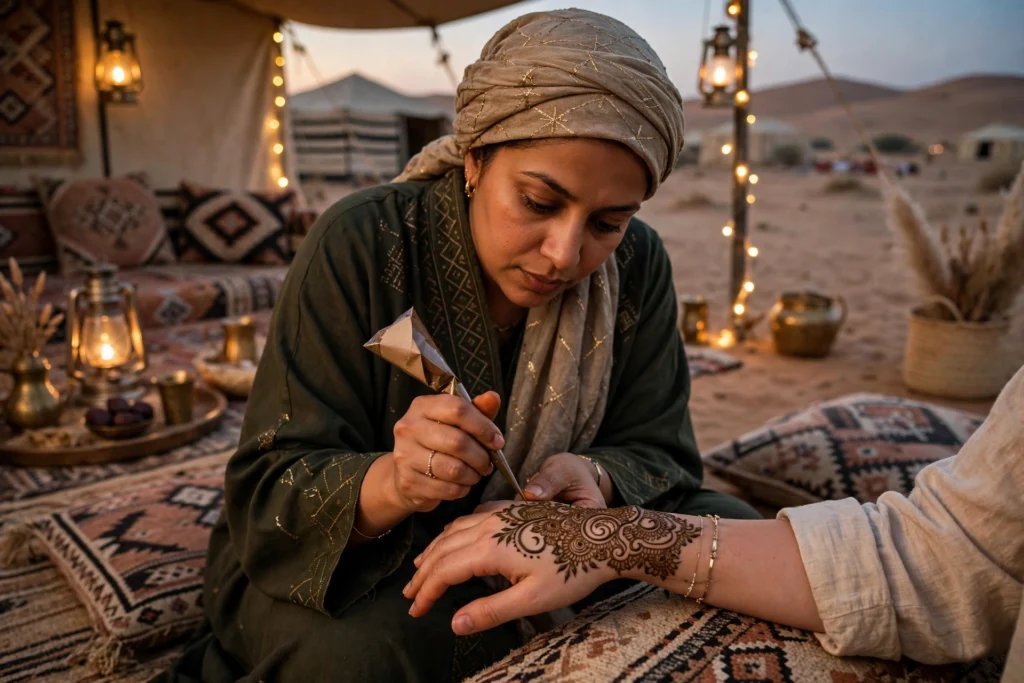
At a desert camp, a henna artist sits at a small table, usually near the entrance or by the seating area. You sit down, pick a design, and the artist draws it on your hand or arm with a small cone.
The designs are mostly flowers, leaves, and curves. Some are simple. Some are detailed and cover the whole hand. You can ask for a small design if you do not want a big one. A small flower on the back of the hand takes only a few minutes.
How henna is done at the camp
First, wash your hands. Dry skin takes the henna better. Then sit still while the artist works. The paste feels cool and wet. It does not hurt. It feels a bit like someone drawing on your hand with a soft pen.
The artist will tell you how long to leave the paste on. Usually around 20 to 30 minutes. While you wait, do not touch it. Let it dry. It will flake off on its own. Once the flakes fall off, the stain underneath will be light orange. It gets darker over the next day.
Try not to wash the design with soap for the first few hours. Water is fine, but soap fades it faster. The stain lasts about a week on most people, and it fades bit by bit.
Who can get henna
Anyone can get henna. It is popular with women and girls, but men get it too. Kids love it — a small design on a child’s hand is one of the easiest wins of the evening.
If your skin is very sensitive, tell the artist. The henna used at camps is natural, but it is still worth a quick word. If you are not sure, ask for a tiny test spot first.
One note for parents: keep an eye on small kids while the paste dries. They will want to touch it.
Arabic coffee, the small cup
Arabic coffee is not like the coffee most people know. It is light, golden, and spiced. It is made from lightly roasted beans, with cardamom, and sometimes a little saffron. It has no milk and no sugar.
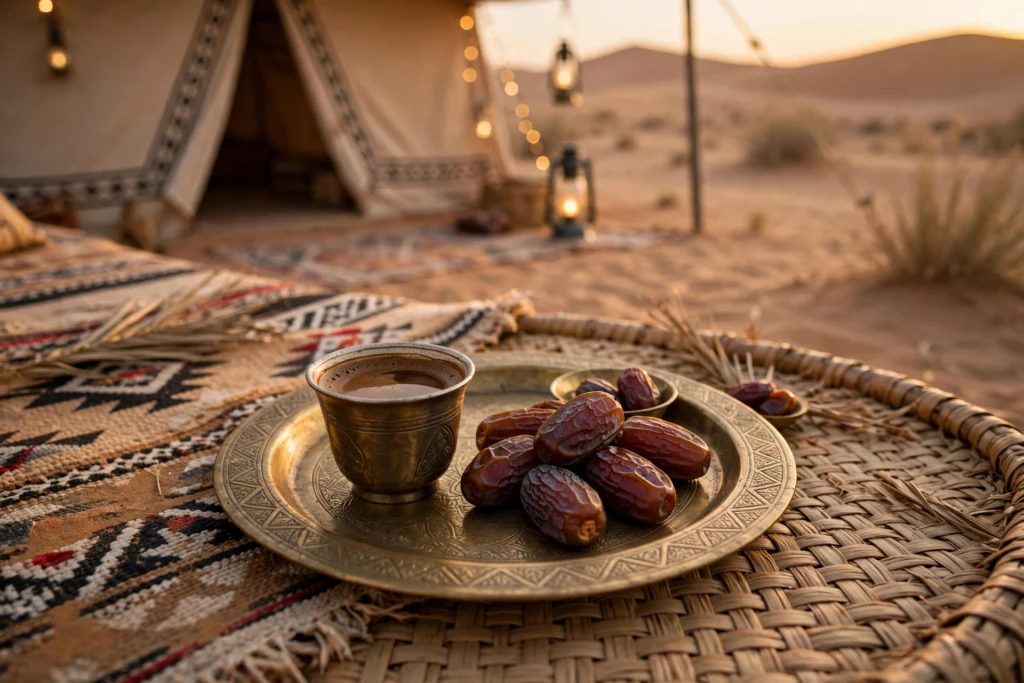
It is served in a tiny cup with no handle, called a finjan. The cup is filled only a quarter full. That is normal. You are meant to drink it in small sips, not in one gulp.
The coffee is poured from a long-spouted pot called a dallah. Take the cup with your right hand. That is the polite way here.
How to drink it, and how to stop
Drink the coffee slowly. It is hot, and the taste is new for most people. It is bitter, with a warm spice taste from the cardamom. You do not have to finish it. A few sips is fine.
When you have had enough, wiggle the cup gently from side to side as you hand it back. That is the sign that you are done. If you just hand it back without the wiggle, the server will fill it again. That is the custom — the host keeps pouring until you say stop with the wiggle.
Dates, the desert’s old snack
Dates come with the coffee. They are the small brown fruit of the date palm, and they have been the desert’s food for a very long time. They keep well in the heat, they travel well, and they give quick energy.
At the camp, dates are served on a tray, often with the coffee. They are sweet, soft, and a bit sticky. Eat one or two while you wait for dinner. They take the edge off your hunger without filling you up. Eat them with the coffee — the bitter coffee and the sweet date go well together.
Why these three things matter
Henna, coffee, and dates are not just camp extras. They are old desert customs. In the desert, a guest was offered coffee and dates as a welcome. It meant: you are safe here, sit down, rest. Henna was part of celebrations — weddings, festivals, and good news.
When you take part in these small things, you are taking part in something that people in this desert have done for a long time. That is worth a few minutes of your evening.
When to do them
Do the henna early in the evening, soon after you reach the camp. That gives the paste time to dry before dinner.
The coffee and dates come to you. Servers walk around with the tray while you sit. Take them when they come.
Quick questions
Does henna hurt?
No. The paste is cool and wet, and it feels like someone drawing on your skin. It does not sting. It dries and flakes off on its own.
Is Arabic coffee strong?
It has caffeine, but the cup is tiny, so it is not a big dose. The taste is bitter and spiced. If you do not like coffee, try one small sip. You do not have to finish it.
Small moments, good memories
The buggy ride is what you will tell people about. But the small moments are what you will remember: the cool henna paste, the tiny cup of spiced coffee, the sweet date on the tray. They cost nothing extra. They take a few minutes. And they are the most local part of the whole evening.
If you want a safari night that has all of this in it, look at the desert safari or the standard safari with dune buggy — or contact us and message us on WhatsApp at +971 55 719 0598. Ask us about the camp evening, and we will tell you what is on that night.