What Happens at the Desert Camp in the Evening?
The driving parts of a safari get all the attention — the dunes, the buggies, the bashing — but ask returning guests what they remember most warmly, and a surprising number say: the camp. It is the evening’s slow centre, where everything changes pace. If you are booking for the first time and picturing it vaguely as “some dinner thing at the end”, this is the real picture. Here is what happens at the desert camp, from arrival to the drive home.
Arrival and the welcome
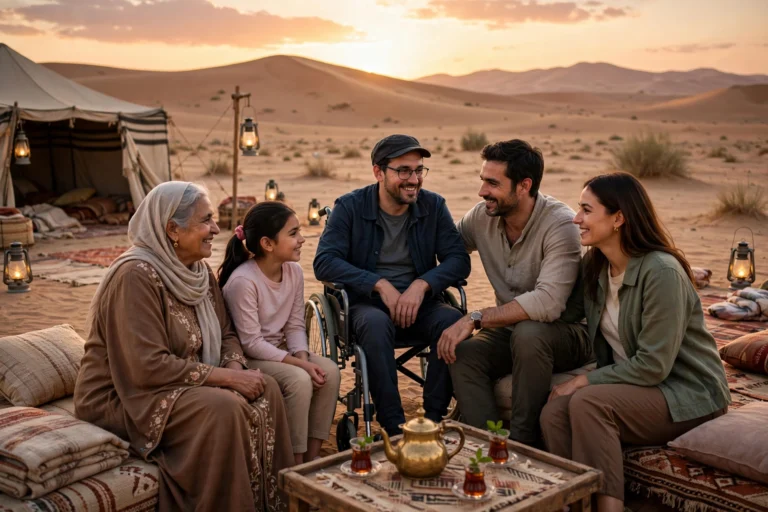
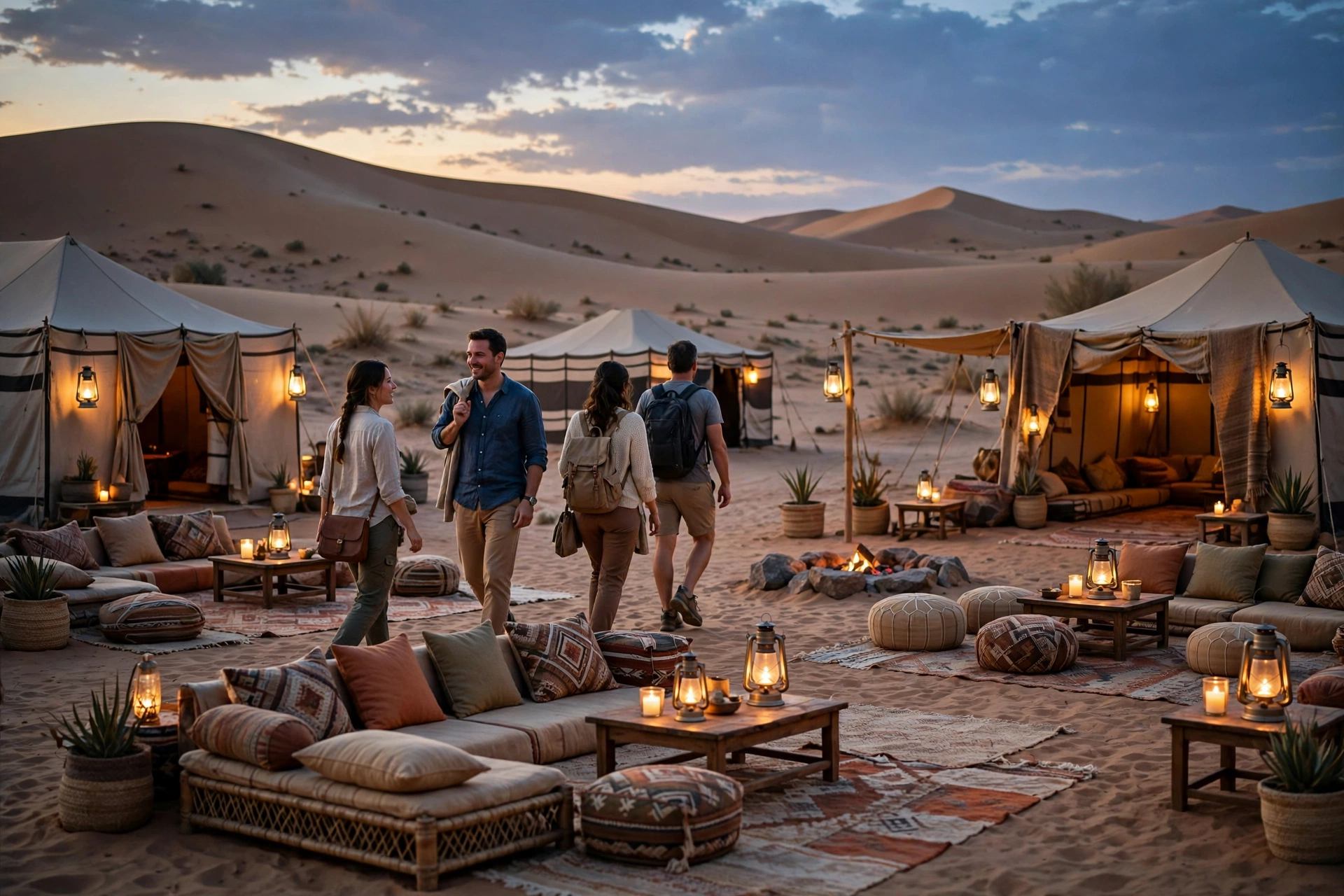
After the last dune stop, the vehicles roll into camp as the light turns gold. The camp sits in a clearing among the dunes — low tables and cushioned seating arranged around a central stage, stalls along the edges, lanterns coming on as the sky darkens. You are welcomed in the old way: Arabic coffee, dates, and soft drinks to wash the dust off. There is no rush and no programme being shouted at you; the first ten minutes are simply settling — finding your table, shaking out your shoes, and watching the desert do its sunset.
The wandering hour
Before dinner, the camp spreads its small activities around the edges, and you drift between them as you please:
- A short camel ride by the gate — a few unhurried minutes, and the best photo of the evening for many people.
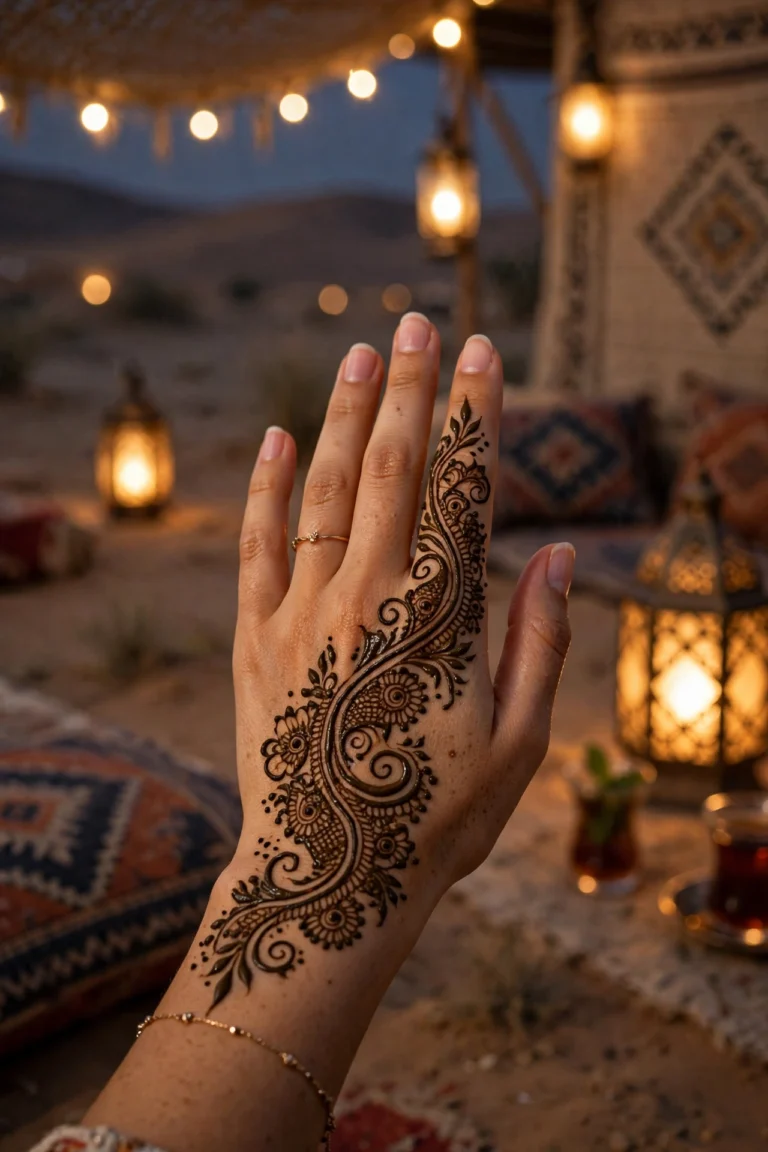
- Henna painting at one of the stalls, quick and pretty, popular with everyone.
- A photo with a falcon, the bird calm on your arm, handled by its keeper.
- Traditional dress to try on for pictures.
- The shisha corner for those who want it, settled and unhurried.
- One last slide on the sandboards at the camp dune, in the last of the light.
On the standard safari with dune buggy this hour also carries the pleasant tiredness of the buggy ride still in your arms; on the premium safari with dune buggy the same hour runs at a slightly more spacious pace. Either way, it is the gentlest part of a desert safari — deliberately so, before dinner.
Dinner: the BBQ at the heart of it
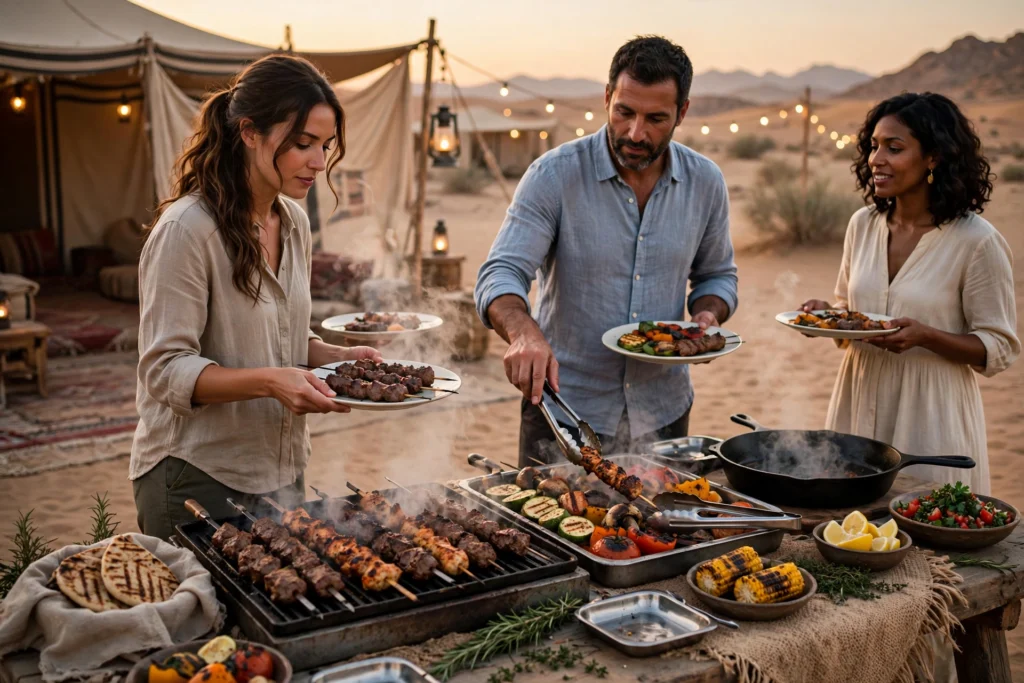
When the buffet opens, the camp’s centre of gravity shifts to food. The BBQ runs hot — grilled meats and kebabs alongside rice, salads, breads and vegetarian dishes, with desserts and fruit to finish. You serve yourself, return as often as you like, and eat at your low table under a sky that by now has gone properly dark and full of stars — the one ceiling no city restaurant can copy. Guests with dietary needs do fine here if the team knows in advance; mention it when you book and the camp will be ready for you.
The shows: colour, rhythm and fire
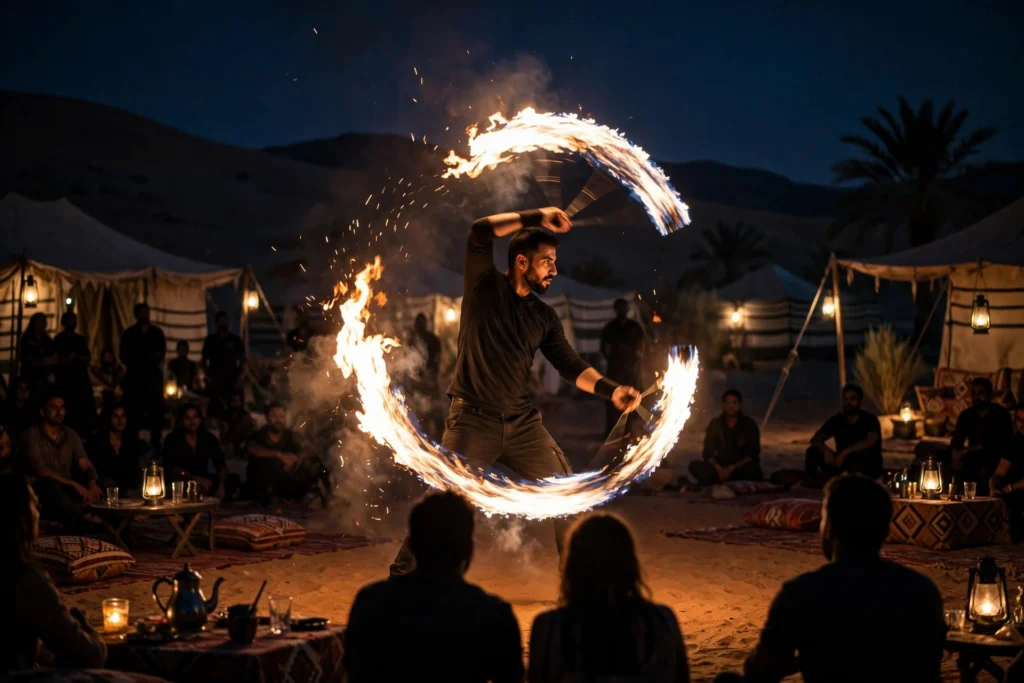
As dinner settles, the stage wakes up. The evening’s entertainment runs in acts while you eat and watch from your cushions: the Tanoura dancer spinning in a whirl of lit, coloured skirts; a belly dance performance; and, as the traditional finale, the fire show — a performer breathing, spinning and juggling flame against the dark dunes, the one act that reliably stops every conversation in camp. A note for honesty: during Ramadan and certain religious days the music and dance acts are respectfully adjusted or paused, and the camp leans into the quiet, the food and the fire — many guests find those evenings just as special, differently.
The wind-down and the ride home
After the fire show, the evening closes the way it opened — gently. Tea and coffee make a last round, the lights dim a little, and there is a moment many guests describe as the day’s best: standing just outside the camp’s glow, in the cool dark, looking at how many stars the desert keeps hidden from the city. Then your driver gathers the group, the cars line up, and the convoy runs back through the night to your hotel. Most people sleep a little on that drive. It is considered a compliment.
Small tips for the camp evening
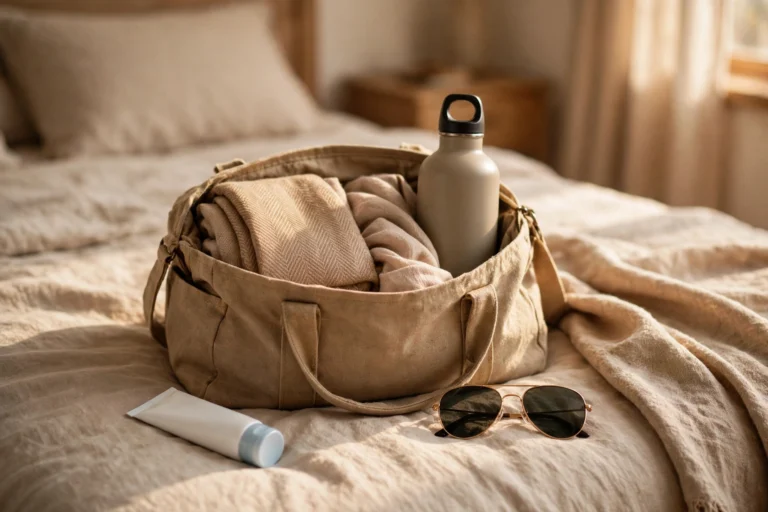
- Bring a light layer. After sunset the desert cools faster than visitors expect, even after a hot day.
- Carry a little cash or a card for the extras you might fancy — photos, souvenirs, upgraded drinks.
- Eat before the shows peak if you want a clear view; the best cushion spots fill as the first act starts.
- Step outside the lights once. Thirty seconds of real desert dark and silence is worth the whole walk to the camp’s edge.
Quick questions
How long do we spend at the camp?
Typically a good two to three hours — long enough for the wandering hour, a relaxed dinner and the full run of shows without any part feeling rushed.
Is the food suitable for vegetarians and children?
Yes — the buffet includes vegetarian dishes, salads and breads, and children manage happily on the milder options. Mention allergies or strict requirements when booking so the camp can prepare.
Are the shows the same every night?
The line-up follows the same loved shape — Tanoura, dance, fire — with performers and details varying a little. During Ramadan, dance and music elements are respectfully adjusted.
What time do we get back to the hotel?
Evening safaris usually have you home in the later evening, depending on your area and traffic. Your driver confirms the plan on the night, and the team can give you the expected window when you book.
The camp is not the end of the day — it is the point of it
The dunes give the safari its thrill, but the camp gives it its memory: coffee at sunset, dinner under stars, fire against the dark, and a quiet ride home. That is what happens at the desert camp, every evening, at walking pace. To book yours, message us on WhatsApp at +971 55 719 0598, tell us your date and group size, and we will save your table at the edge of the dunes.