Driving on Soft Sand: Simple Tricks That Stop You Getting Stuck
Every dune has two kinds of sand. The firm side, where the wind has packed it down, grips your tyres and feels almost like a dirt road. The soft side is loose and deep, and it grabs the wheels, slows you down, and — if you handle it badly — buries the buggy up to its belly.
Getting stuck is the one thing almost every first-time driver worries about. The good news: driving a dune buggy on soft sand comes down to a few simple habits your guide will show you, and getting stuck is mostly avoidable. Here they are before you go, so the briefing on the day simply confirms what you already know.
Keep your momentum, gently
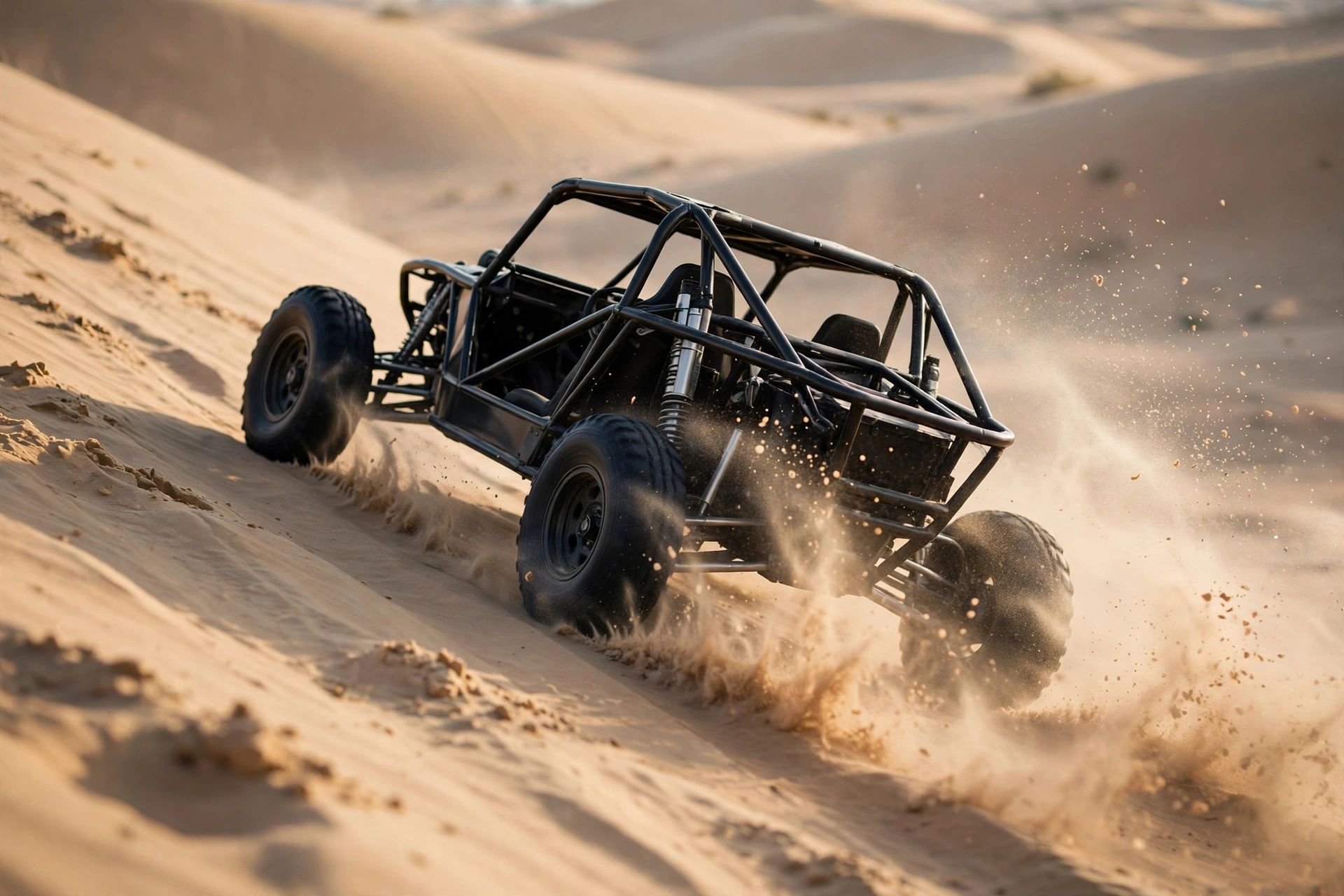
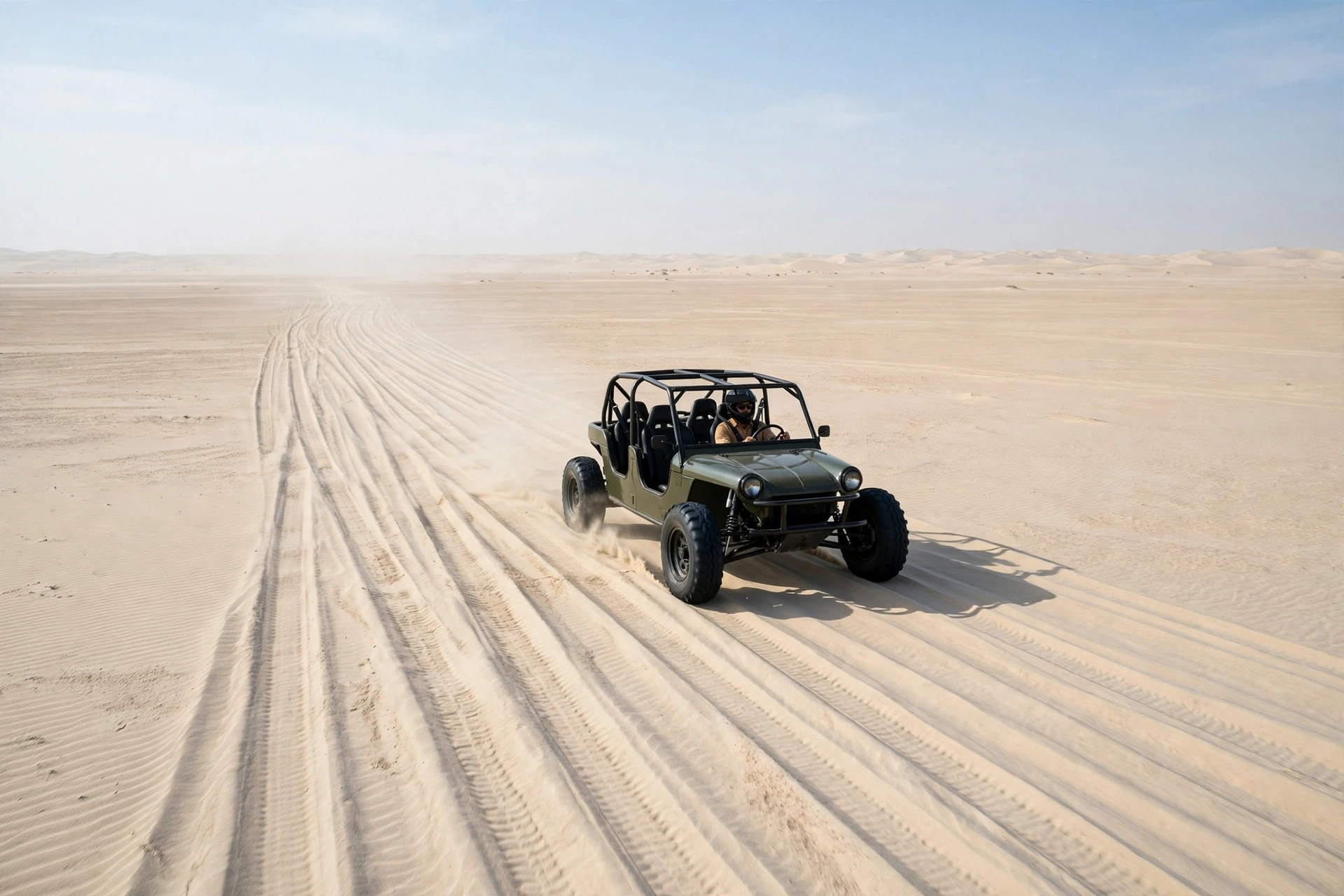
Soft sand punishes stopping and starting. When a buggy is moving steadily, it rides on top of the sand. When it slows to a crawl in the soft stuff, the wheels sink and start to dig.
The trick is a steady, even speed — not fast, not aggressive, just constant. Think of it as keeping the buggy floating. Ease the pedal down before you reach the soft patch, hold that speed through it, and only relax once you are back on firmer ground.
This is also why your guide keeps a proper gap between buggies. If the buggy in front slows down suddenly and you have to brake in deep sand, you lose the momentum that was carrying you. Space is not just a safety rule; it is what keeps everyone moving.
Climb straight, come down straight
Dunes have a shape, and the buggy likes them best in straight lines. Climb facing up the slope, and come down facing down it. The dangerous move is turning sideways across a steep slope — that is how a buggy can tip — so your guide’s route avoids it, and so should you.
Going up, keep that even speed and let the buggy work. Machines built for this, like the Polaris RZR XP Pro, have the power and the wide stance to climb steadily without being pushed hard. Going down, ease off and let the buggy roll under control rather than racing the slope.
Near the top of a dune, lift off a little. You cannot see what is on the other side until you are over it, and the other side is often steeper than you expect.
Gentle hands on the wheel
On tarmac, you turn the wheel and the car answers at once. On sand, the answer comes a little slower, and the buggy can wander slightly in the loose surface. New drivers often respond by making bigger and bigger steering movements, which makes things worse.
Use small, calm movements. Point the buggy where the guide’s tracks go and let it settle. The wide tyres on these machines are made to spread the weight and find grip in soft ground — they do that best when you are not fighting them.
Read the sand the way the guide does
With a little practice you can start to see the difference. Firm sand looks smooth and darker where the wind has packed it. Soft sand looks pale, rippled and loose, and it piles up on the sheltered side of the dune, away from the wind.
You do not need to master this on your first ride — your guide reads the route for the whole group. But once you notice it, you will understand why the guide’s line bends the way it does, and the ride becomes more interesting, not just faster.
If you do get stuck, do this
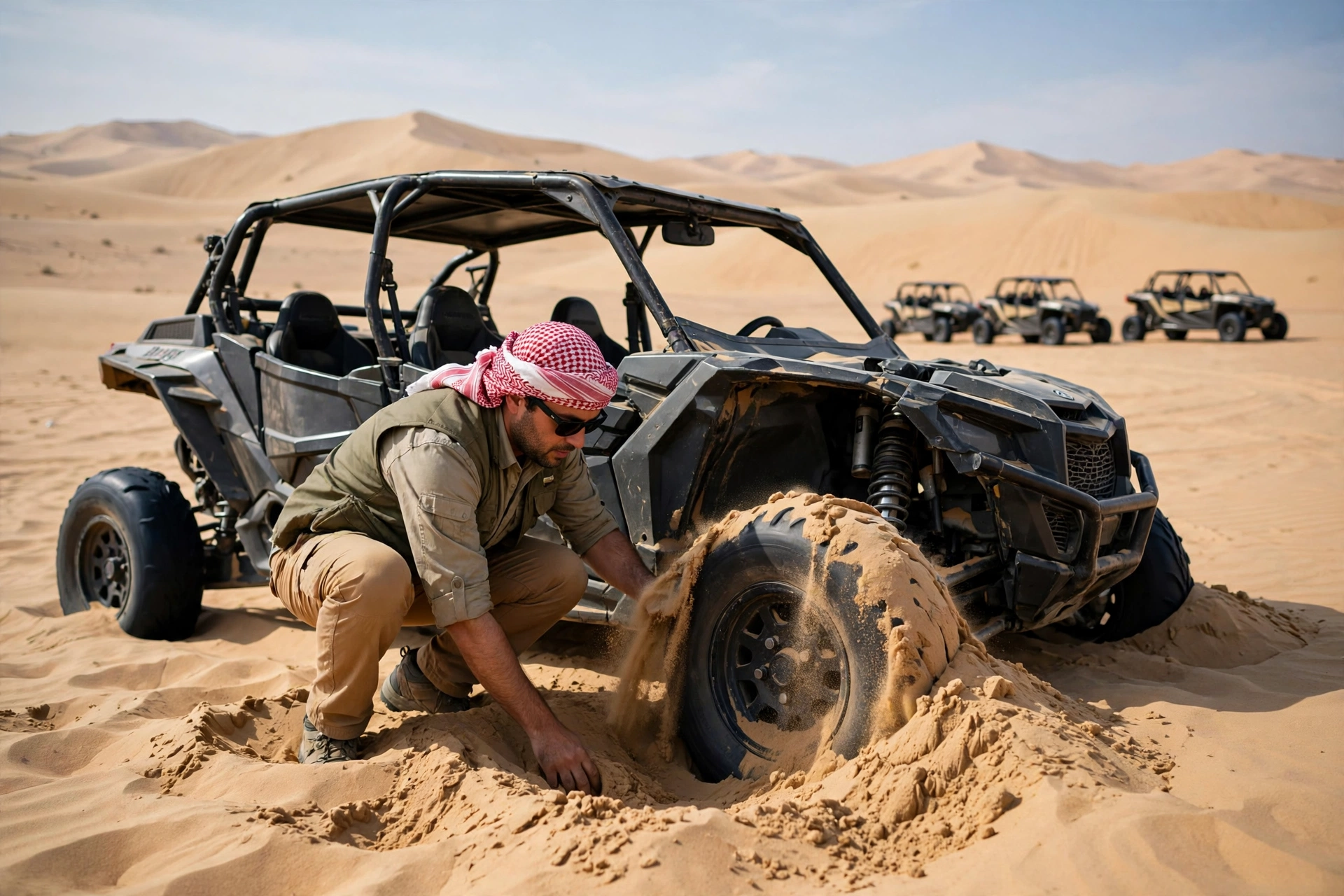
It happens, even to people who listen to everything. A moment’s hesitation in the wrong patch, and the wheels dig in. When it does:
- Stop spinning the wheels. Pressing the pedal harder digs the hole deeper. The moment the buggy stops moving forward, take your foot off.
- Stay in the buggy, harness on, and wait. Your guide will see the group has a gap and will come back to you.
- Let the guide free you. Guides deal with this every week. Sometimes it means digging a little sand away from the wheels; sometimes a gentle push or a pull. It takes minutes, and it is part of desert driving, not a failure.
The powerful machines help here too. A buggy like the Can-Am Maverick X3 has the clearance and low-down power to crawl out of soft patches that would stop a lesser machine — one reason the guide matches the route to the buggy and the group, not the other way round.
The one habit that covers almost everything
If you only remember one thing, remember this: follow the guide’s tracks, at the guide’s pace, with space in front of you. The guide has already chosen the firmer line and the safe slopes. Nearly every case of getting stuck starts with someone leaving that line or crowding the buggy ahead.
Quick questions
Is getting stuck dangerous?
No. It is an inconvenience, not an emergency. You stay strapped in, the guide comes back, and the buggy is freed in a few minutes. The route stays close to support at all times.
Should I press the pedal harder if the buggy slows in soft sand?
Only while you are still moving steadily forward. If the buggy has stopped moving, more pedal just digs the wheels deeper. Take your foot off and wait for the guide.
Are some buggies better in soft sand than others?
Yes. Wide tyres, good ground clearance and strong low-speed power all help. That is why the fleet is made up of proper desert machines — you can see them all on our buggy rental page.
Do I need off-road experience to handle soft sand?
None at all. The briefing before the ride covers exactly this, first-timers get a little practice on easy ground, and the guide’s line keeps you on the friendlier sand while you learn.
Come and feel it for yourself
Reading about soft sand only goes so far — ten minutes behind the wheel teaches more than any guide like this one. If you have questions about the buggies, the route or whether it suits a complete beginner, message us on WhatsApp at +971 55 719 0598 and we will talk you through it.