Helmets, Goggles and Gloves: Why the Gear Matters More Than You Think
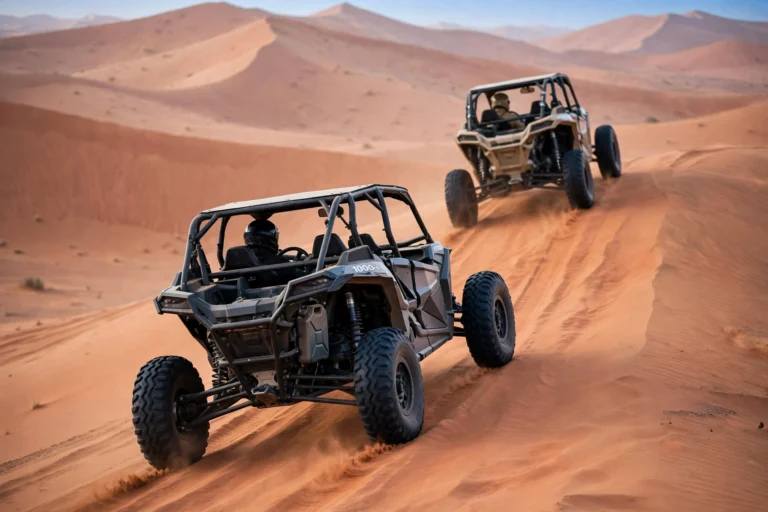
When people picture a dune buggy ride, they picture the machine: the wide tyres, the engine, the dunes. The three things that actually shape how the ride feels get handed to you at the base, almost as an afterthought — a helmet, a pair of goggles, and gloves.
Most riders stuff the gloves in a pocket, treat the goggles as optional, and wear the helmet because they have to. Half an hour later, out on the sand, every one of them has changed their mind. This is what each piece of dune buggy safety gear is really doing for you, in a buggy or on a quad — the same kit comes with our Yamaha quad bike rides as with the buggies — and how to wear it so it works.
The helmet: more than the obvious job
Yes, the helmet protects your head. In an open buggy with a roll cage and a four-point harness, serious impacts are rare — but the desert throws smaller things at you constantly. The buggy ahead flicks up stones and packed clumps of sand. A low branch at the base, a jolt over an unexpected bump, a gust that arrives full of grit: the helmet handles the small knocks so you stop noticing them.
It also does two quieter jobs. It keeps the sun off your head and the wind noise down, which matters more than people expect over an hour of riding. A rider who is not squinting, deafened and slowly cooking is a rider who is actually enjoying the dunes.
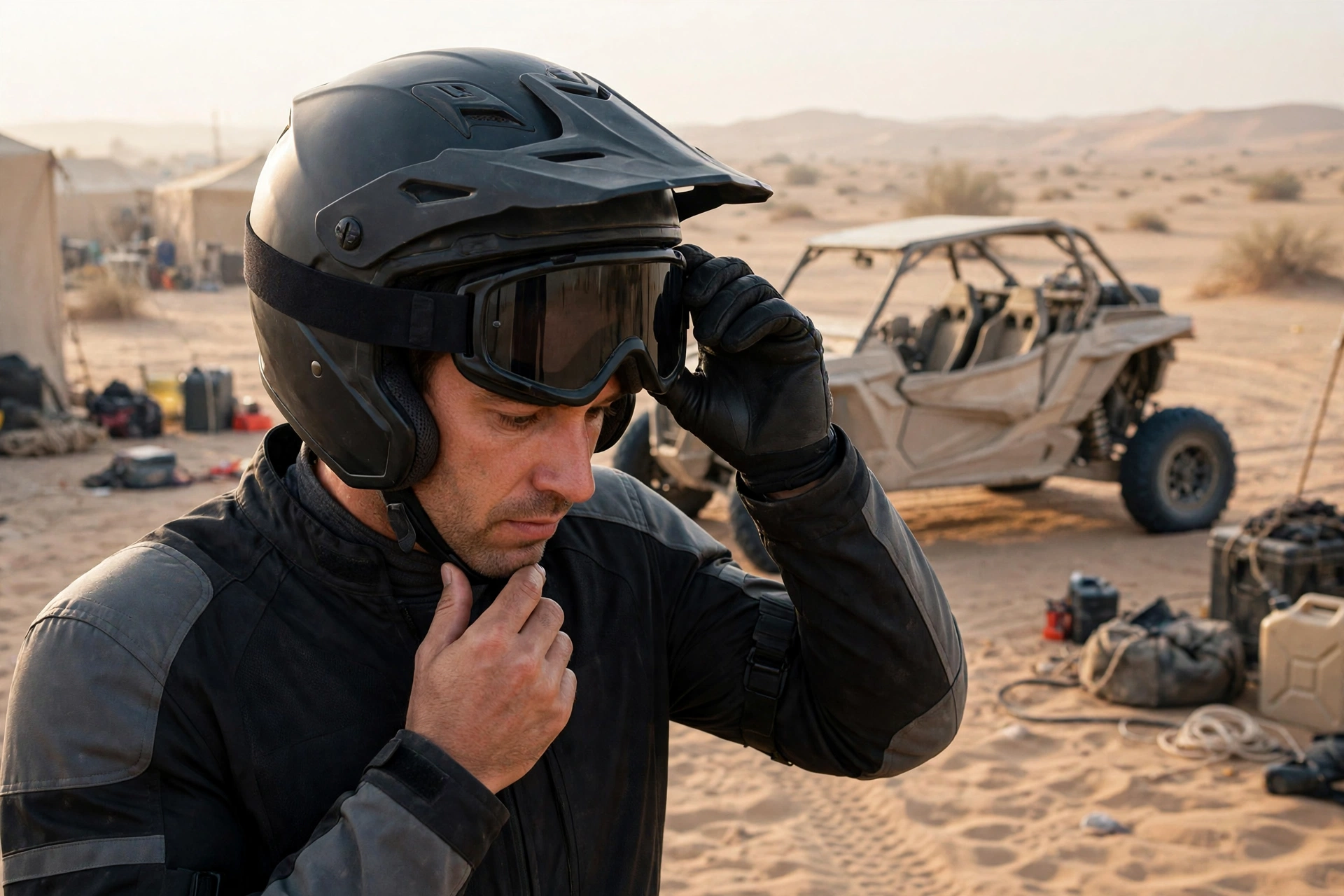
Fit is everything. A helmet should sit level, feel firm all the way around, and not rock when you shake your head. The strap needs to be snug under your chin — not tight enough to annoy, never loose enough to lift. If yours wobbles, say so before you set off. Guides carry different sizes, and swapping takes a minute.
Goggles: the piece people underestimate most
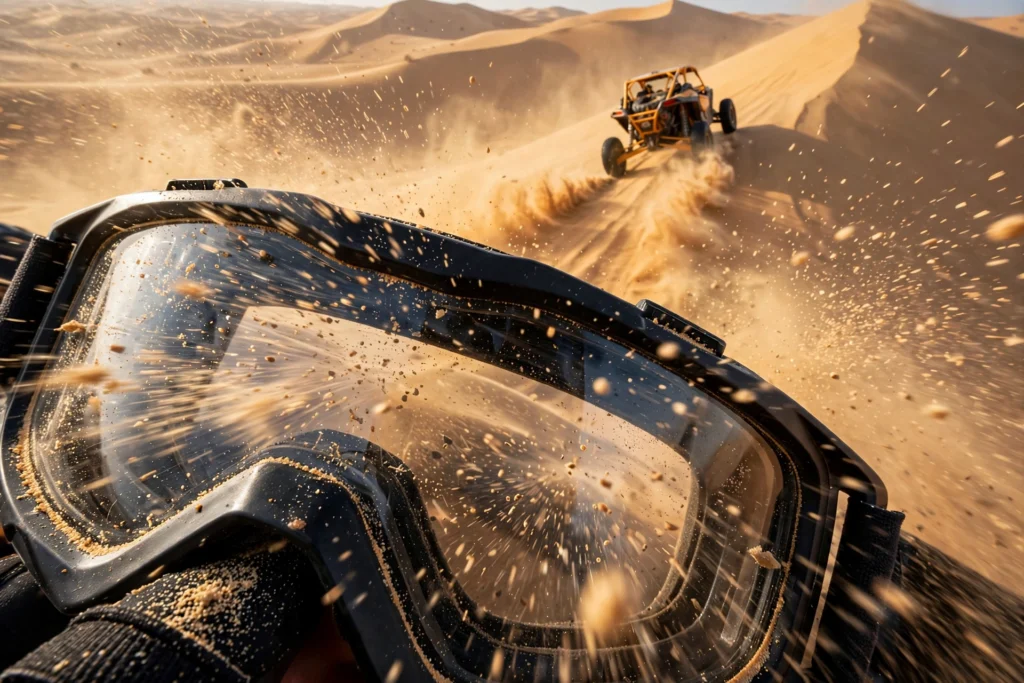
Follow another buggy over a crest and you will understand goggles in about four seconds. The machine in front throws a fine, constant spray of sand off its rear wheels, and it hangs in the air exactly at face height. Sunglasses — the substitute everyone tries first — stop perhaps half of it. The rest goes around the frames, into your eyes, and stays there.
Proper goggles seal against your face. That seal is the whole point: no spray, no dust, no watering eyes, no blinking grit out at the exact moment the route gets interesting. On a quad bike the case is even stronger, because there is no windscreen and no cage — it is just you and whatever the desert puts in the air, which is why the gear matters just as much on the quad bike rides as in a buggy.
Give the lens a quick wipe at photo stops, never with a sandy glove if you can help it, and keep them on whenever the group is moving — including the slow sections. Slow sand in the eye still ruins a minute.
Gloves: small, quiet, essential
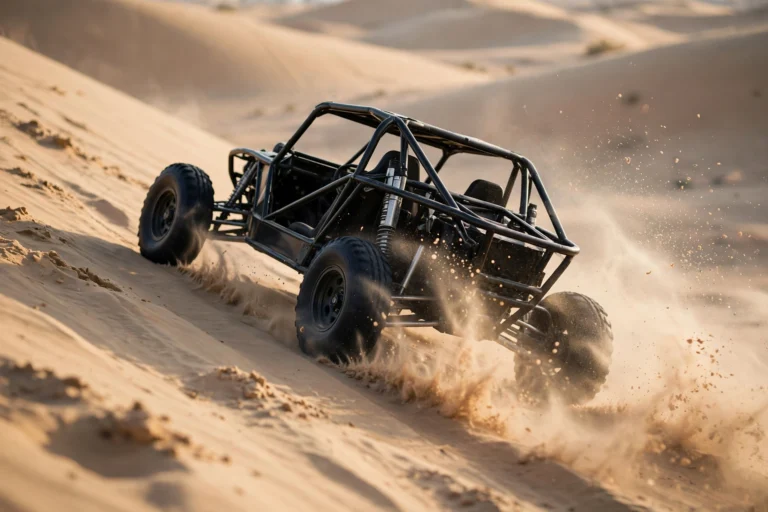
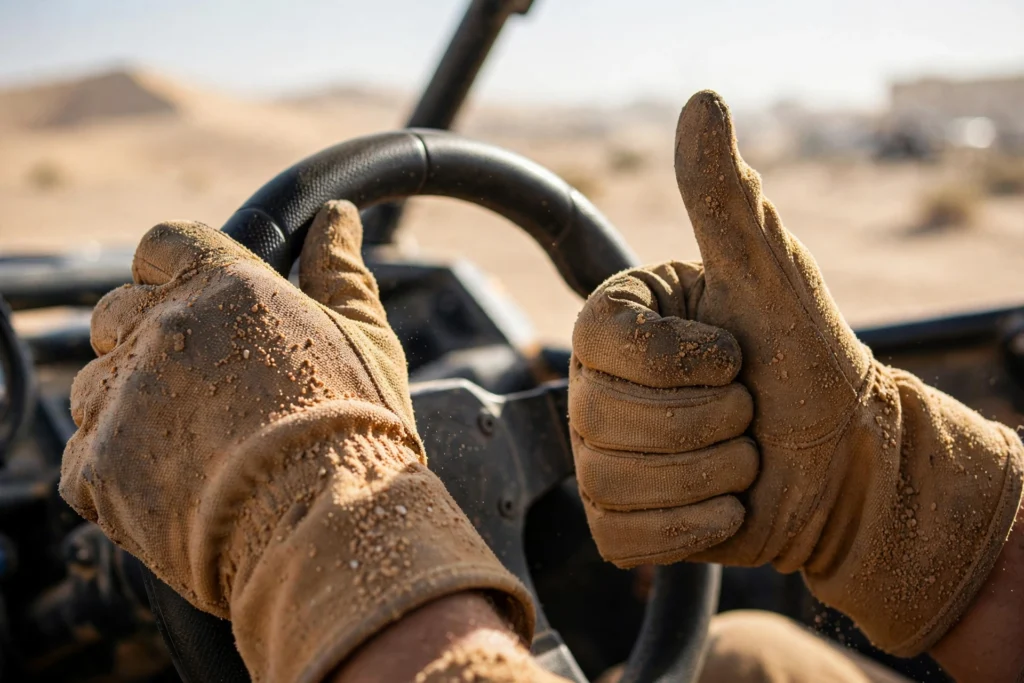
Gloves look like the least important item, and they are the one experienced riders never skip. A buggy steering wheel over rough sand is a busy thing — it tugs, kicks and vibrates as the tyres fight the surface. Bare hands blister, sweat makes the wheel slippery, and winter mornings and summer sun both attack the backs of your hands in their own way.
Gloves fix all of it quietly: grip when your palms sweat, padding against the vibration, and protection from sun and flying sand. On a quad, where your hands are out on open handlebars the entire ride, they do the same job doubled. If you are starting on the lighter Kymco quad bike as a first-timer, gloves are a large part of why the bars feel friendly instead of harsh by the end of the ride.
The gear is part of a system, not a costume
It helps to see how the kit fits together with everything else around you. Before you drive anywhere, your guide runs a safety briefing: controls, speed guidance for different terrain, trail rules, signals, and what to do if the buggy stalls. In the buggy you sit in a steel roll cage with a four-point harness. The vehicles are inspected before every tour. The helmet, goggles and gloves are simply the layer of that system that travels with your body.
That is also why the rules about your own clothing exist. Closed shoes, nothing loose or flapping, no scarves around your neck: the gear is designed to sit over normal, sensible clothes, and loose fabric near a moving vehicle undoes its good work.
What you do not need to bring
Nothing. That is the short answer. The helmet, goggles and gloves are provided for every rider before every ride, along with the briefing — you do not need to buy riding gear for a holiday activity, and a motorcycle helmet from home will just spend the day in the hotel. Sunglasses are still worth bringing for the photo stops, and a hair tie if you have long hair: hair goes under the helmet far more happily when it is tied back first.
Quick questions
Is the safety gear included, or do I rent it on the day?
It is included. Before every ride you are given a helmet, goggles and gloves, and your guide runs a safety briefing before the group sets off. Nothing extra to arrange.
Can I wear my sunglasses instead of goggles?
At photo stops, sunglasses are perfect. While driving, wear the goggles — sunglasses leave gaps at the sides, and the sand spray from the buggy ahead finds those gaps within minutes.
What if the helmet does not fit properly?
Tell your guide at the base, before the ride starts. Helmets come in different sizes, and a helmet that rocks or lifts is swapped in a minute. A firm, level fit with a snug strap is what you want.
Do quad bike riders get the same gear?
Yes. Quad riders get the same helmet, goggles and gloves, plus the same briefing — on a quad you are more exposed to wind and sand, so the gear works even harder.
Gear on, then go and enjoy it
Nobody writes home about a pair of gloves. But the riders who have a great day — clear eyes, comfortable hands, head cool and quiet — are the ones who wore everything they were handed and wore it properly. Gear on, briefing listened to, harness snug: after that, the only thing left to think about is the dunes. If you have any questions about the kit, the machines or which ride suits you, message us on WhatsApp at +971 55 719 0598 and ask away.