Falconry in the Desert: Meeting the UAE’s National Bird
Falconry in the Desert: Meeting the UAE’s National Bird
Most people come to the Dubai desert for the dunes and the drive. Then they meet the falcon, and the day changes. The falcon is the national bird of the UAE. It is a small, fast hunter with sharp eyes and a calm way of sitting still. Falconry in the desert Dubai is one of those quiet moments on a safari day that stays with you long after the ride is over. You do not need to know anything about birds to enjoy it. Just stand near the handler, watch the bird, and listen.
The falcon, the UAE’s national bird
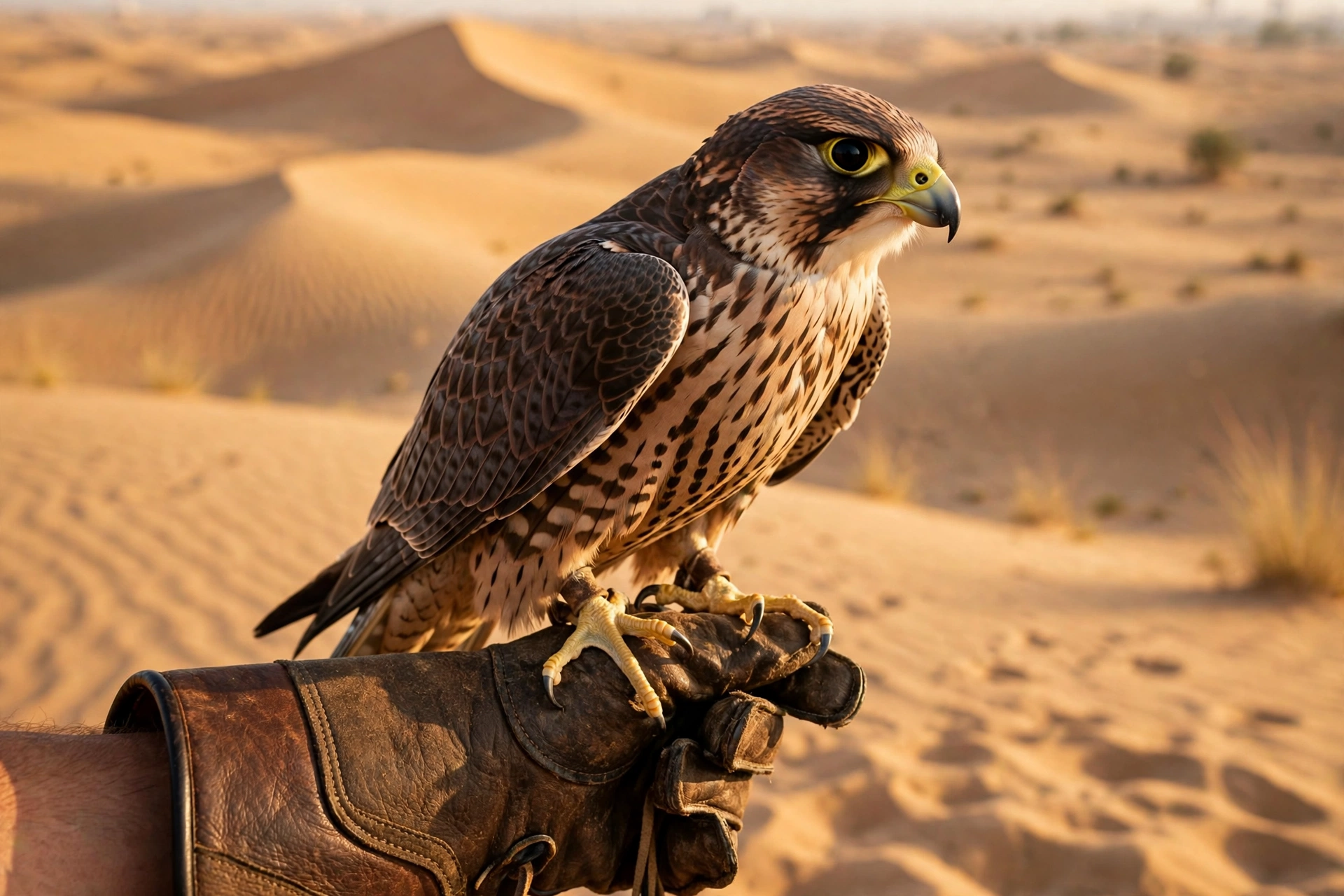
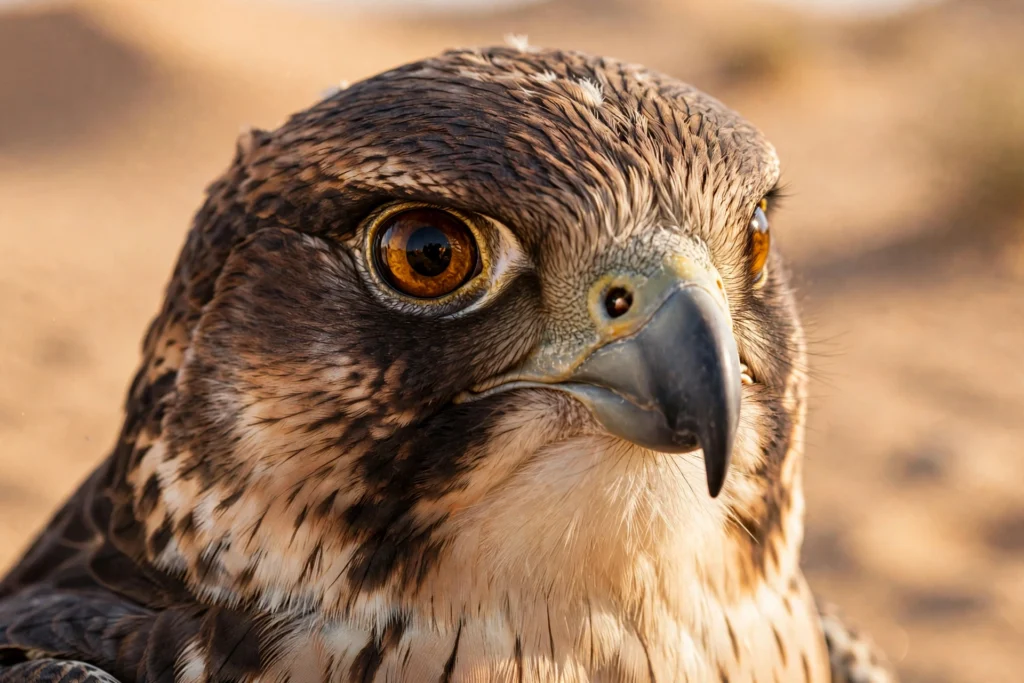
The falcon holds a special place in the UAE. It is on the country’s emblem. For the people of this land, the falcon stands for sharp sight, patience, and skill. It hunts in open sand, where there is nowhere to hide. It finds its prey from high up, then drops fast and true.
The falcon is not just a symbol. It is a living bird that people here have worked with for a very long time. Meeting one feels different from seeing an animal in a zoo. You are looking at a working hunter, and at a piece of the country’s story, at the same time.
A tradition that goes back centuries
Falconry is old. People in this part of the world have trained falcons to hunt for centuries. In the past, it was a way to find food in a hard land. Over time, it became more than hunting. It became a skill passed from father to son, and a sign of patience and care.
Today, falconry is on UNESCO’s heritage list. That means the world sees it as a tradition worth keeping alive. In the UAE, families still keep falcons, and handlers still train them the old way. The bond between the bird and the handler has not changed at all.
The hood, the glove and the lure
Three things show up in every falconry display. Once you know what they are for, the whole thing makes more sense.
The hood is a small leather cap that covers the falcon’s head. It keeps the bird calm. A falcon with its hood on rests quietly. When the handler takes the hood off, the bird wakes up and looks around with those sharp eyes. The moment the hood comes off is the moment the display really starts.
The glove is thick leather, worn on the handler’s hand. It protects the handler from the bird’s strong feet and sharp claws, and gives the bird a steady place to sit.
The lure is a piece of meat tied to a cord. The handler swings it to call the falcon back after a flight. The bird sees it, dives for it, and lands near the handler.
None of this is rushed. The handler moves slowly. The bird moves when it is ready.
Watching a falcon fly
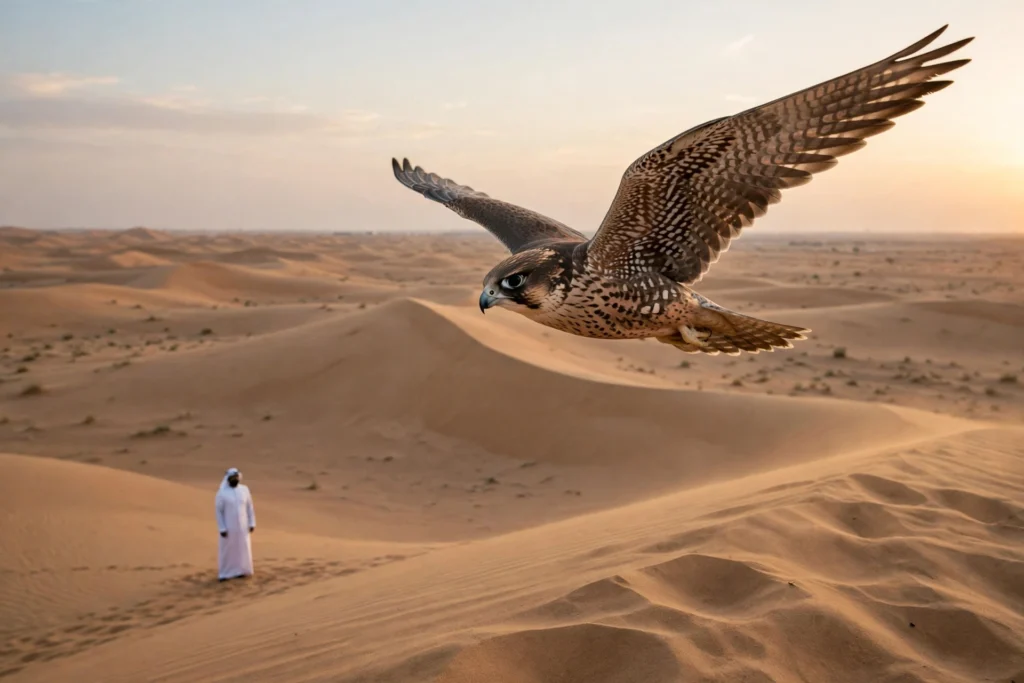
The best part of the display is the flight. The handler takes the hood off, lifts the glove, and the falcon leaves. It climbs fast. In a few seconds, it is a small shape against the sky. Then the handler swings the lure, and the bird turns and drops.
The drop is the part people remember. The falcon folds its wings and comes down fast, straight toward the lure. It is over in seconds. The bird lands, takes the food, and the handler picks it up again. It looks easy. It is not. It takes long training and a lot of trust.
Stand still and keep quiet for the best view. Your guide will tell you where to stand — they do this every day, and they know where the bird will fly.
How falconry fits into a safari day
Falconry is usually a short stop on a longer day. On a desert safari, you might drive the dunes first, then stop at camp, where the falconry display takes place. You can watch, ask questions, and take photos.
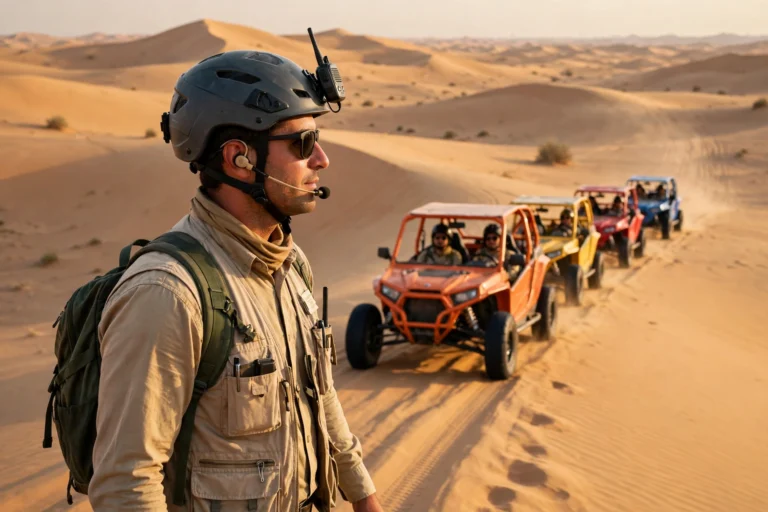
On a standard safari with dune buggy, the falconry stop sits between the driving and the camp time. It gives the day a slower pace. After the noise and speed of the buggy, the quiet of the falcon feels like a good break. Many people say it is the calmest part of the whole trip.
Ask your guide anything. Handlers like to talk about their birds — how old the falcon is, what it eats, how long training takes. If you want a photo with the bird on the glove, ask first.
A few simple tips: wear a hat and bring water, because the display happens in open sun. Keep your voice low while the bird is flying. Do not touch the falcon unless the handler says you can. Take your photos quickly, then put the phone down and just watch.
Quick questions
Can I hold a falcon on my glove?
Often, yes. The handler will help you and tell you what to do. Always ask first and follow their lead.
Is falconry part of every desert safari?
Not every trip includes it. It depends on the day and the plan. If meeting a falcon matters to you, ask when you book so the team can tell you which trips include a display.
Are falcons dangerous?
They are hunters, and their claws are sharp. That is why the handler wears a thick glove. Guests are safe as long as they follow the handler’s instructions.
What is the best time of day to see a falcon fly?
Falconry displays usually happen in the open desert, often in the softer light before sunset. The bird flies well in calm air, and the light makes for good photos too.
A quiet moment worth keeping
The desert gives you speed, sand, and big skies. The falcon gives you something else: a quiet moment with a bird that has shared this land with its people for centuries.
If you would like a safari day that includes a falconry display, have a look at the desert safari trips, or ask us about the standard safari with dune buggy. You can also contact us or message us any time on WhatsApp at +971 55 719 0598 — tell us you would like to meet the falcon, and we will help you plan the day.