Tracks in the Morning Sand: Reading the Desert’s Night News
Tracks in the Morning Sand: Reading the Desert’s Night News
Look down at the tracks in the desert sand and the desert starts to talk. The night was busy, even when it looked empty. The wind smooths the sand each evening. By morning, the sand is a clean page. Every small foot that walked in the night leaves a mark on it.
You do not need to be a tracker to enjoy this. You only need to slow down and look. The tracks tell you who was out, where they went, and how they moved. It is the desert’s night news, written in the sand.
The sand is a clean page each morning
The desert wind does a lot of work at night. It lifts the top layer of sand and lays it down again. By the time the sun comes up, the dunes look fresh. Old tyre marks fade. Old footprints soften.
That is why morning is the best time to look. In the middle of the day, the sun is high and the tracks are hard to see. In the early light, each small dip casts a small shadow. The tracks stand out. A morning desert trip puts you out there at just the right time.
The small tracks
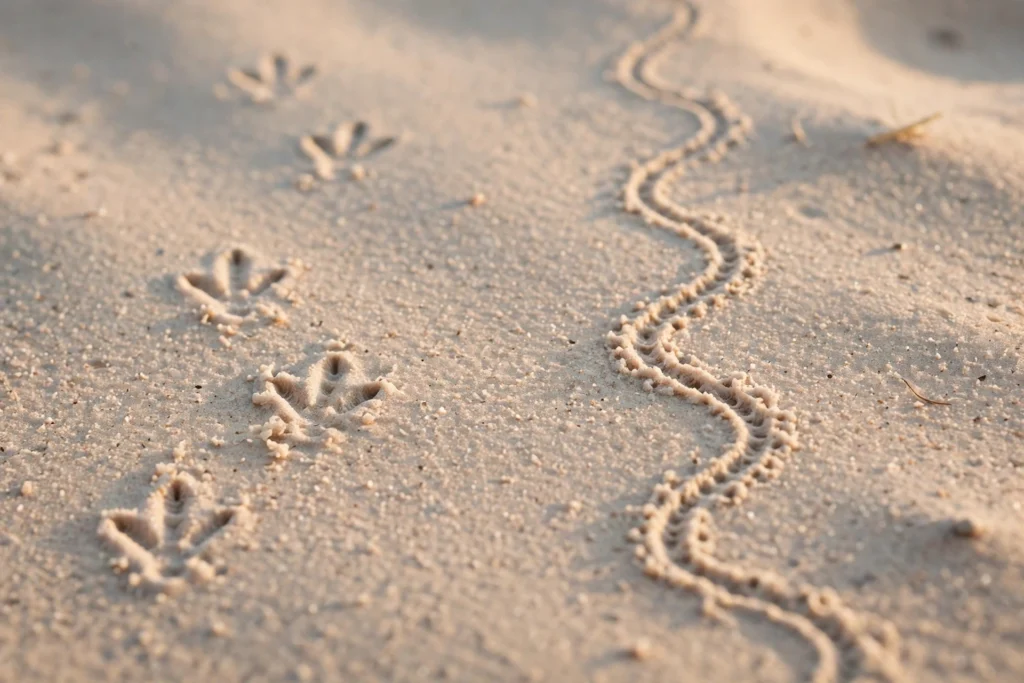
The smallest tracks belong to the smallest animals. Beetles leave thin, wavy lines. They walk in a straight line, then curve around a small stone, then carry on. Their trails look like a thin pencil line drawn across the sand.
Small birds leave rows of tiny three-toed prints. They hop, so the prints come in pairs, close together. You often find them near low bushes, where birds land to feed in the cool of the morning.
Ants leave busy little paths. They walk in a line, one after another, and the line bends around small stones. Follow an ant line and it will lead you to a bush or a small hole in the sand.
These small tracks are easy to miss. They are also the most common. The desert is full of small life, and the morning sand shows it.
The big tracks
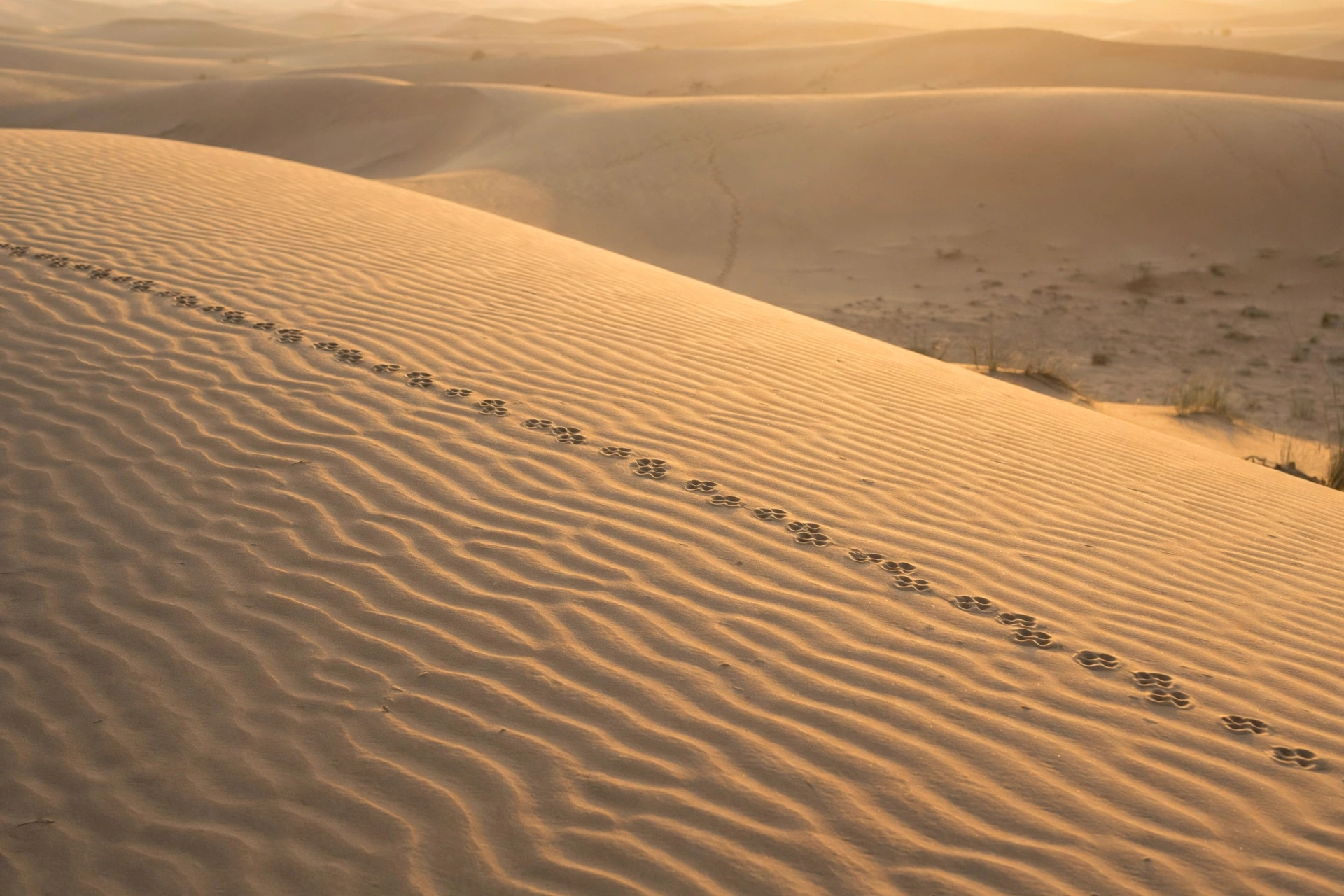
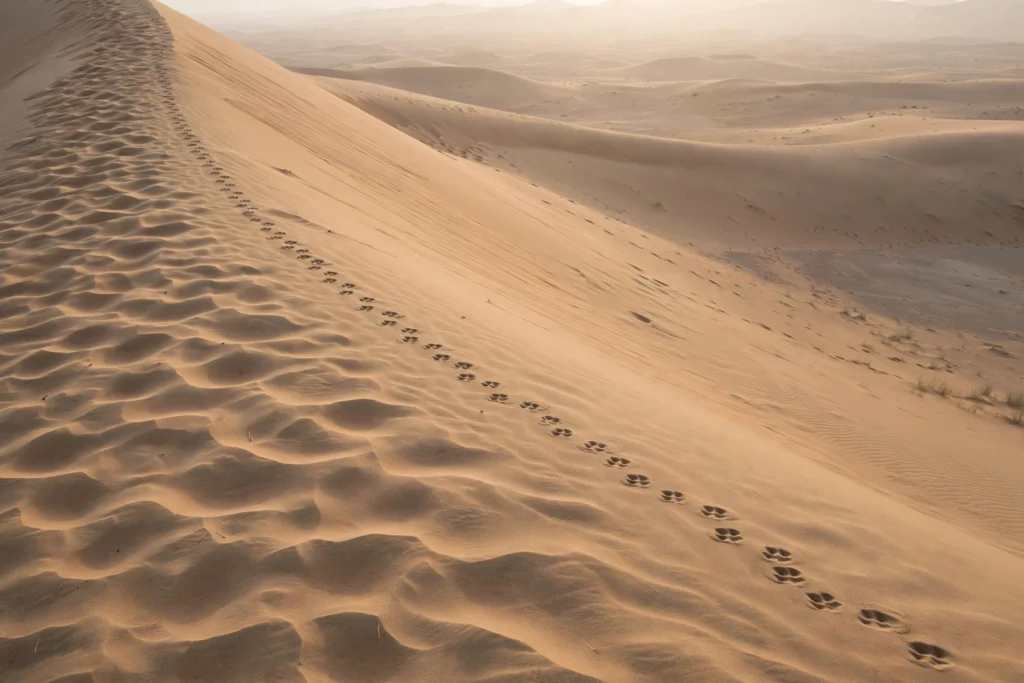
Foxes leave the clearest tracks of the night animals. A desert fox walks in a neat, straight line. Its four paws land one after the other, almost in a single row. The prints are small and round, with four toes. You often see a fox track line running along the top of a dune, where the fox could see far.
A fox track tells a story. The line is straight when the fox is on the move. It bends when the fox stops to sniff at something. It circles a bush when the fox is hunting. One line in the sand can show you a whole night of work.
Hares leave longer prints. Their back feet are much longer than their front feet, so the prints come in a clear pattern: two small front prints, then two long back prints in front of them. A hare moves in big hops, so the gaps between the groups are wide.
What the wind does to tracks
Not every mark you see is fresh. The wind can make a track look old fast. A light wind rounds the edges. A strong wind can wipe a small track out in an hour.
Fresh tracks have sharp edges. The sand inside the print is still loose, and the edge of the print is clean. Old tracks look soft. The edges are rounded, and the print is half filled with blown sand.
Tracks on the sheltered side of a dune last longer. Tracks on the open side fade fast. If you see a clear track on an open dune top, it was made late in the night, close to morning.
What you will not see
You will not see big cat tracks, and you will not see snake tracks most days. The desert around Dubai is home to small animals, not large ones. The tracks you find will be foxes, hares, birds, beetles, ants, and lizards.
You also will not see tracks everywhere. Some parts of the desert floor are hard and flat. Feet leave no mark on hard ground. The best tracks are on the soft sand of the dune slopes and the flat hollows between dunes.
How to look without breaking the story
Tracks are easy to ruin. One step across a track line wipes it out. Walk around the lines, not through them. Crouch down to look, and keep your feet on the sand that is already marked by your own group.
Take a photo from low down, with the sun to one side. Low light makes the tracks stand out in a photo. A photo from straight above, in flat light, shows almost nothing.
A good morning habit
Make track-watching a habit on a morning trip. Step out of the car. Walk a few slow steps. Look down. Then look up at the dunes. The two views go together: the big, empty dunes above, and the busy little marks below.
Quick questions
What animals leave tracks in the Dubai desert?
Mostly small animals: desert foxes, hares, lizards, beetles, ants, and small birds. You will not find big animal tracks in the desert around Dubai.
When is the best time to see tracks?
Early morning. The wind smooths the sand overnight, and the low sun makes each track cast a small shadow. By midday, the tracks are hard to see.
How do I tell a fresh track from an old one?
A fresh track has sharp, clean edges. An old track looks soft and rounded, and the print is half filled with blown sand.
Can I see tracks on a buggy ride?
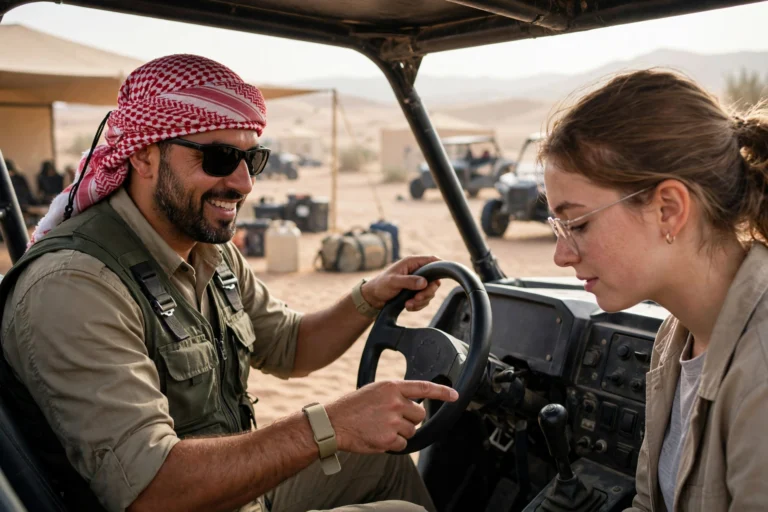
Yes. The guides know the soft-sand spots where tracks show well, and they can stop so you can look. Walk around the track lines, not through them.
Look down once in a while
A morning in the desert is not only about the big dunes. The small marks at your feet tell you the desert was busy all night. Slow down, look down, and read the night’s news in the sand.
If you want a morning out there, look at the morning desert safari or the buggy rental — or contact us and message us on WhatsApp at +971 55 719 0598. We will plan a morning that starts slow and lets you see the desert properly.