Buggy Safety Checks Before Every Ride: Behind the Scenes
By the time you arrive at the desert base, your buggy looks like it simply woke up ready. It did not. A working desert fleet lives on routine — unglamorous, repeated, and absolutely non-negotiable — and most of it happens before the first guest is even picked up. This is a look at the buggy safety checks before every ride: what gets touched, tested and ticked off, and what happens when something does not pass.
The morning walk-around
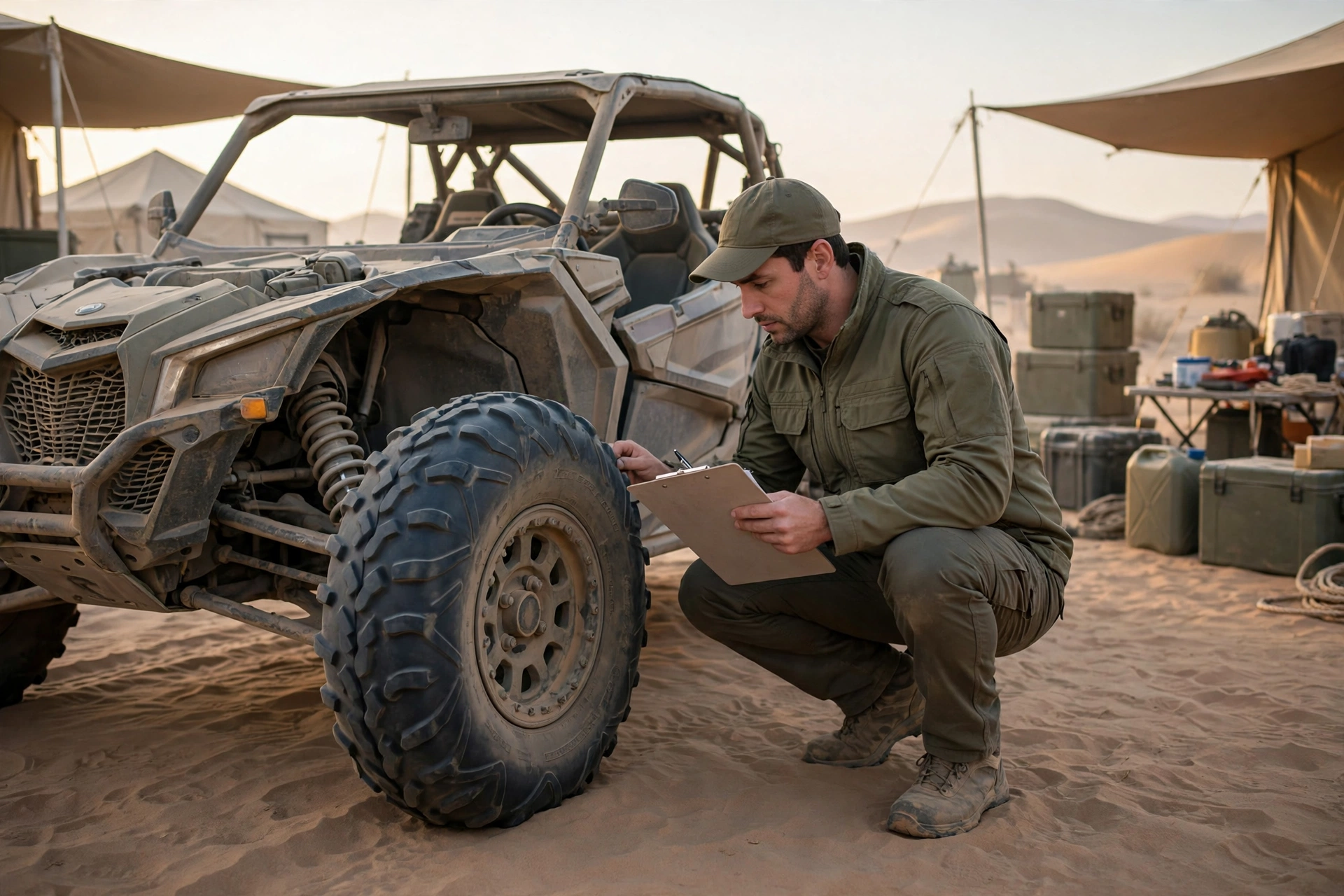
Every machine gets the same slow circle before its first ride of the day:
- Tyres — checked for cuts and wear, and for pressure. Sand driving runs lower pressures than road driving for grip and float, so “correct” here is a number the team sets deliberately, not whatever the tyre arrived with.
- Brakes — pedal feel and a short roll test. Sand hides in everything, including brake parts, so this one is physical, not visual.
- Steering — full lock both ways, listening and feeling for anything loose, stiff or strange.
- Fuel and fluids — topped and checked, because a ride interrupted by an empty tank is a planning failure, not bad luck.
- Lights and the safety flag — the tall flag on every buggy is not decoration; it is how crests stay safe, so it gets checked like a part of the machine. Because it is one.
The belts and the frame: the parts that protect you
Seat belts and harnesses are pulled, buckled and released by hand — webbing checked for fraying, buckles for sand and positive clicks. The roll frame gets an eye too: it is the structure the whole safety story rests on, and any machine with damage from a previous day does not go out until it has been properly sorted, not merely looked at. These are the checks nobody photographs and everybody depends on.
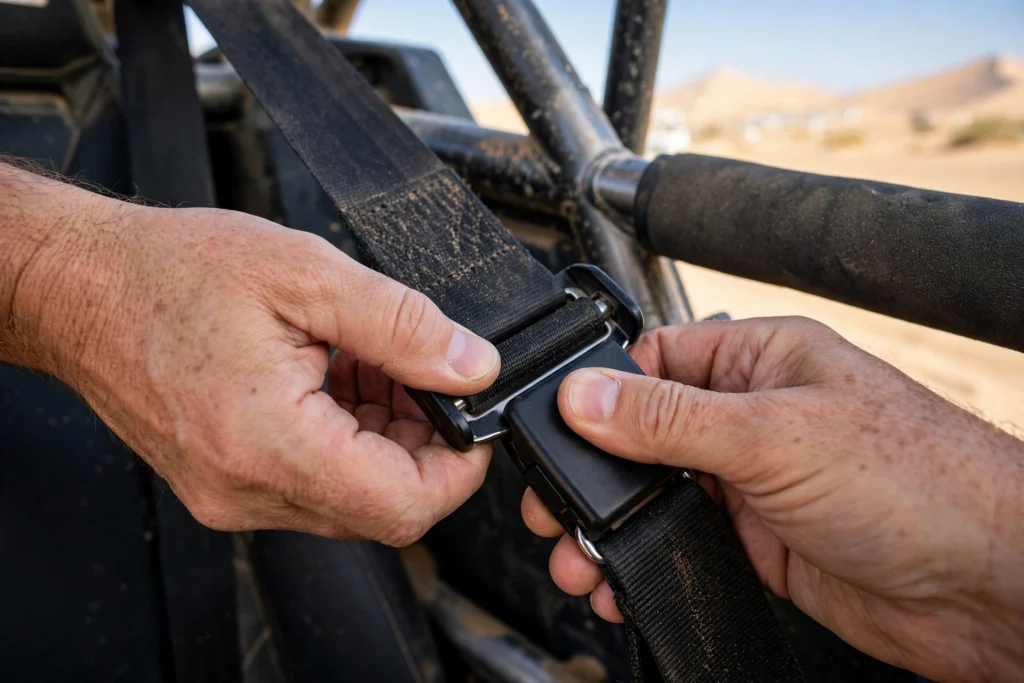
Between rides: the quick round
The morning list is the deep one, but machines are not checked once and forgotten. Between rides there is a shorter round — a walk around the machine, tyres and belts glanced and tugged, fuel confirmed, anything the returning driver mentions noted and dealt with. Drivers are part of the system here: a guide who felt a vibration or heard a new noise says so, and the machine is looked at before it is loaded with the next guests. Sand is abrasive and honest; it wears things steadily, and the checks are paced to catch that wear early.
When something fails the check
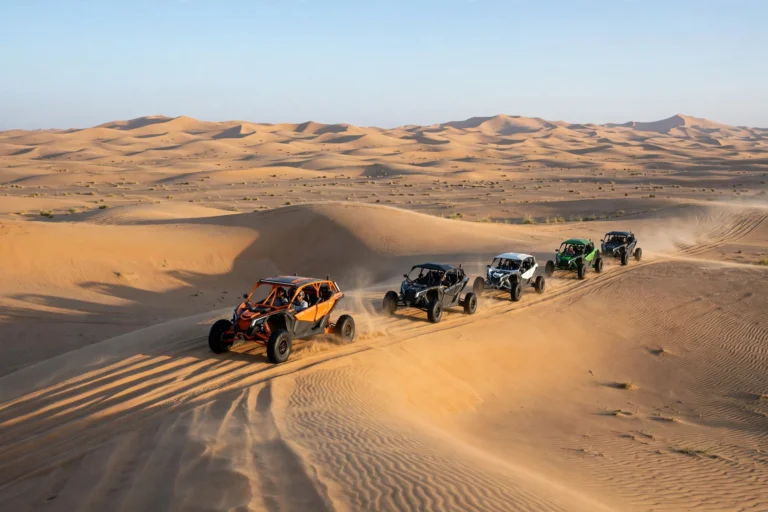
This is the part that quietly defines an operator: a machine that fails does not go out “just for one gentle ride”. It is swapped. A spare buggy takes its place on the buggy rental line, and the flagged one goes to the workshop side of the yard for proper attention. Guests rarely even hear about it — the group simply leaves on time, in machines that all passed. The fleet is mixed for a reason too: workhorses like the Can-Am Maverick X3 and the Polaris RZR XP Pro share the same routine regardless of badge or price.
The gear you wear is checked too
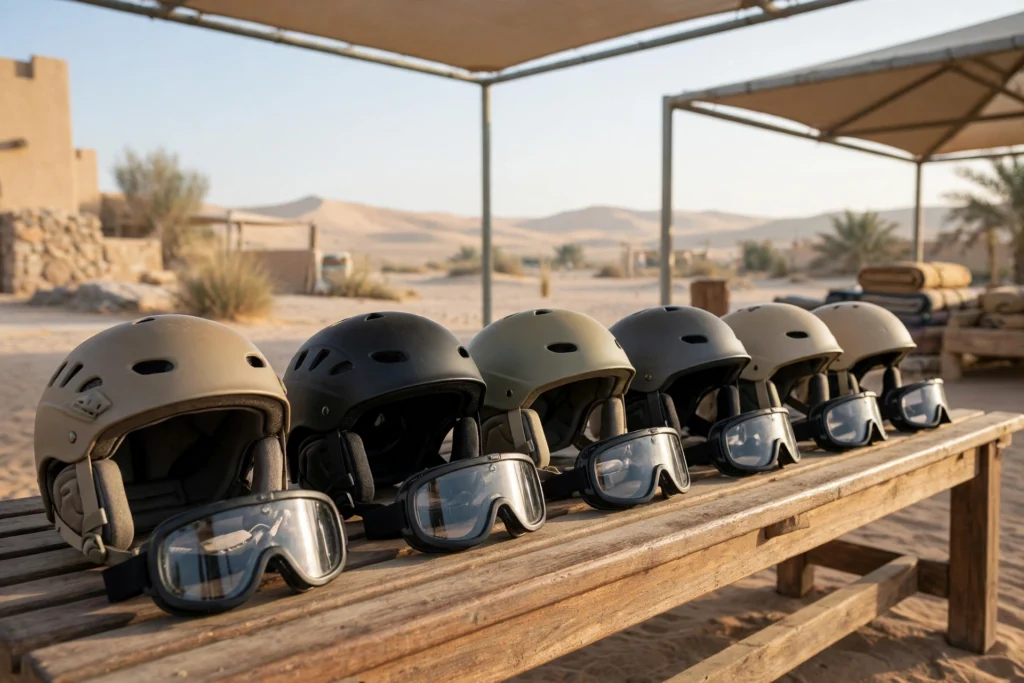
Helmets come back from every ride sandy; they are cleaned, their straps and shells checked, and damaged ones retired without debate. Goggles get the same treatment — a scratched lens or a slack strap means the pair leaves the line. It is slower than just hanging everything back up, and it is also why the helmet you are handed fits, clicks and stays clear at speed.
Your part in the system
Riders hold one card in this routine: your senses. If your buggy feels odd — a pull to one side, a noise that was not there at the start, a belt that will not sit right — say so at the next stop, or raise a hand and stop sooner. Guides would rather swap a machine mid-ride than have a guest politely endure something. And at the end of the ride, your two sentences to the guide (“all fine” or “it did a thing”) genuinely feed the next round of checks.
Quick questions
How often are the buggies serviced beyond these checks?
The daily routine sits on top of regular workshop servicing — oils, filters, suspension and wear parts on a schedule set by hours of use, not guesswork. The walk-around catches today’s problems; the servicing prevents next month’s.
What happens if a buggy breaks down mid-ride?
The convoy stops, the guide assesses, and the support system takes over — a replacement machine or a seat in another vehicle, and the ride continues. It is uncommon precisely because of the morning checks, and it is planned for anyway.
Can I see the checks happening?
Arrive for a morning ride and you will likely catch the end of them at the base. The team is happy to walk you around your own machine before the briefing — just ask.
Are the quads and kids’ machines checked the same way?
Yes — same philosophy, adjusted list. Smaller machines, same rule: if it does not pass, it does not go out.
Checked, then charged with fuel, then yours
That is the unseen first chapter of every ride: a slow circle in the early light, hands on tyres and belts, and a hard rule about machines that do not pass. The buggy safety checks before every ride are not the exciting part of your day — they are the reason the exciting part stays the right kind of exciting. To book a ride with a team that works this way, message us on WhatsApp at +971 55 719 0598 and tell us when you would like to come.