A Local’s View: What Al Badayer Looks Like Across the Year
Ask a tourist about Al Badayer and they will describe one day: the day they went. Red sand, huge dunes, a buggy, home by dinner. Ask someone who works out here and you get a different answer, because Al Badayer is not one place. It is at least four, and the season decides which one you meet.
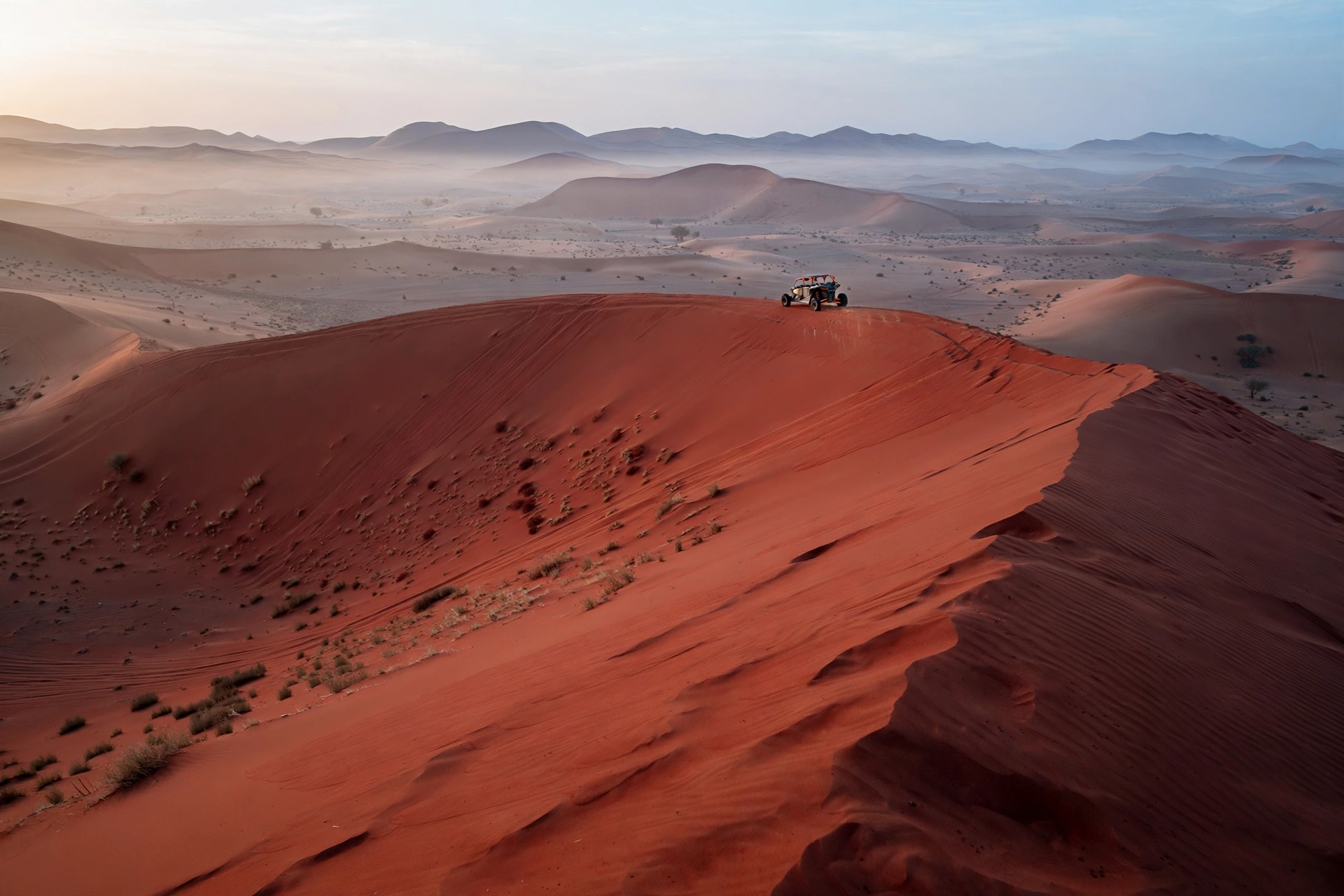
The area sits along the Dubai–Hatta road, where the sand turns a deep rusty red and the dunes grow into proper hills. The biggest of them, the Big Red, is the landmark everyone knows. Around it stretches a whole working landscape of ridges, flats and bowls that shifts with the light, the wind and the month. This is Al Badayer desert through the year — and what each version means for a ride.
Winter: the desert at its kindest
From roughly November to February, Al Badayer is the place on postcards. The mornings can be genuinely cold before the sun gets going — riders arrive in jackets and peel them off by mid-morning. The air is clear, the red of the sand looks at its deepest, and the dunes hold crisp edges that photograph beautifully.
This is also the busy season, and the desert knows it. More buggies, more camps, more life at the base — but drive ten minutes from the meeting point and it still empties out fast. The dunes are big enough for everyone. If it is your first ride, winter mornings are the easiest introduction there is: cool air, firm sand, and light that makes even a phone photo look professional.
Spring: the sand softens and the crowds thin
By March and April the days warm up and the visitors thin out, and regulars quietly love this part of the year. The sand starts to dry and soften on the surface, which changes the driving: a little more slide, a little more care on the crests, and routes your guide would happily take in January get read more carefully.
The light stays lovely later into the morning, and the evenings before the real heat arrives are some of the most comfortable of the year. For Al Badayer with elbow room, spring is your season.
Summer: early starts and a tougher, quieter desert
Summer here is not a secret — it is hot, properly hot, and the desert changes its working hours. Riding moves to the early morning, when the air is still kind and the dunes sit in long blue shadow. By mid-morning the light turns white and harsh, the sand surface gets very soft, and sensible people are drinking water in the shade.
But there is something special about a summer dawn at Big Red. The heat haze has not started, the tracks of the night are still written in the sand, and you can have a famous landscape almost to yourself. Groups who book the morning buggy rental tours in summer talk about the quiet as much as the ride. Shorter, earlier, well-watered: that is the summer formula, and it works.
Autumn: the desert resets
September and October are the in-between months locals wait for. The worst heat breaks, the evenings come back into play, and the whole place seems to breathe out. Safari evenings return in force — sunset over the ridge, dinner at camp as the air cools.
The sand firms up as the nights cool, the driving gets easier week by week, and by late autumn Al Badayer is sliding back into its winter best. If you are planning a first desert safari and cannot come in peak winter, aim here.
The wind is the desert’s editor
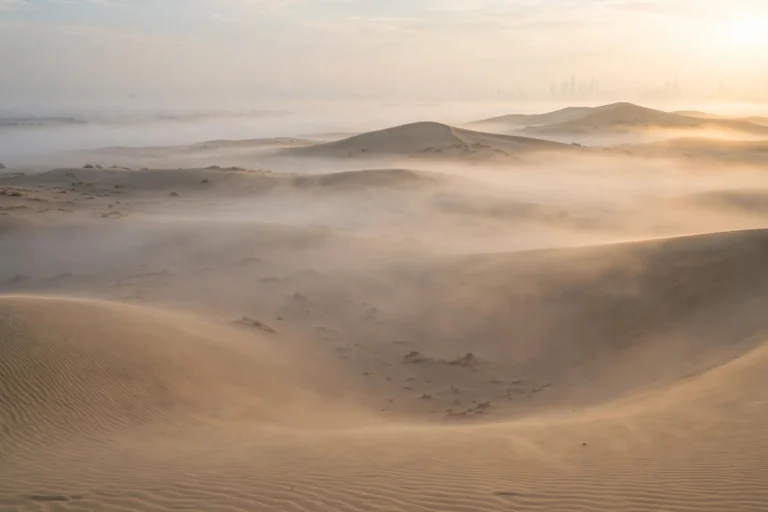
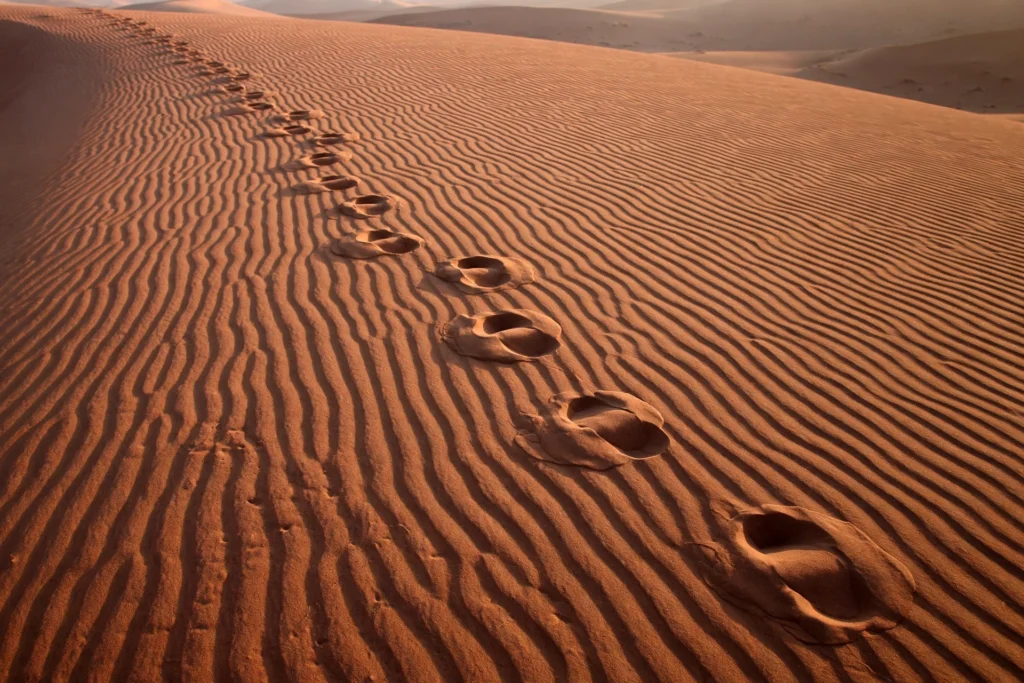
Whatever the month, the wind rewrites Al Badayer overnight. It smooths yesterday’s tracks, rebuilds the sharp crest lines, and draws fine ripples and patterns across every open face. After a windy night, the first riders of the morning drive on sand that looks untouched since the beginning of the world — with only the small prints of night animals and, here and there, a neat line of camel tracks crossing a slope.
It is also why no two rides are ever quite the same. Your guide is not following a fixed road. The route is read fresh each day, off the state of the sand that morning.
What lives out there
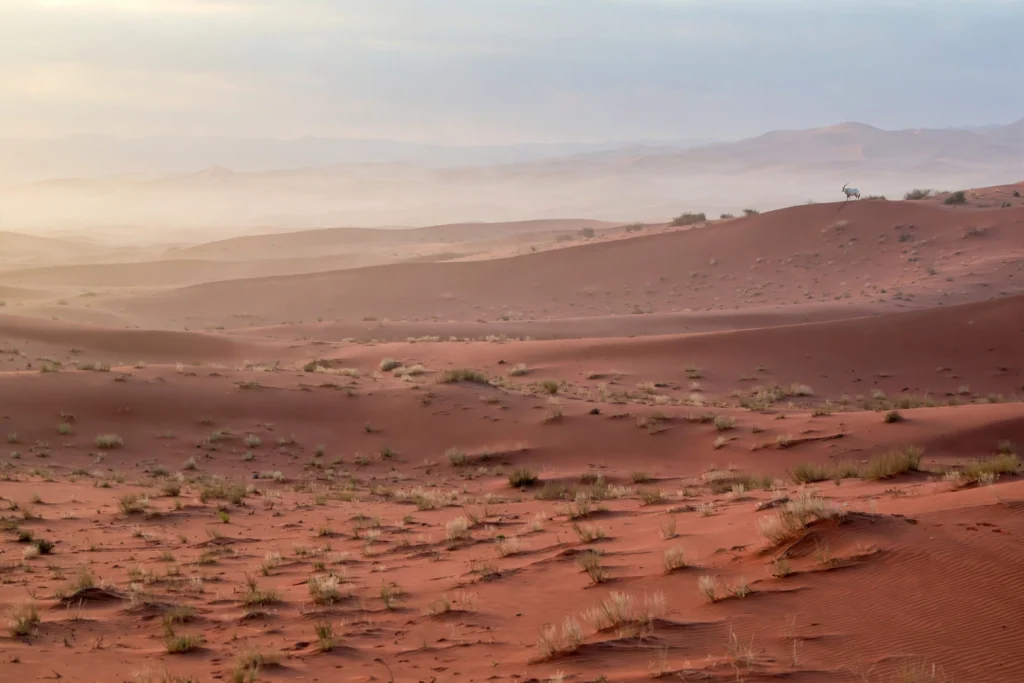
A working desert is not an empty one. Early riders see the most: desert foxes heading home at dawn, small birds working the flats, and tracks everywhere telling the night’s stories. With luck and a quiet approach, you may see an Arabian oryx — white, straight-horned, and completely unbothered by a buggy that keeps a respectful distance.
Camels, of course, are the residents everyone meets. Herds move through Al Badayer as they have for generations, and meeting one on a ridge at golden hour has ended up in more holiday photo albums than any dune. Slow down, give them the road, and enjoy it. It is their home; we are the visitors with the noisy machines.
The light is the real show
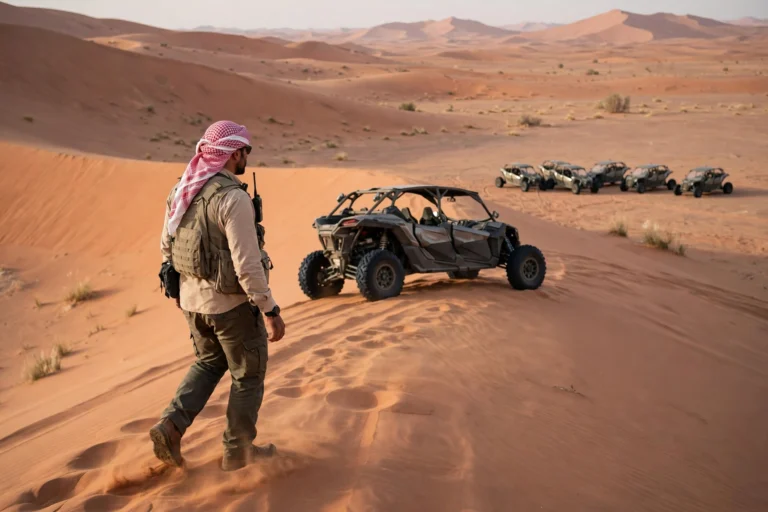
If there is one thing a year out here teaches you, it is that the dunes themselves barely change — the light does everything. Dawn turns the sand rose-red. Mid-morning flattens it to a bright copper. Late afternoon stretches every ridge shadow long and dramatic, which is why so many riders choose the big machines like the Can-Am Maverick X3 for the later runs: the desert is performing, and you want the best seat.
There is no wrong season, honestly. There is only the version of Al Badayer you happen to meet — and each one has riders who swear it is the best.
Quick questions
When is Al Badayer at its best for a first ride?
In the cooler months, roughly November to February, especially in the morning. The air is kind, the sand is firm, and the light is the clearest of the year.
Is it worth going in summer?
Yes, if you go early. Summer rides start in the morning before the heat builds. You get a quieter desert, clean overnight sand, and the Big Red almost to yourself.
Will I see wildlife at Al Badayer?
Often tracks, sometimes the animals themselves. Early morning gives the best chance — foxes at dawn, birds, camels regularly, and oryx if you are lucky. Nothing is promised, which makes a sighting better.
Does the route change with the seasons?
Yes. Wind and temperature change the sand constantly, so guides read the dunes fresh each day and adjust the route to the conditions — softer sand and steeper faces get more respect in the hot months.
Come and meet your version of it
Pick a month and Al Badayer will show you a different face — frosty winter dawn, quiet summer morning, or a golden autumn evening. All of them are worth the drive out of the city. Tell us when you are coming on WhatsApp at +971 55 719 0598, and we will tell you honestly what the desert is doing that week and which ride suits it best.