Keeping Your Distance: How a Guided Convoy Stays Safe on the Dunes
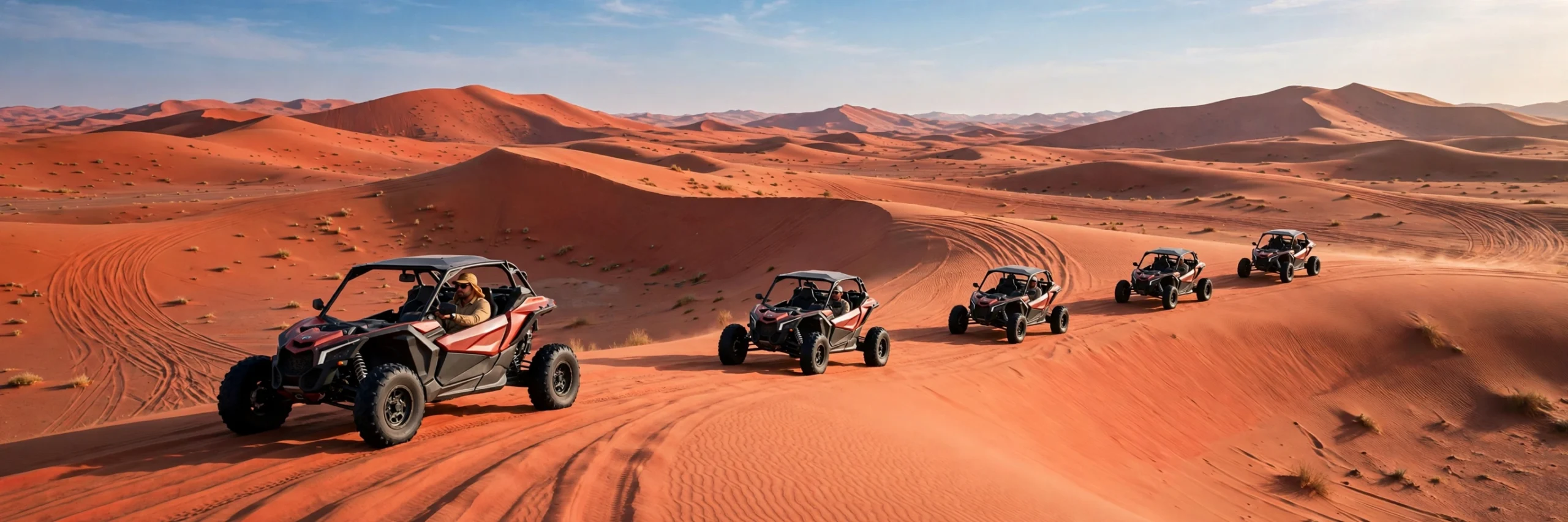
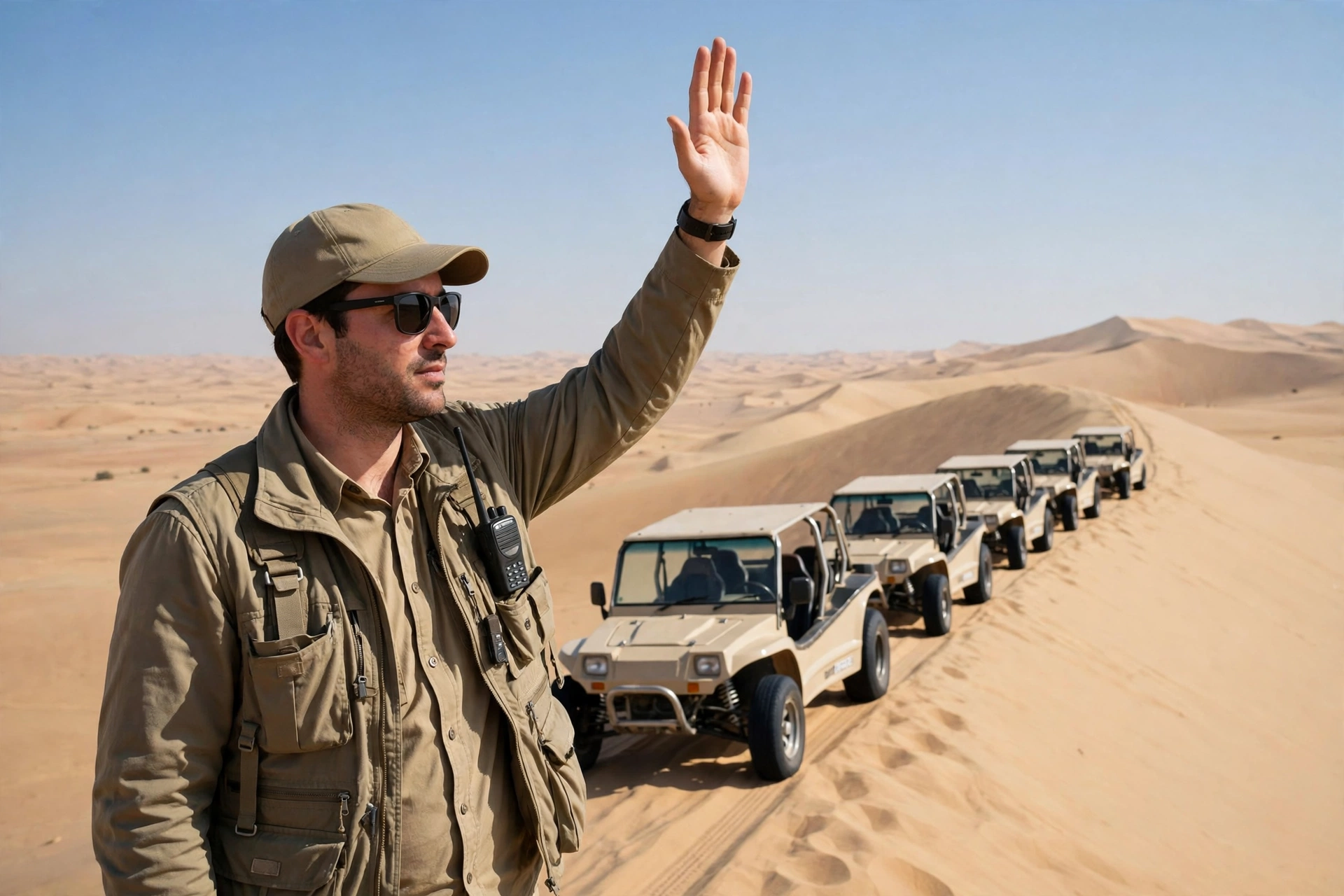
Watch a guided buggy convoy cross Al Badayer and one thing stands out before anything else: the gaps. The buggies are not bunched together like cars in traffic. They run in a line with real space between each one, and that space is not an accident or a lack of organisation. It is the main safety tool on the whole tour.
If it is your first ride, understanding guided dune buggy convoy safety — why those gaps exist and what your part in them is — will make you a calmer, better driver within ten minutes of the briefing. Here is how the convoy system works.
Why sand demands more space than a road
Three things about the desert make close driving a bad idea.
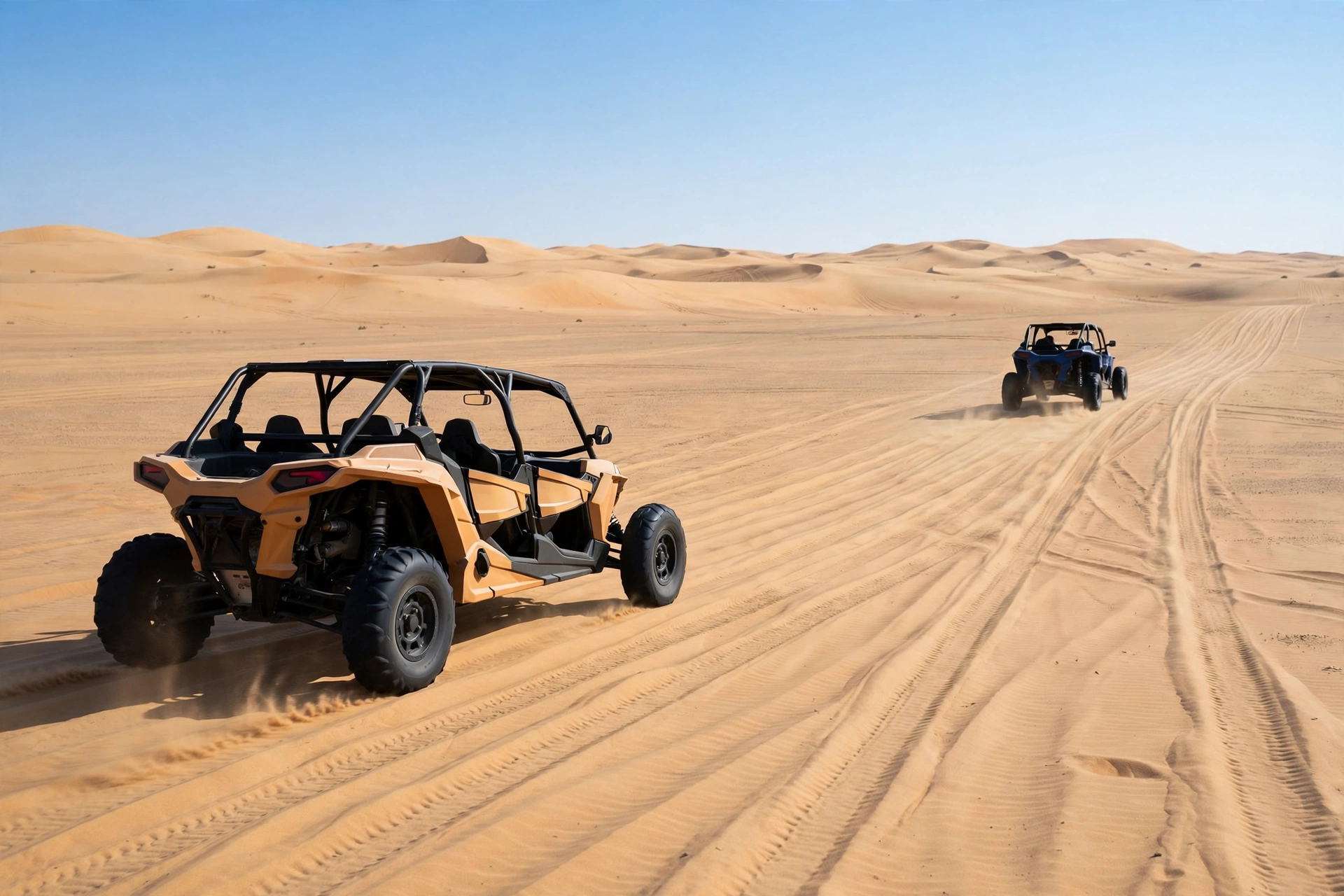
First, stopping. Soft sand is not tarmac. Your buggy slows differently on it, wheels dig in rather than grip, and the buggy behind you needs a proper margin to stop without drama — especially coming down a dune face, where gravity is helping neither of you.
Second, sight. Every crest is blind. You cannot see what is on the other side of the ridge until you are on top of it, and the buggy ahead of you might be slowing for a drop, a turn or a patch of very soft sand. The gap is what gives you time to react to a problem you cannot yet see.
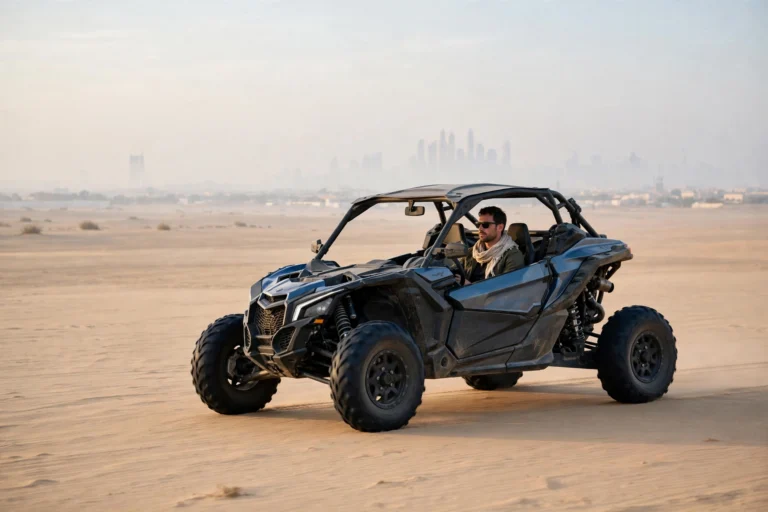
Third, spray. A buggy throws up a curtain of fine sand behind it. Follow too closely in a powerful machine like the Can-Am Maverick X3 and you will spend the ride driving inside that curtain, half blind, eating dust through your goggles. Drop back, and the air — and the view — clears.
How the convoy is set up
Your guide rides at the front and picks the line. That matters more in the desert than on any road, because the guide is reading the sand as he goes: where it is firm, where it is soft, which slope is safe to climb and which one to leave alone. Your job is simply to follow that line at the agreed distance.
Before you set off, the safety briefing covers the trail rules in plain terms — the distance to keep from the buggy in front, when to stop, and how to signal. Every rider on our tours hears the same rules, which is why the convoy works even when the group is full of complete beginners in everything from the Maverick X3 to the Polaris RZR XP Pro: nobody is inventing their own system out there.
The order and the spacing also let the guide match the route to the group. A nervous group gets wider, easier lines. A confident group gets more interesting terrain. Either way, the gaps stay.
The signals that hold the line together
You cannot have a chat between buggies at speed, so the convoy runs on simple signals and simple rules, all covered in the briefing. The guide signals stops and slow-downs. If the guide stops, the line stops. If you need to stop — you feel unwell, something feels wrong with the buggy, you are stuck — you stop where you are and signal, and the guide comes back to you.
Your instinct might be to push on and catch up. Do not. A stopped buggy is easy for the guide to return to. A buggy that has wandered off the line to chase the group is a problem that takes longer to fix. Stay on the marked trail, stay where the guide last saw you, and help comes to you quickly.
Your three jobs as a driver in the convoy
Everything the briefing asks of you comes down to three things.
Keep your gap. Not roughly — actually. If you notice you have crept up behind the buggy in front, ease off and let the space open again. If the buggy behind is crowding you, do not speed up to escape it; hold your pace and let the guide sort the line out at the next stop.
Follow the line, not your own idea. The track the guide takes over a dune is chosen for the sand that day. Cutting your own line across a slope might look shorter, but it is how buggies end up bogged in soft patches the guide was steering everyone around.
Obey the stop. When the guide signals a stop — at a crest, a viewpoint or because something ahead needs checking — stop promptly and in line. Photo stops and regroups are built into the route, so nobody needs to stop randomly for a picture and break the convoy apart.
It is a system, and that is the point
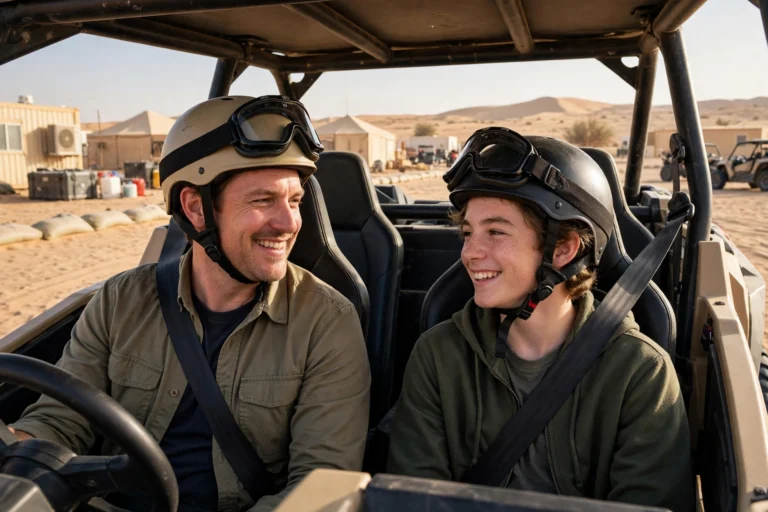
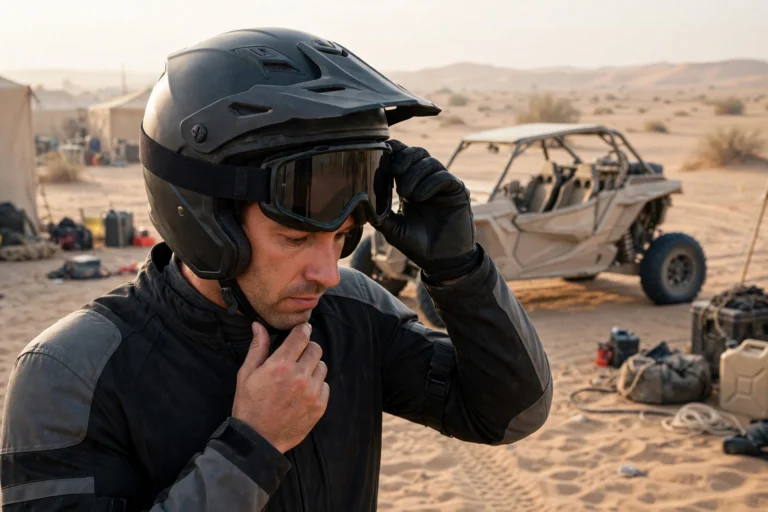
None of this is about taking the fun out of the ride. The distance rules are why a group of strangers, most of whom have never driven on sand, can climb serious dunes in serious machines and come back grinning. The buggies are inspected before every tour, every rider wears a helmet, goggles and gloves with a four-point harness in the buggy, and the convoy spacing sits on top of all of that as the layer that works while you are actually moving.
If you want to see the machines and ride formats this system runs with, browse the buggy rental options — every one of them goes out as a guided convoy, whether it is two buggies or a full group.
Quick questions
Can I overtake the buggy in front of me?
No. The convoy keeps its order and its gaps for the whole route. Overtaking on a blind crest or a dune slope removes the safety margin the system is built on. If you want a faster ride overall, tell us when you book — the guide sets the group’s pace, not individual drivers mid-route.
What if I lose sight of the buggy ahead?
Slow down and stop safely where you are, on the trail. Do not guess a direction across the dunes. The guide counts the convoy through every section and will come back for you — it is a normal part of the job.
Why can’t we drive side by side on the flat parts?
Side by side, neither driver can see the other’s line clearly, and a swerve to avoid soft sand puts two buggies in the same space. In single file, everyone has a clear view ahead and room to react.
What happens at photo stops? Does the spacing rule end there?
At stops the convoy parks up together, and that is your time for photos, water and sandboarding. The spacing discipline starts again the moment the guide sets off — getting back into line with your gap is part of the rhythm of the ride.
Ride in the line, enjoy the desert
The convoy looks disciplined because it is — and that discipline is exactly what makes the ride feel free once you are in it. Any questions about how our guided tours run? Message us on WhatsApp at +971 55 719 0598 and ask before you book.