The Safety Briefing, Explained: What Your Guide Teaches You Before You Drive
For many first-time riders, the most nervous moment of the whole tour happens before the engine starts. You are standing next to a powerful buggy, looking at some very large dunes, wondering what you have signed up for.
That is exactly what the dune buggy safety briefing is for. It is the short, practical lesson your guide gives you at the base before anyone drives anywhere. It takes the unknowns away one by one — the controls, the harness, the rules of the route — so that by the time you set off, the only new thing left is the driving itself. Here is what it covers, step by step.
The controls, in plain language
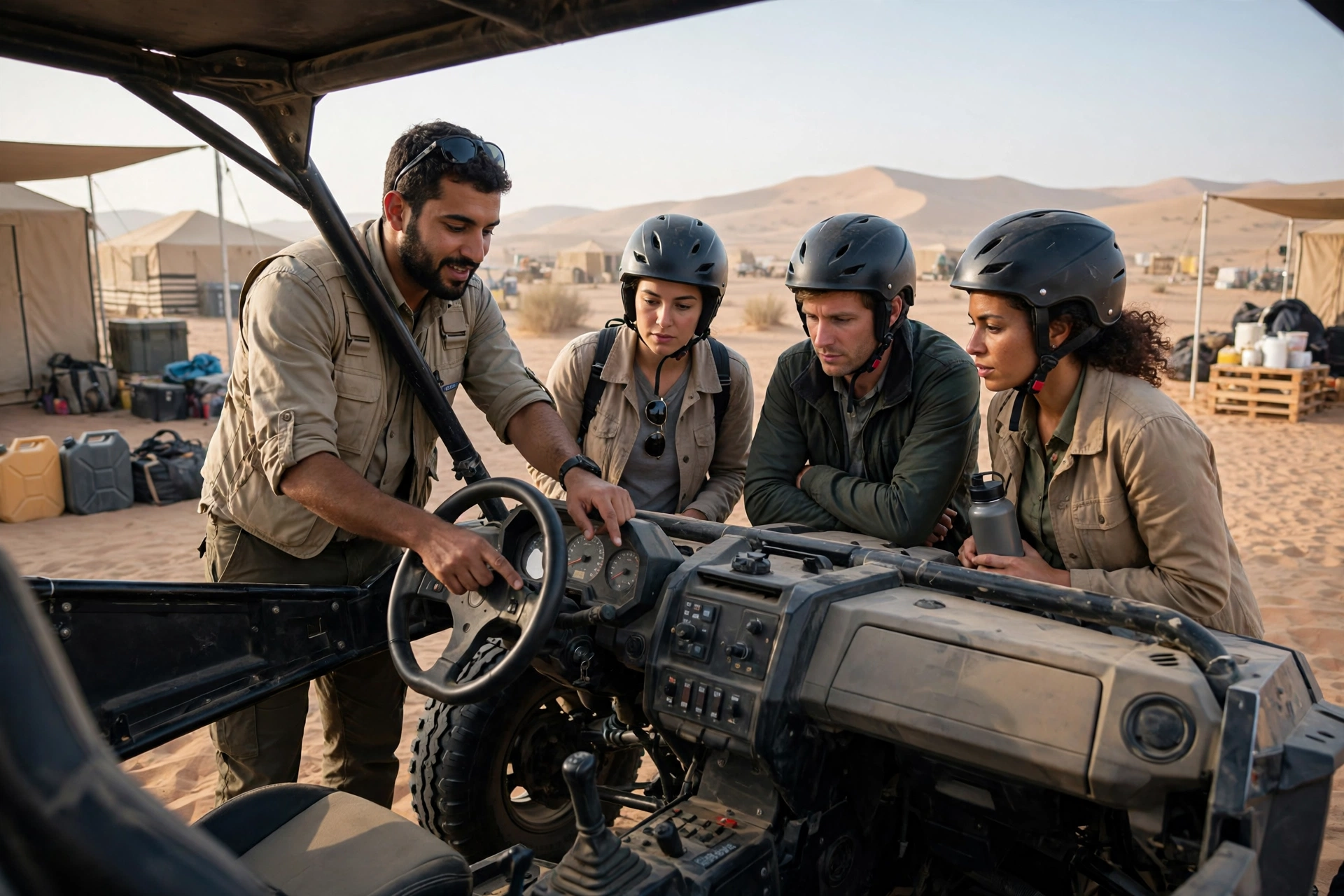
Your guide starts with the buggy itself. You are shown the steering, the pedals, and how the buggy responds on sand compared to a normal road. Sand is softer and the wheels move a little more than you expect, and it helps to hear that before you feel it.
You are also shown what not to do. No sharp turns at speed on a slope. Easy on the pedal going over a crest, because you cannot see the other side until you are on it. None of this is complicated, and it is explained in simple words, because our guides do this with complete beginners every single day.
Getting you fitted and strapped in
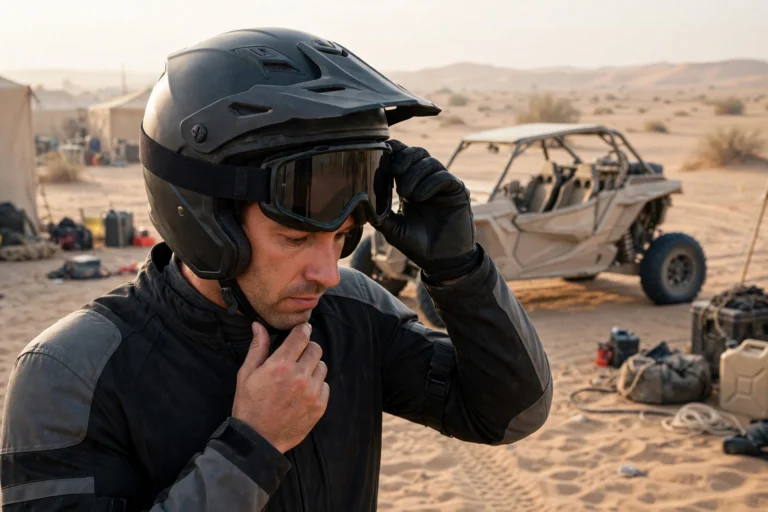
Next, the gear. Every rider gets a full safety helmet, goggles and riding gloves, and the guide checks the fit with you. Goggles matter more than people expect — when you follow another buggy, you drive through a fine spray of sand.
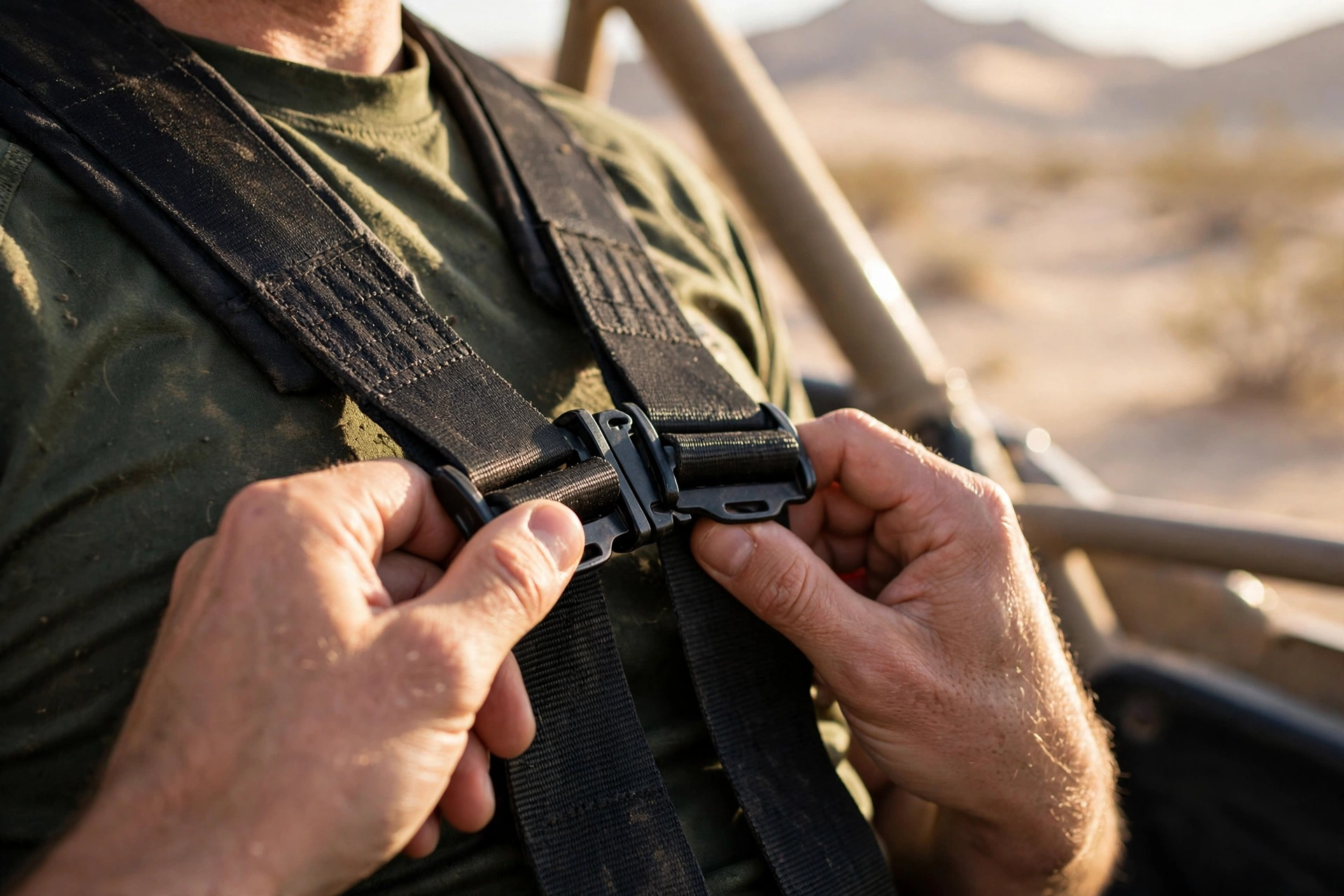
Then the harness. The buggies carry a four-point harness, and the guide shows you how it clips and how firm it should sit. A harness that is loose is not doing its job, so take the extra ten seconds to get it right. The buggies also have a full roll cage and a reinforced frame, which the guide will point out — it is reassuring to know it is there, even though the route is planned so you should never need it.
How to follow the guide’s line
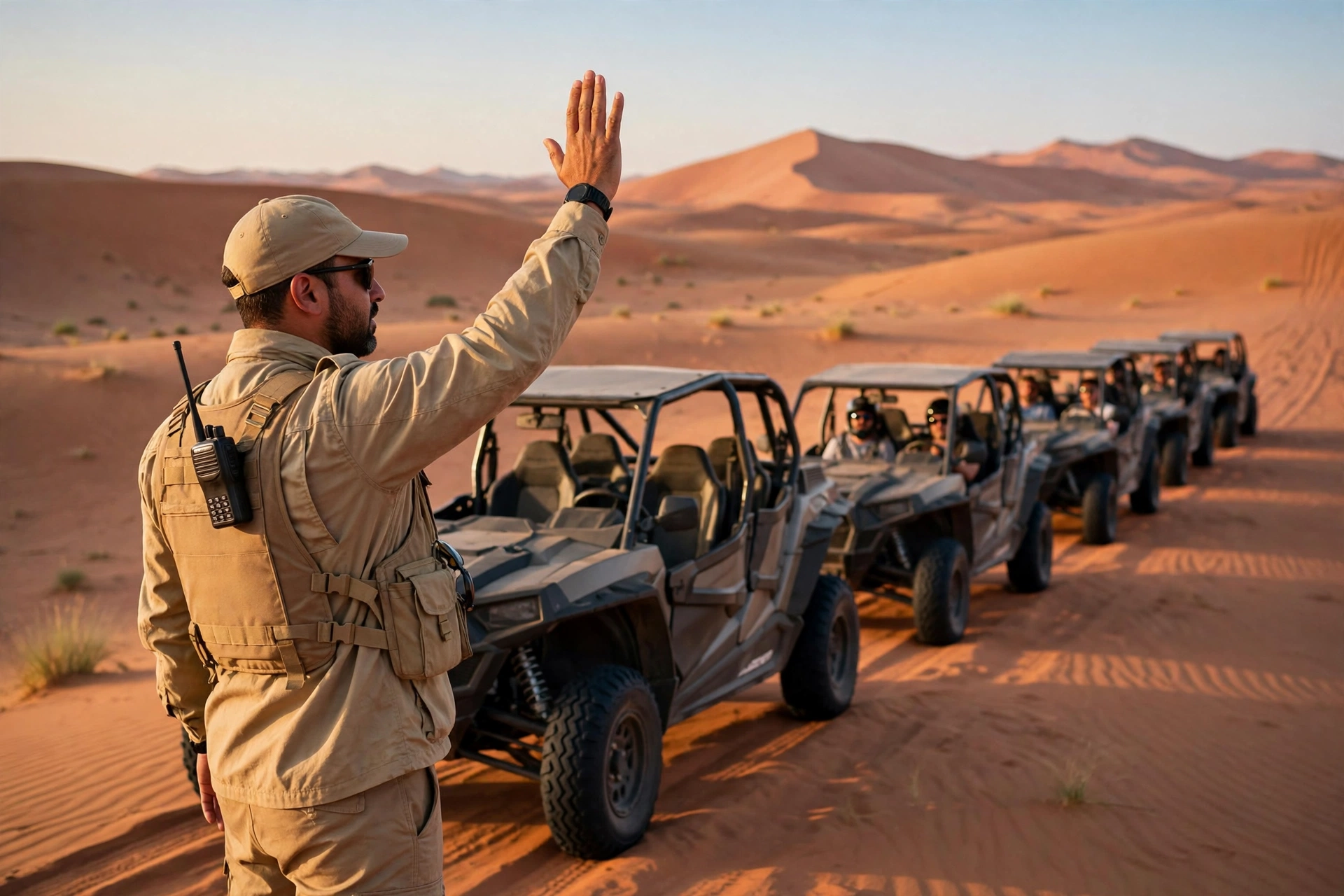
This is the heart of the briefing, and the part that makes the whole system work. You do not pick your own way over the dunes. You follow the line your guide takes, at the distance your guide sets.
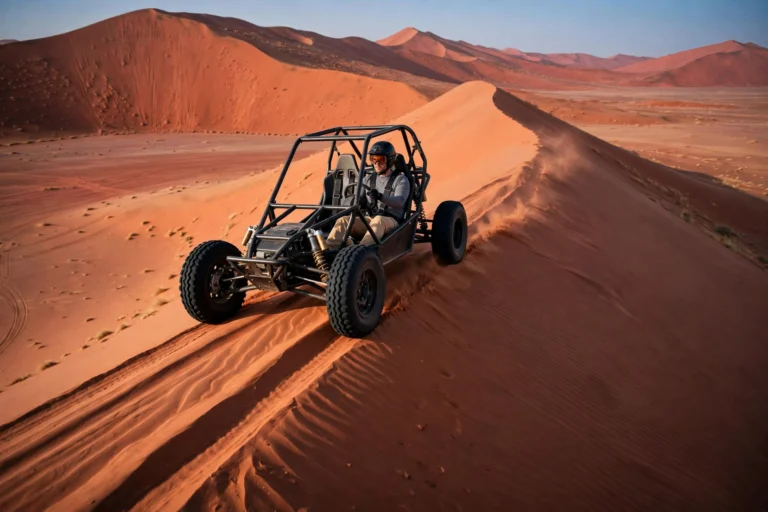
The guide reads the sand ahead — where it is soft, where a dune drops away, where to climb straight and where to come down gently — and drives the safest, most enjoyable line through it. Your job is simply to follow that line at a sensible gap, so you have room to slow down or stop.
You will also learn the hand signals and what to do if you want to stop: slow down, pull up safely, and wait. The guide keeps the group together and checks back on everyone. Nobody gets left behind on a route, and nobody is expected to keep up with driving that feels too fast for them. If the pace is wrong for you, say so. Good guides would rather slow the group down than have one unhappy driver.
The honest rules, said out loud
Every briefing includes the restrictions, and they are worth hearing clearly. You need to be 16 or older to drive a buggy. Children aged 13 to 15 can ride as passengers with a parent or guardian in the vehicle, and children under 13 cannot take part. No driving licence is required — the tour runs on desert tracks, not public roads — but you do need to bring a valid ID for check-in.
Some people cannot ride at all: pregnant women are not permitted on the tours, and anyone with a serious back or heart condition should speak to a doctor first. Alcohol before or during the tour is strictly not allowed. And the clothing rule: closed shoes, nothing loose or flapping. If any of this is unclear when you book a ride such as the Can-Am buggy ride for couples, ask before the day — it is far better than finding out at the base.
A few minutes of practice before the real dunes
Before the group heads out properly, first-time riders get a little time near the base to feel the buggy on easy ground — starting, stopping, gentle turns. This small step makes a big difference. By the time you follow the guide onto the first real dune, your hands already know what to do.
Our guides are DTCM-certified and have led hundreds of tours. That experience shows in the briefing: it is calm, it is clear, and it is never rushed. If you tend to worry, tell your guide you are a complete beginner. They hear it every day, and they will keep an extra eye on you without making a fuss about it.
Quick questions
How long does the safety briefing take?
It is a short session at the base before you drive — long enough to cover the controls, the gear, the harness and the route rules properly, plus a little practice on easy ground for first-timers. It is part of the tour, not something you need to arrive hours early for.
What if I forget something once we are out there?
Follow the guide’s line and keep your distance. That one habit covers most situations. If you are unsure or want to stop, slow down and wait — the guide checks on the group and will come to you.
Do I need a driving licence for the briefing or the ride?
No licence is needed to drive a buggy on our desert tours. You do need a valid ID at check-in, and drivers must be 16 or older.
Can I ask questions during the briefing?
Please do. The briefing is the time for every “silly” question — they are the same questions every first-timer has, and the guide would rather answer them at the base than deal with confusion out on a dune.
Ready to try it with a proper briefing behind you?
Every tour on our buggy rental page starts the same way: gear on, briefing done, then the dunes. And if you want the buggy as part of a full evening out, the same briefing covers you on our desert safari packages too. Questions before you book? Message us on WhatsApp at +971 55 719 0598.