Ramadan Evenings in the Desert: Buggy Ride Followed by Iftar at Camp
Ramadan changes the feel of Dubai. The days slow down, the city takes a breath, and then, just before sunset, everything quietly comes back to life. Out in the desert, that daily rhythm fits the landscape so naturally that a Ramadan desert safari in Dubai feels less like a tour and more like being let in on something.
If you are visiting Dubai during Ramadan — or you live here and have Muslim friends and colleagues observing the month — an evening that pairs a buggy ride with iftar at a desert camp is one of the most thoughtful ways to experience it. Here is how it works.
The shape of a Ramadan desert evening
The timing is the first thing that changes. During Ramadan, the centre of the day is sunset, because that is when the fast breaks. So the desert evening builds backwards from that moment.
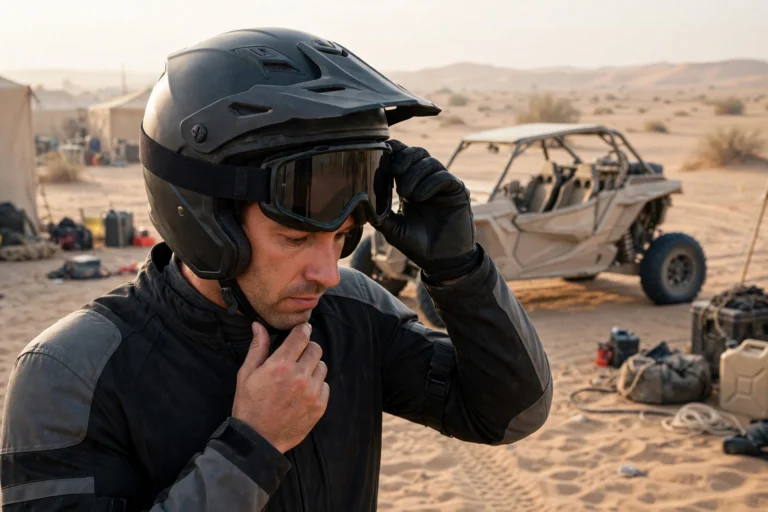
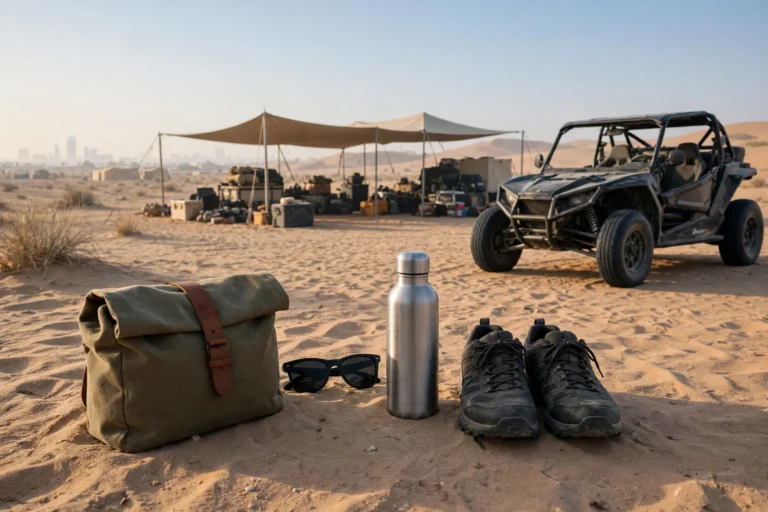
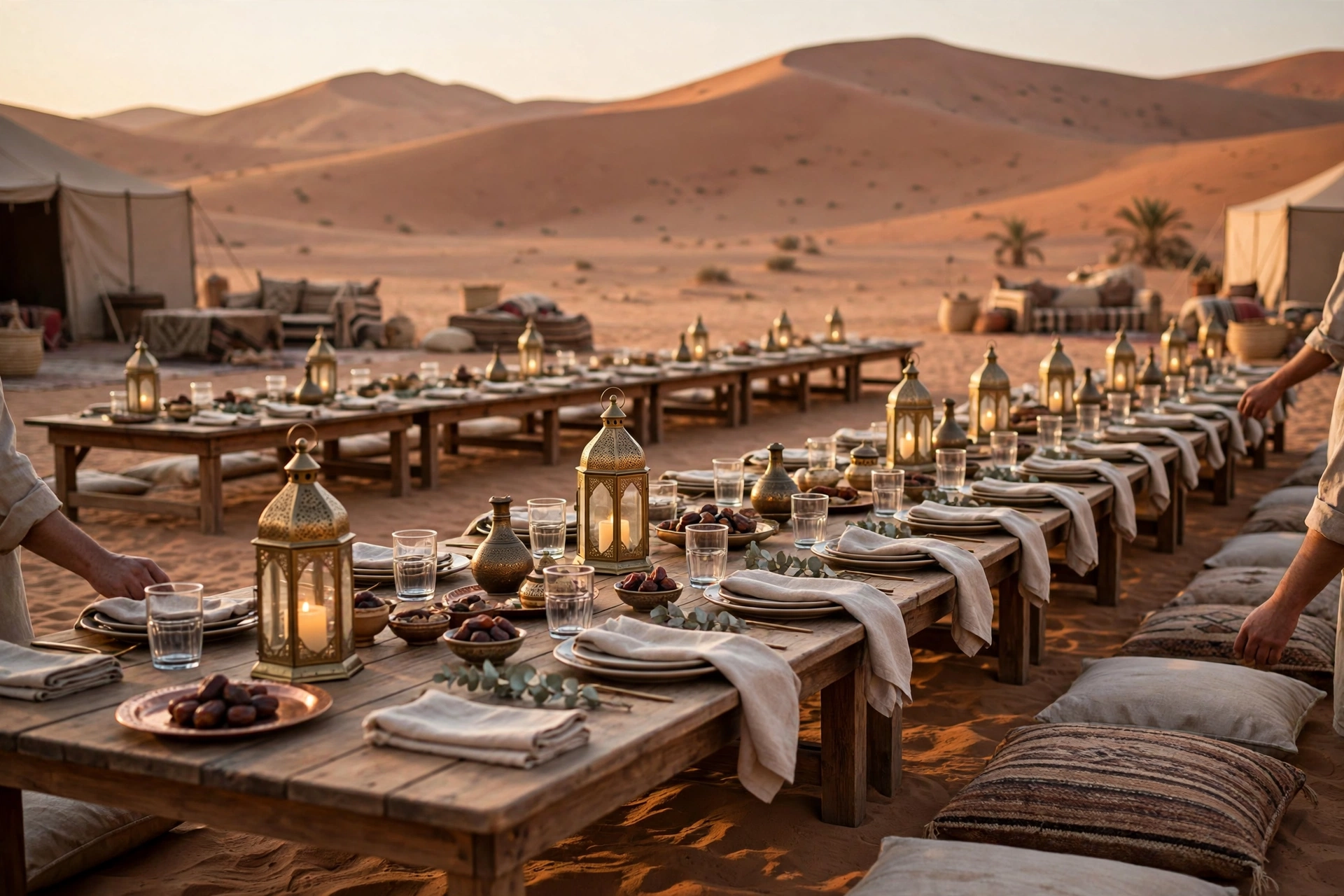
You head out in the later afternoon, when the heat has eased. The buggy ride runs in the soft, low light — genuinely some of the prettiest driving light of the year, with long shadows on the Al Badayer dunes and none of the hard glare of midday. Then, as the sun gets close to the horizon, you come off the dunes and into camp, where the tables are already being set.
Our full desert safari evenings are built around exactly this arc: the drive, the dunes, then the camp. In Ramadan the camp half of the evening simply takes on the shape of iftar.

Iftar at the camp
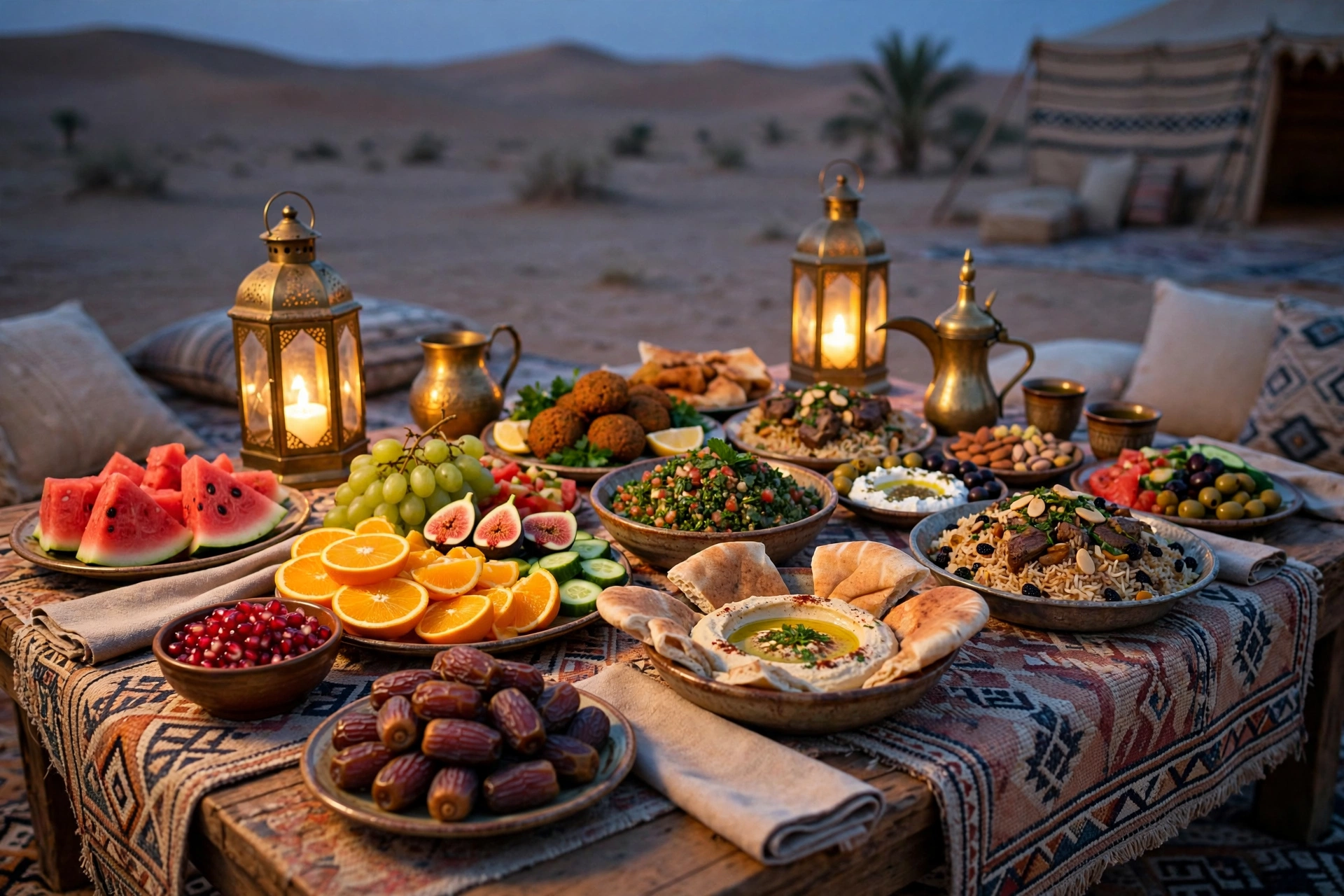
Iftar is the meal that breaks the day’s fast, and it begins the moment the sun sets — traditionally with dates and water, before the main food. At the camp, that means a pause that the whole evening respects. The call to prayer marks the moment, those who have been fasting eat first, and nobody rushes it. If you are not fasting, you simply wait a few courteous minutes and then join in. It is a small thing, and it is appreciated more than you might expect.
Then the evening opens up: the BBQ buffet, salads, breads and Arabic dishes, drinks, and time to sit back under a sky that gets darker and more full of stars than anything you will see from the city. Guests who want the fullest version of the evening — private-style comfort, the buggy ride included — usually look at our premium safari with a dune buggy ride, while the standard safari with a dune buggy keeps the same shape in a simpler form.
Joining respectfully, whether you fast or not
Visitors sometimes worry about getting Ramadan etiquette wrong in the desert. Honestly, the desert camp is one of the easiest places to get it right, because the evening is structured and the team will guide you. A few simple things cover almost everything:
- You do not need to be Muslim, or to fast, to join an iftar evening. Guests are welcome, and sharing iftar with visitors is a normal, warm part of the month.
- Out of respect, avoid eating and drinking in front of those who are fasting until the fast breaks at sunset. On the afternoon ride this mostly means being thoughtful with snacks and water bottles around guides and fellow guests during the day.
- Dress a little more covered than you might for a summer tour. Trousers and a top with sleeves suit both the buggy harness and the tone of the evening — and Ramadan evenings can turn cool after dark, so a light layer earns its place anyway.
- Accept the dates. If someone offers you a date at iftar, take it. It is the traditional start of the meal, and joining in is the whole point.
Why Ramadan is secretly a lovely time to go
There is a practical side to this too. Ramadan falls in the cooler part of the year in this cycle, and desert evenings are comfortable — warm in the late afternoon sun, pleasantly cool by dinner. The dunes in the hours before sunset are calmer, the light is kind, and the whole experience runs at a gentler pace than a peak-season Saturday.
There is also something harder to put in a tour description. A desert camp at iftar is genuinely peaceful: a group of people who have waited all day to eat, eating together as the light goes, in a place that has hosted exactly this rhythm for a very long time. Even guests who came purely for the buggy ride tend to say the iftar was the part they remember.
Quick questions
Can non-Muslims join a Ramadan desert safari and iftar?
Yes, absolutely. Visitors are welcome on the ride and at the iftar table. The team will let you know when the fast breaks, and you eat together from that point.
What time does a Ramadan evening safari run?
It is built around sunset, with the ride in the late afternoon and iftar as the sun goes down. Exact pickup times shift with the sunset time across the month, so confirm your timing when you book.
Should I eat before I go?
If you are not fasting, have a normal lunch and avoid heavy snacking in front of fasting guides and guests during the afternoon. Save your appetite — the iftar spread at camp is the main event.
Is the buggy ride itself different during Ramadan?
The ride is the same guided self-drive experience on the same dunes, with the same safety gear and briefing. What changes is the timing of the day and the iftar-focused evening at camp afterwards.
An evening that slows down in all the right ways
Most desert tours are about speed at some point. A Ramadan evening has the speed — the late-afternoon ride sees to that — and then it does something rarer: it slows everyone down together, around a table, at exactly the moment the desert is at its best. If your Dubai trip falls in Ramadan, do not work around the month. Lean into it. Message us on WhatsApp at +971 55 719 0598 and we will help you line up an evening that fits it perfectly.